

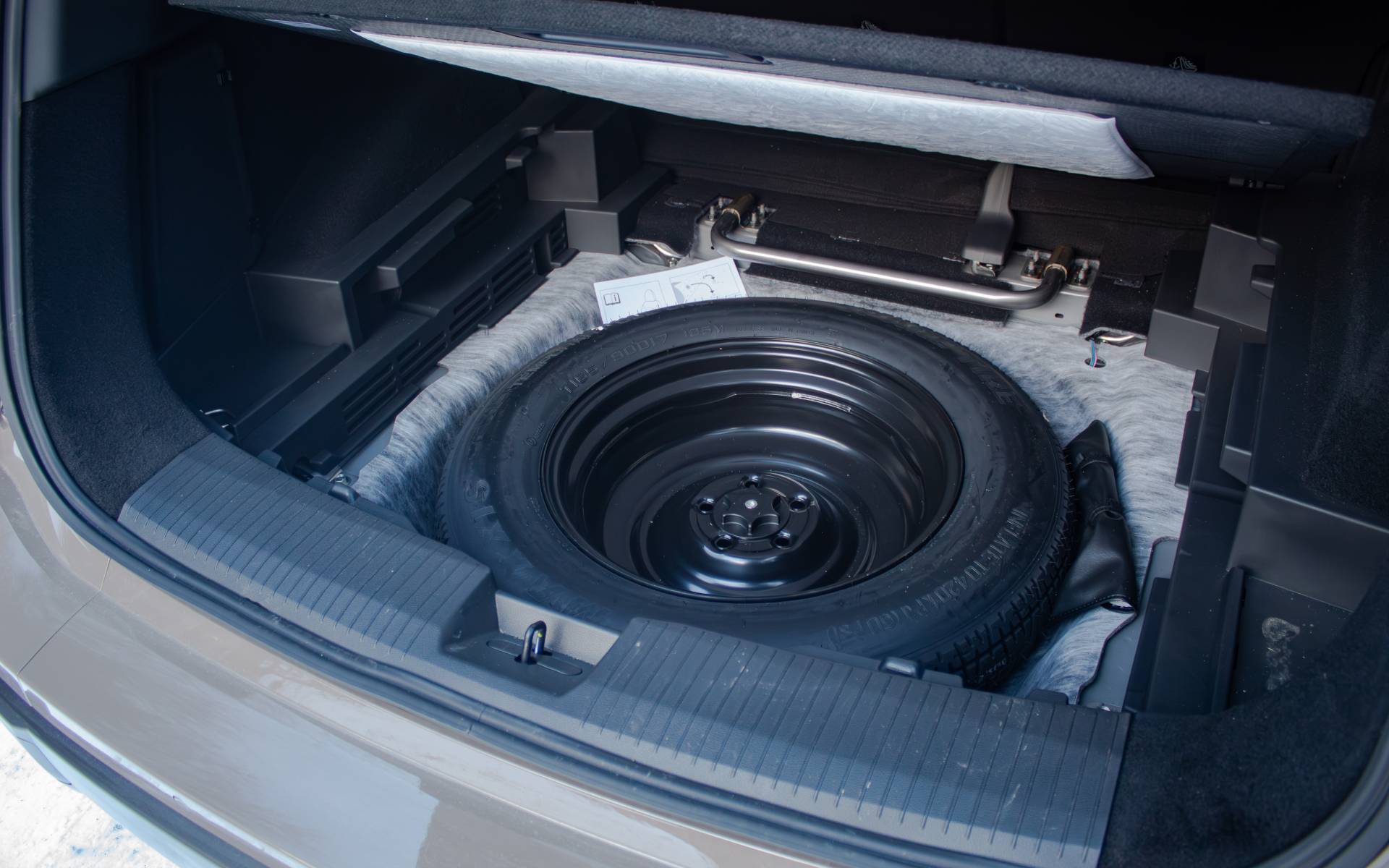
How long can you drive on a spare tire?
So-called run-flat tires are relatively common these days. In the event of a flat tire, they can hold up and allow you to continue driving for a considerable distance, though at a reduced speed.
This gives you plenty of time to drive home or to a dealership to have the tire repaired after an inspection (which is possible if the puncture is small enough and the tire hasn’t been driven on flat for too long) or to have it replaced.
If the vehicle you’re considering purchasing or have just bought is equipped this way, take the time to read the owner’s manual to review all the manufacturer’s instructions and recommendations. If, on the other hand, it has a spare tire stored under the trunk floor—as is the case with many vehicles—there are still some important things you should know. Among other things: what are the speed and mileage limits to follow when using a spare tire?
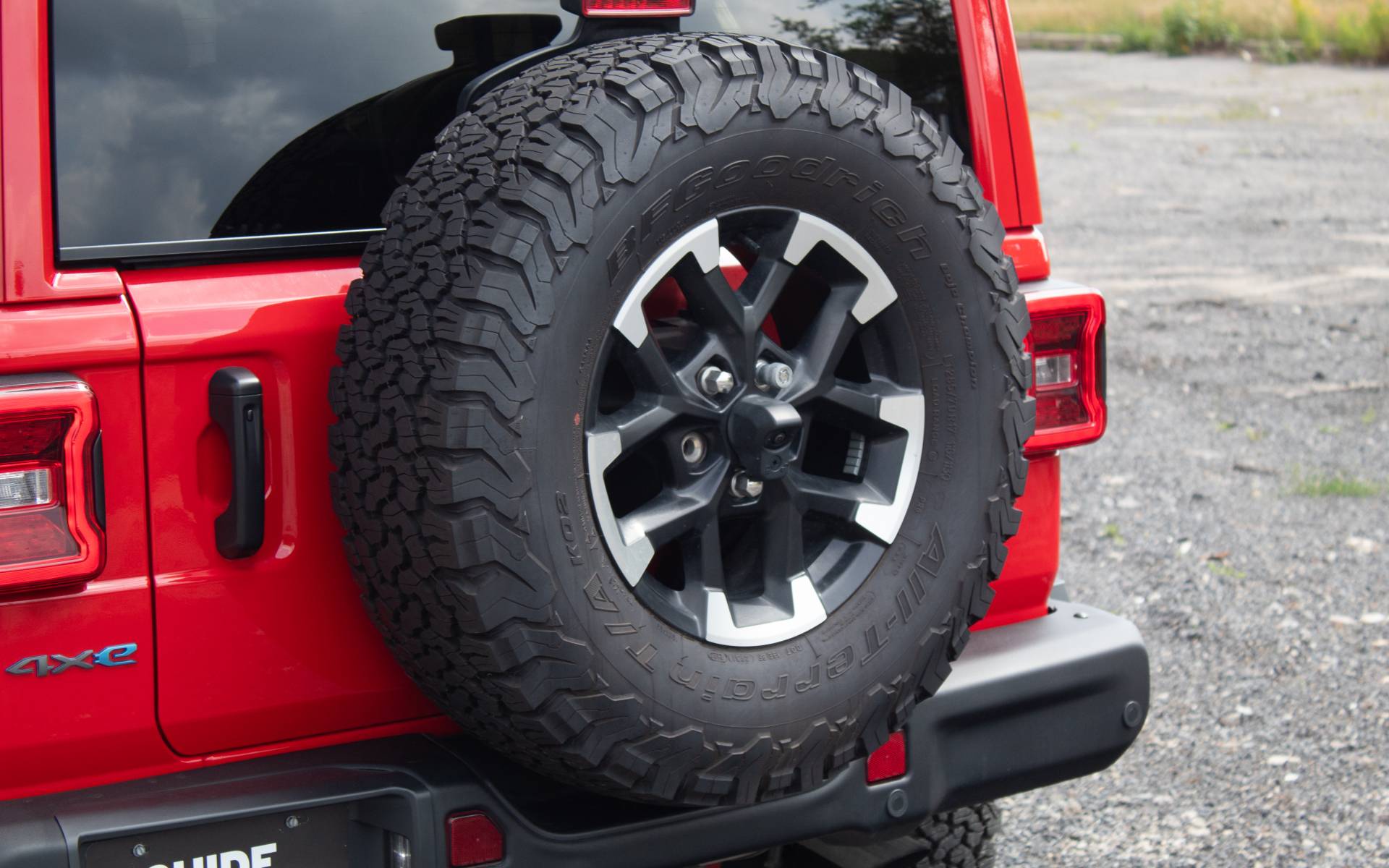
Of course, some vehicles come with a full-size spare tire that’s identical to the other four, which solves the problem pretty quickly. This includes most pickup trucks as well as many off-road SUVs, with the Jeep Wrangler and Ford Bronco leading the pack.
Otherwise, to save space, the spare tire is smaller in both diameter and width. It is also typically lighter and less rigid, with a less aggressive tread pattern, making it only a temporary solution—or a backup option, if you will. For these reasons, it is generally recommended not to drive faster than 80 km/h or for distances exceeding 80 to 100 kilometers—and certainly not on gravel or snow-covered roads.
If you exceed these limits, you risk damaging your vehicle’s transmission and suspension. Always keep in mind that your braking ability will be affected. By the way, if you have a flat tire on the front, it’s best to move a rear tire and install the spare tire in its place to maintain good steering control.
Furthermore, if your home, a car dealership, or a repair shop is only about 10 to 20 kilometers away from where you had a flat tire and put on your spare tire, you could, in theory, put the spare back in its place after swapping it for a new replacement tire. It could then be used again.