

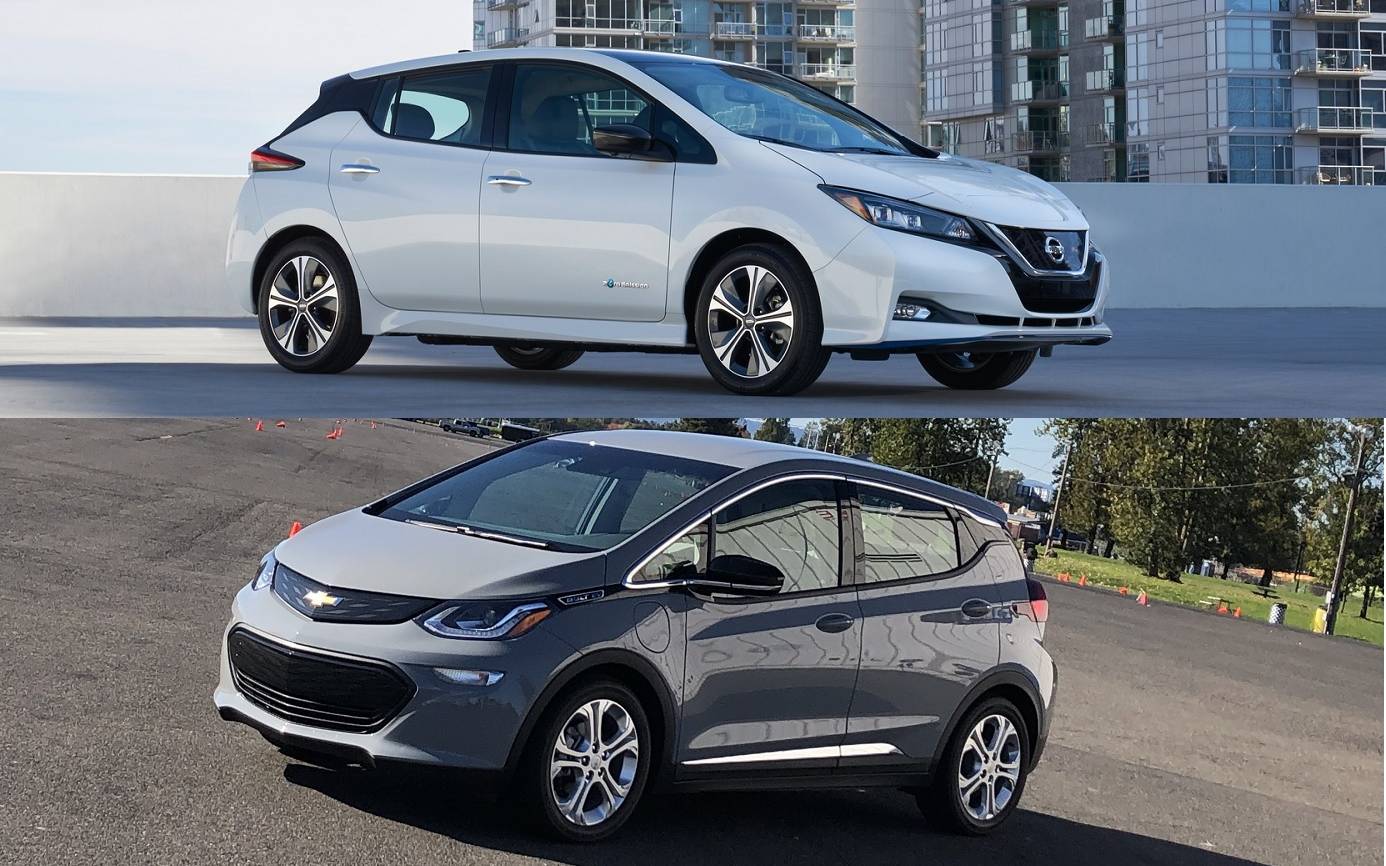
Used Nissan LEAF or Chevrolet Bolt EV: Which One Should You Choose?
The return of federal incentives and the recent spike in gas prices have given new life to electric vehicles, both new and used. If you’re more interested in the used option for budget reasons and don’t need a lot of space, a compact car like the Nissan LEAF or the Chevrolet Bolt EV might be just right for you.
Which one should you choose? To answer this question, we’ll compare the Bolt EV (2017–2023) exclusively with the second-generation LEAF (2018–2025), since they’re in the same model years. By the way, the LEAF was named World Green Car of the Year in 2018.
First and foremost, the key factor is obviously range. The Chevrolet model comes out on top with its 60-kWh battery offering 383 km (2017–2019 models) or its 66-kWh battery capable of delivering 417 km (2020–2023 models). For its part, the LEAF was available with a 40-kWh or 62-kWh battery, offering a range of 240 km or up to 363 km, respectively.
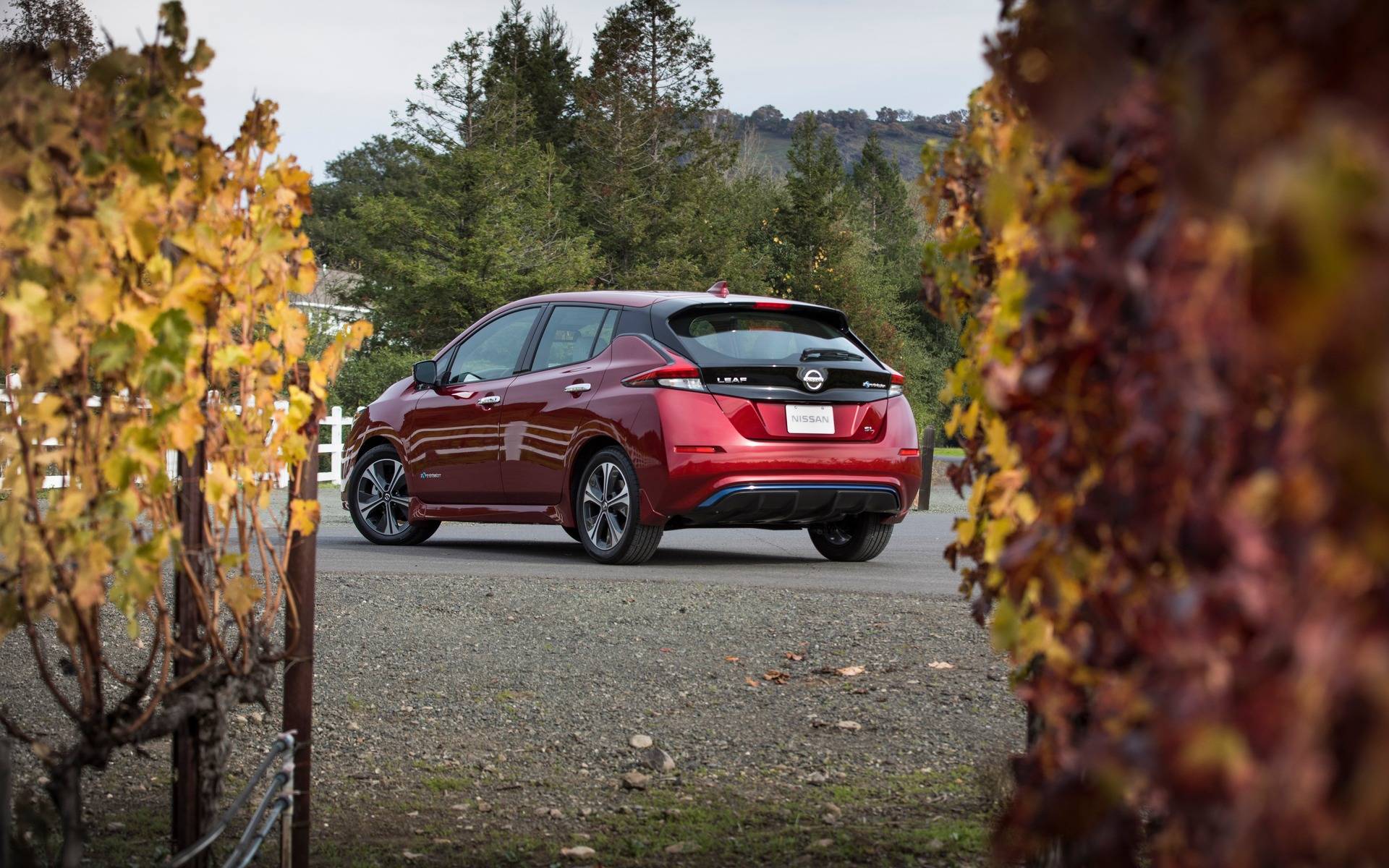
Note: Slightly redesigned for 2023, the LEAF now features a sleeker front end and new wheels, not to mention a few new features inside, but the S Plus version has been discontinued, even though it offered the longest range. The maximum range is now 349 km.
On the road, both of these front-wheel-drive models (no all-wheel drive, sorry) support one-pedal driving, but keep in mind that Chevrolet’s system works better and in more situations. The safety and driver-assistance features are comparable. That said, the LEAF could be equipped with ProPilot assistance on the highway (hands on the wheel), while the Bolt EV has never offered GM’s famous Super Cruise system.
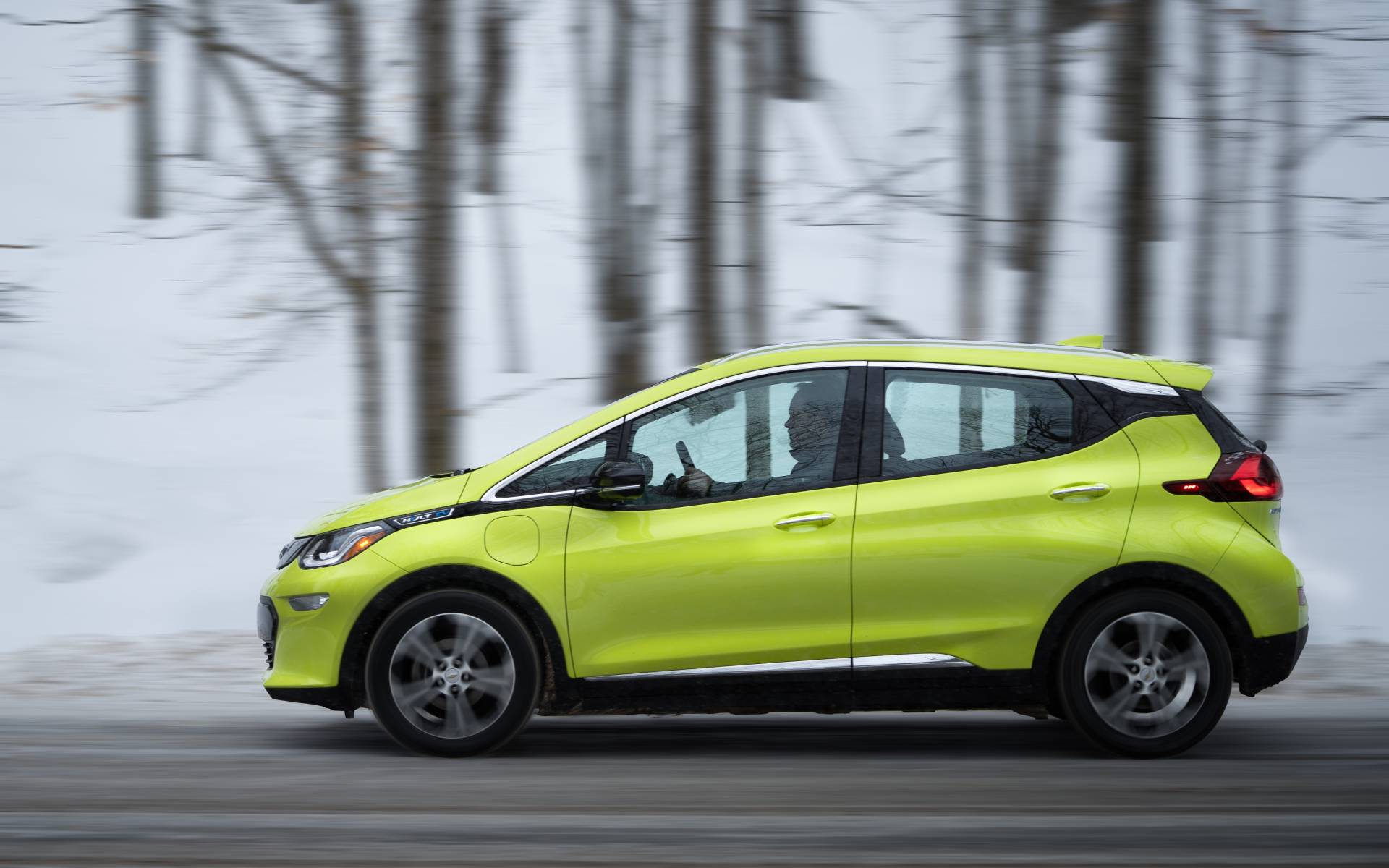
Nissan wins in the comfort department, while Chevrolet comes out on top when it comes to driving enjoyment. If you like brisk acceleration, the Bolt EV uses its 201 horsepower and 266 lb-ft of torque to reach triple-digit speeds in 7 seconds. In the LEAF, the electric motor produces 147 horsepower and 236 lb-ft of torque. The more powerful version delivers 214 horsepower and 250 lb-ft, for a more respectable 0-100 km/h sprint time of 8 seconds.
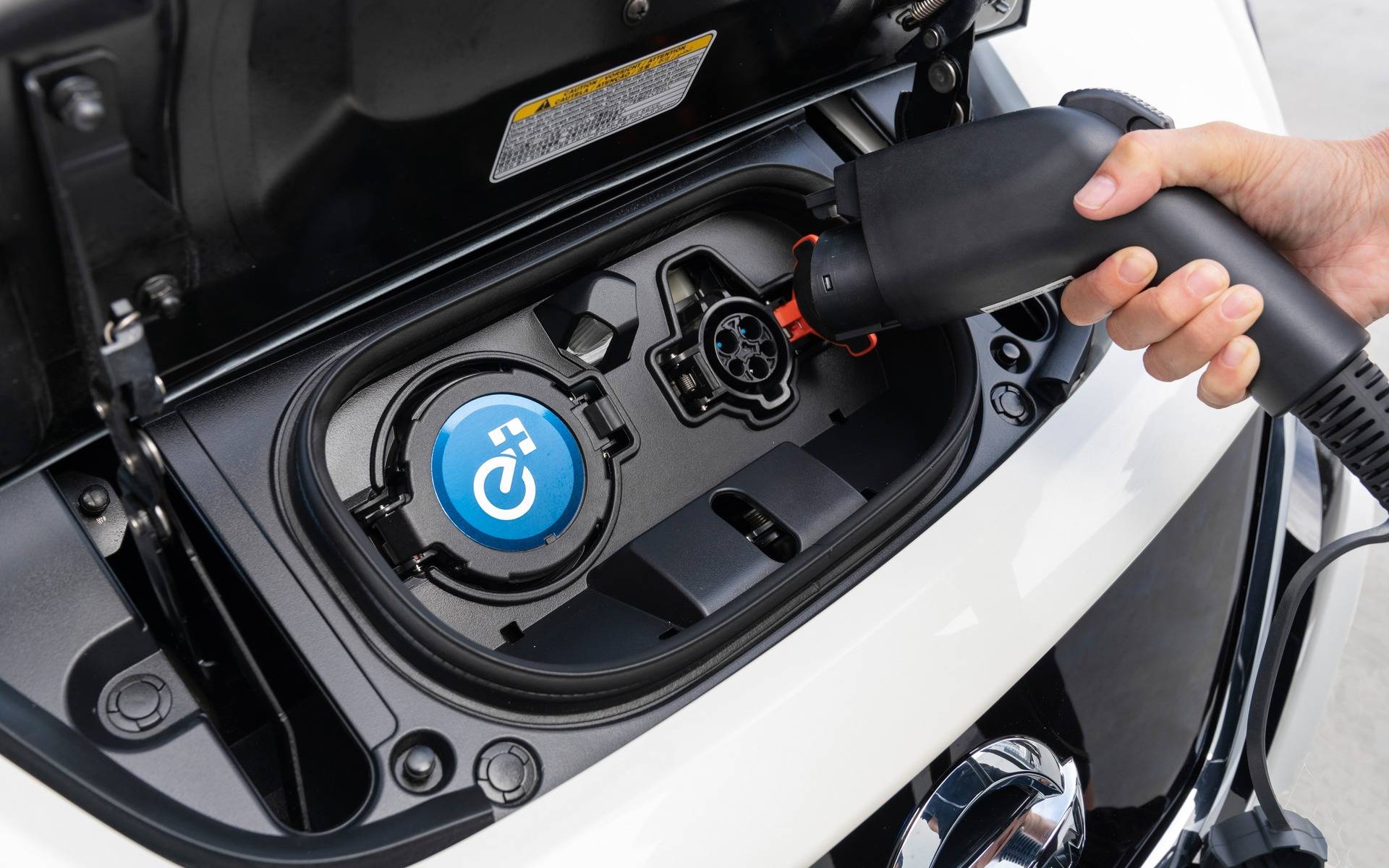
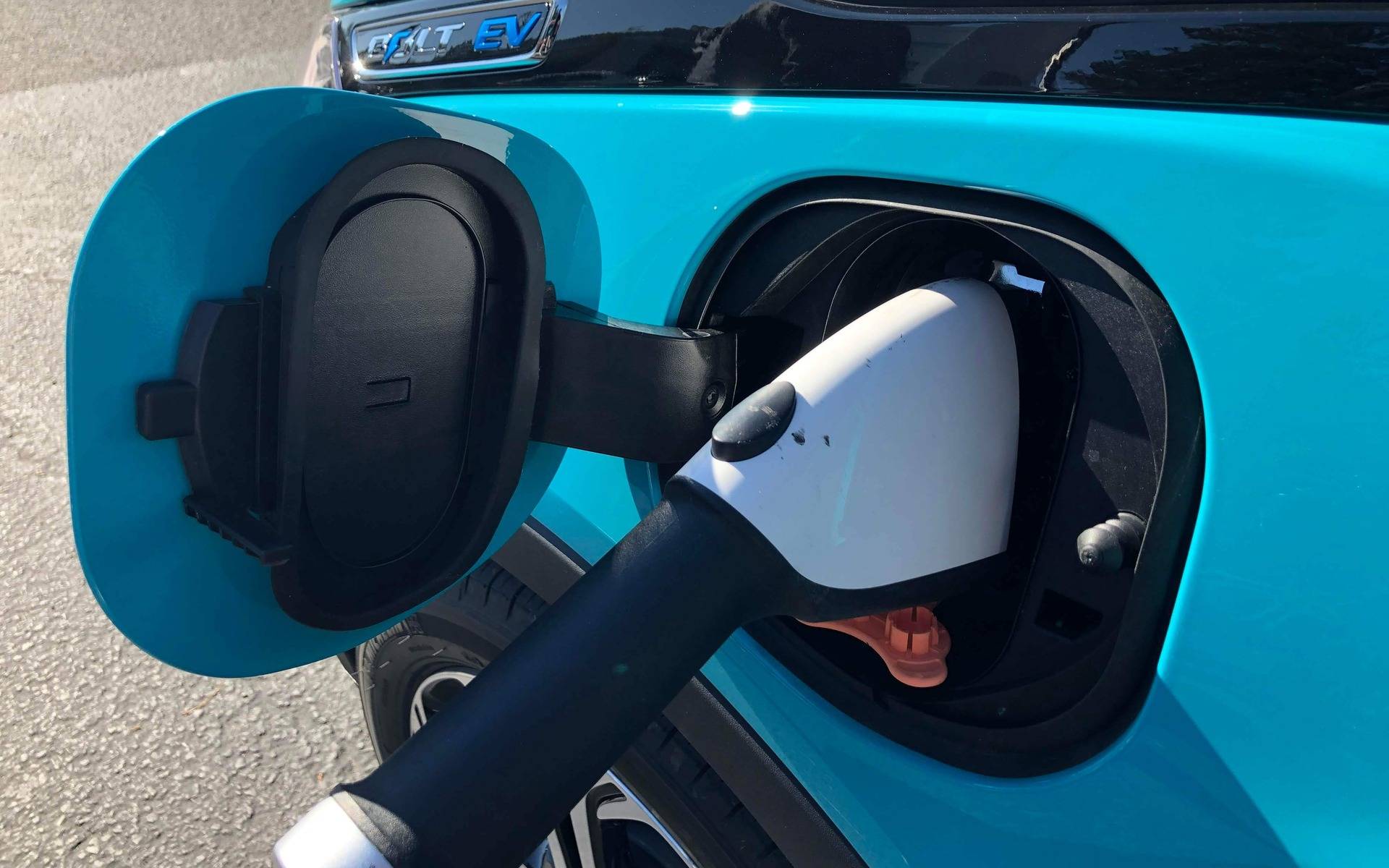
When it comes to charging at fast-charging stations, the Bolt EV takes longer (10% to 80% in about 1 hour) but features a convenient CCS port, whereas the LEAF generally charges a bit faster (10% to 80% in about 48 minutes) but is limited by its CHAdeMO port, which is compatible only with a limited number of charging stations. CCS-to-CHAdeMO adapters now allow for the use of faster chargers, although the power output is limited by the car.
Finally, if cargo capacity is a deciding factor for you, you should know that the LEAF’s trunk is significantly roomier, holding 668 liters of luggage compared to just 479 liters for its American rival (or even 462 liters in the Bolt EUV, which, ironically, is less practical).
Reliability? It’s generally pretty good for both brands, but both have had major issues with their batteries. Read more details about Nissan and Chevrolet. GM has carried out replacements, but some owners remain unconvinced. In short, there’s still some risk involved, even if the vehicle passes inspection. Finding a good dealership you can trust is essential.
Now you have all the information you need to make an informed decision. With that, happy shopping!