

The most reliable used cars, according to a new Canadian study
Data and studies on vehicle reliability are valuable to consumers, but they typically come from U.S. companies or publications such as JD Power and Consumer Reports. However, the online platform Clutch has just addressed this issue with a comprehensive report based on more than 100,000 inspections of used vehicles in Canada since 2017.
It’s important to note that Clutch evaluates each vehicle intended for resale on a 210-point scale. About 50% fail the inspection and are sent to auctions or sold to dealerships. The rest are refurbished, listed on its website, and then tracked through deliveries, returns, and post-sale warranty claims (90 days).
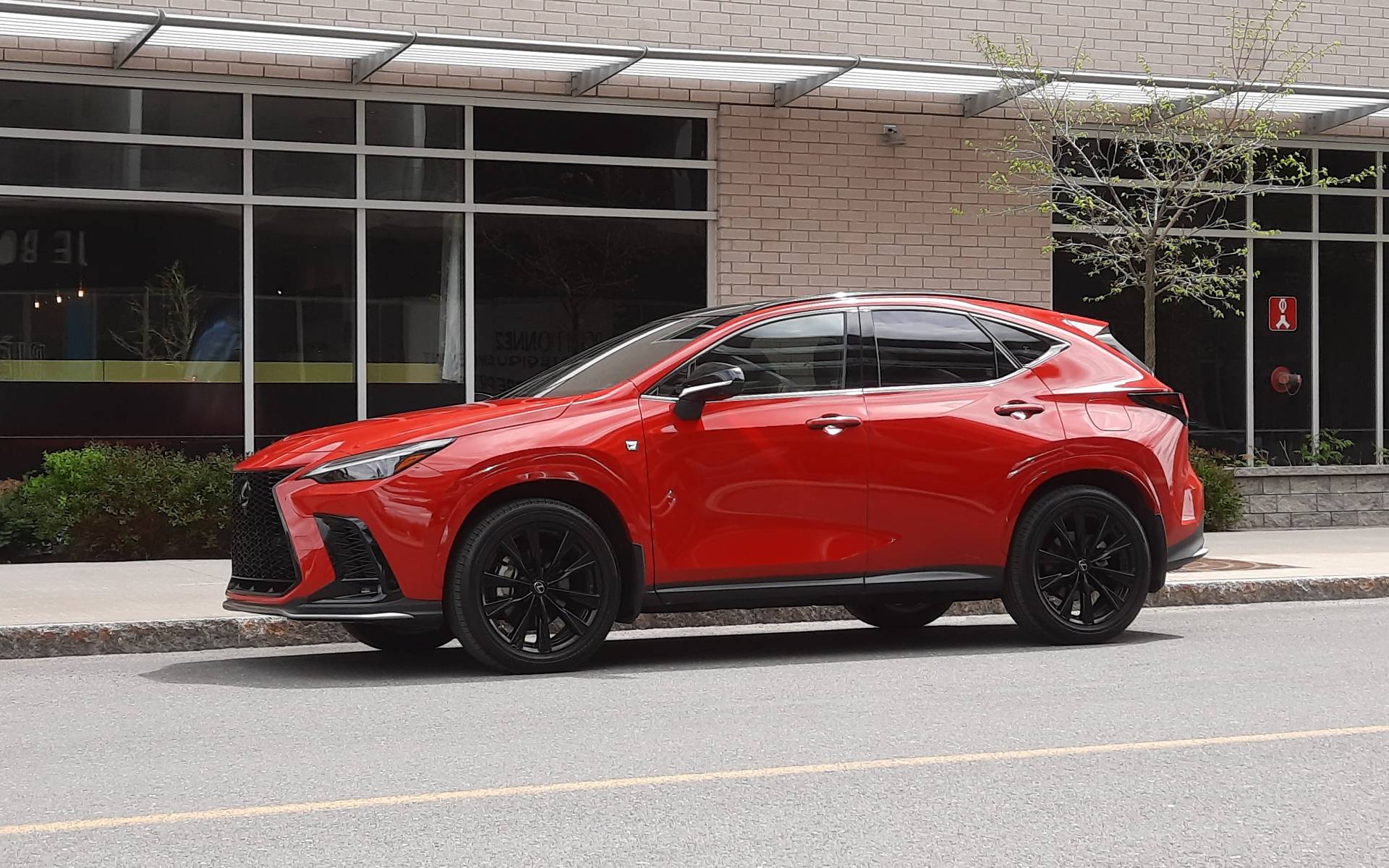
The very first “Clutch Certified Pre-Owned Vehicle Reliability Index” ranks different car brands on a scale of 10. As the table shows, seven brands score above 9, and six of them are Japanese: Lexus, Subaru, Acura, Toyota, Honda, and Mazda. The exception is MINI. In any case, their vehicles generally arrive in better condition, require less work, and generate fewer issues after the sale.
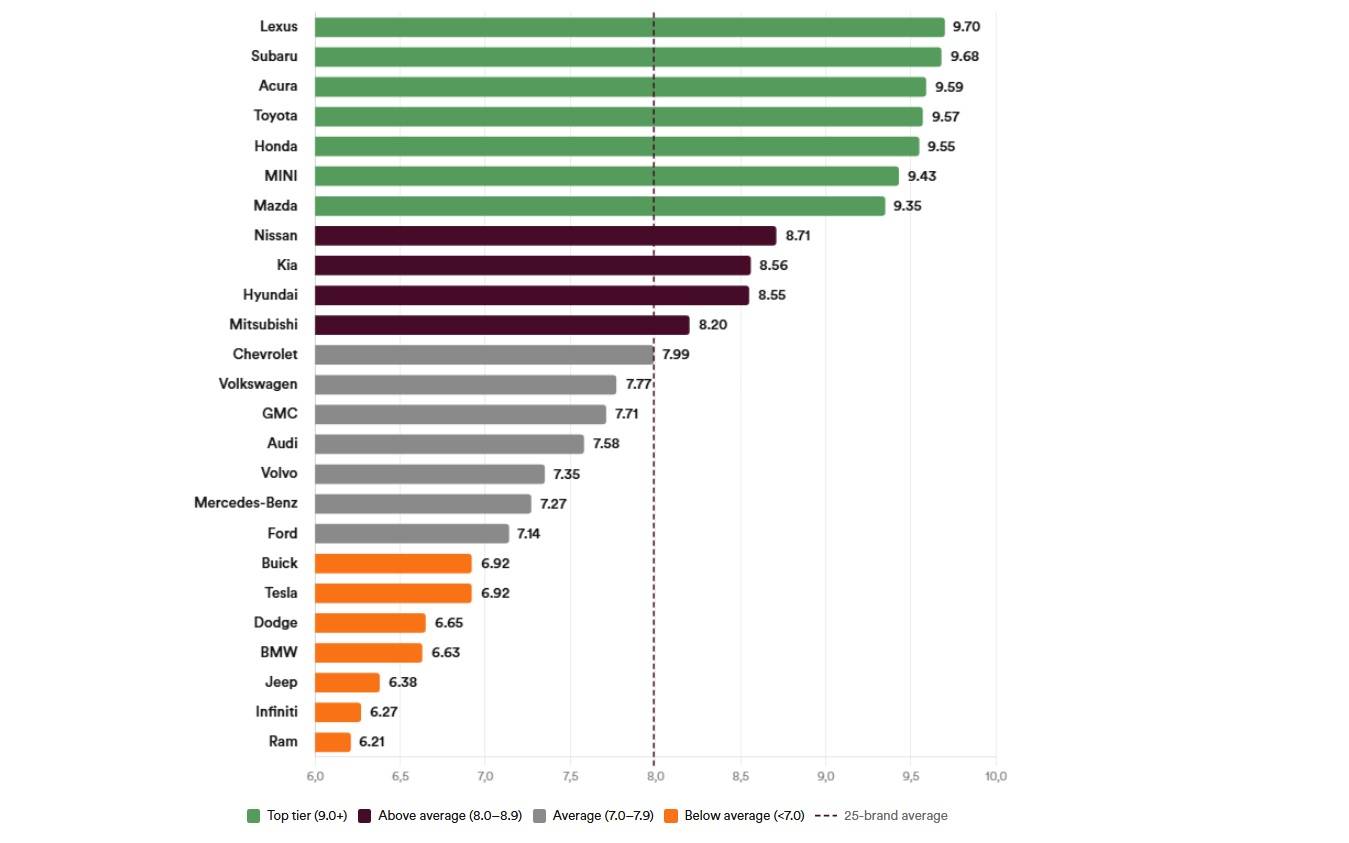
Four other Asian brands rank above average: Nissan, Kia, Hyundai, and Mitsubishi, with the latter offering, as is well known, the best powertrain warranty (10 years/160,000 km). Clutch notes that issues with Nissan’s CVTs and Hyundai and Kia’s 2.0- and 2.4-liter engines have largely been resolved since 2019–2020.
Chevrolet, Volkswagen, GMC, Audi, Volvo, Mercedes-Benz, and Ford rank average or slightly below average. They all have a weak point, but no systemic issues.
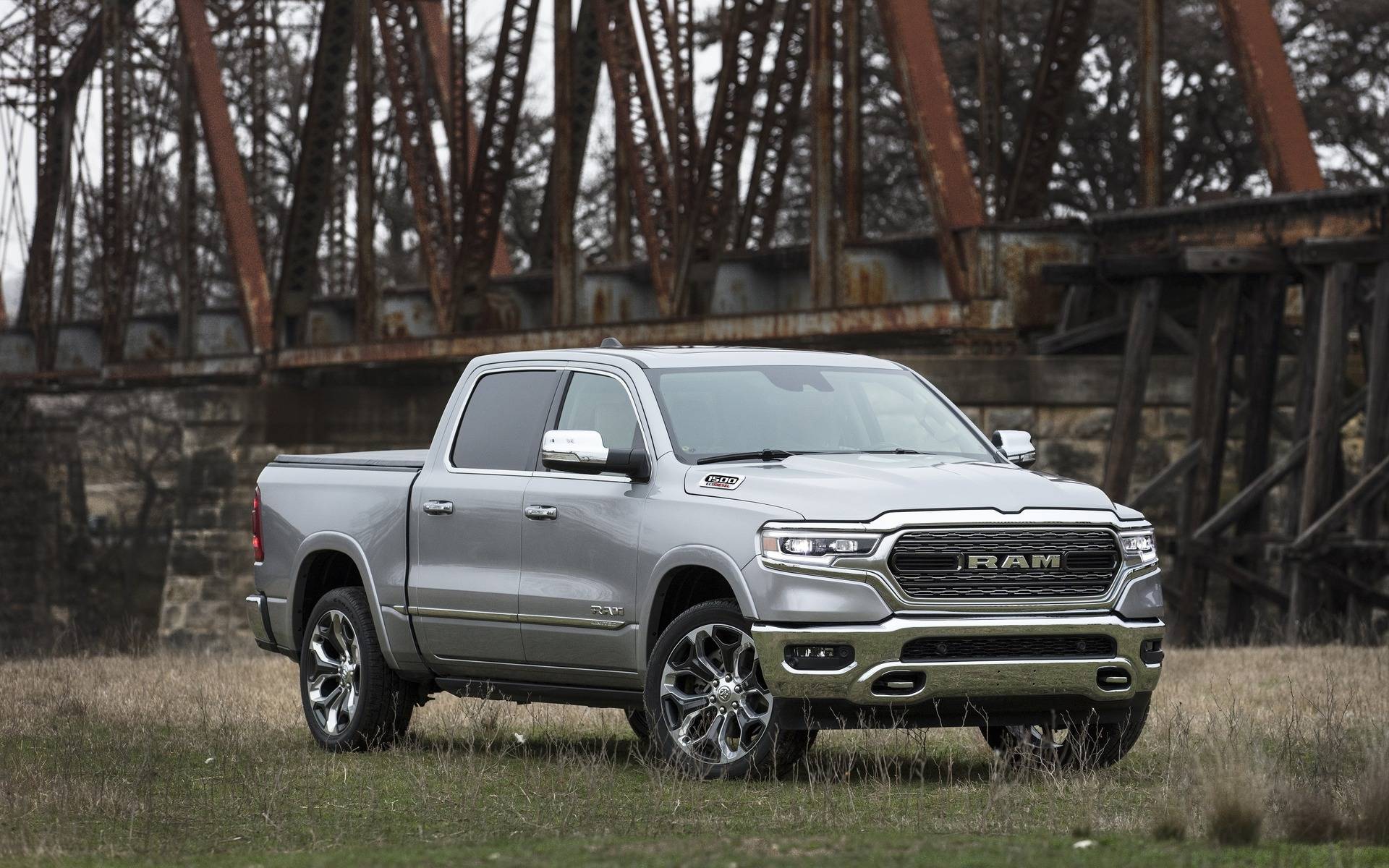
Finally, the group of least reliable brands is primarily American, including Buick, Tesla, Dodge, Jeep, and Ram, the latter three of which are part of the Stellantis group. These brands pass inspections less often, have higher repair costs, and are more prone to rust and mechanical issues.
The table also shows that BMW is the worst-performing German brand, while Infiniti defies the positive reputation of Japanese brands.
What about durability? According to the Clutch study, Japanese brands maintain their reliability well beyond a given mileage, far outperforming their American, German, and Korean competitors. At 100,000 km, an American car fails Clutch’s technical inspection on average 60% more often than a Japanese car. German cars fail 39% more often, and Korean cars, 24% more often. A Honda at 120,000 km performs as well as a Chevrolet at 60,000 km—twice the distance for the same result.
We invite you to check out Clutch’s report to see how each brand scores in the areas of powertrain, brakes/steering, electric/technology, interior/climate control, and body/glass. Please note that Alfa Romeo, Fiat, Genesis, Jaguar, Land Rover, Porsche, and a few others are not included in the report due to a lack of data.