

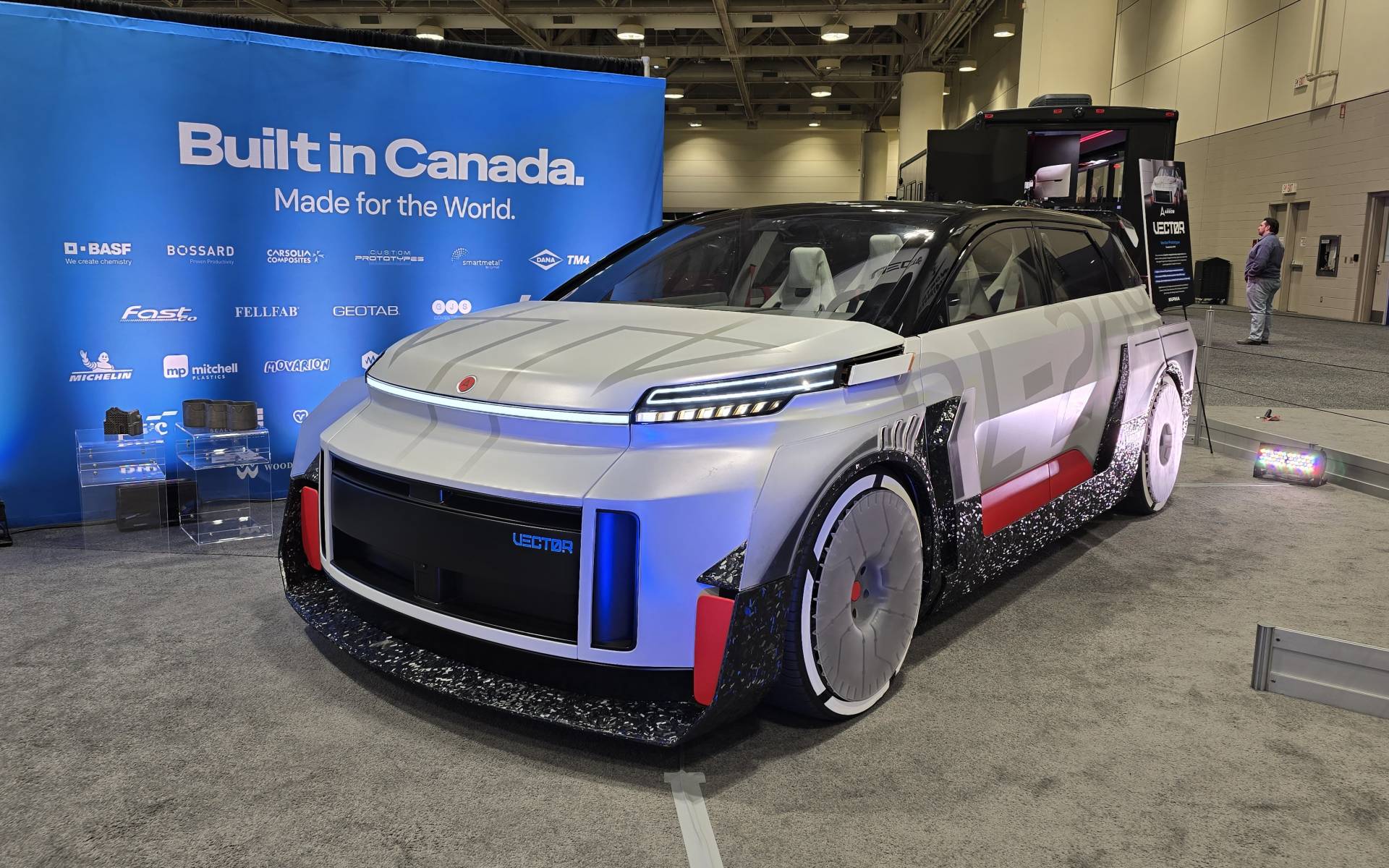
Project Arrow Vector and Borealis: two new Canadian concepts
Remember Project Arrow? The result of collaboration between dozens of companies across the country and supported by the Automotive Parts Manufacturers' Association (APMA), this Canadian electric vehicle concept, which first appeared in 2023, is now moving to the next stage with the unveiling of two new developments at the Toronto Auto Show.
For its 2.0 phase, Project Arrow is moving beyond a simple concept by deploying a whole range of cutting-edge technologies from more than 80 suppliers and partners. Ontario Tech University is the main construction partner and supports technical integration, prototype assembly, and advanced research collaboration.
Project Arrow Vector
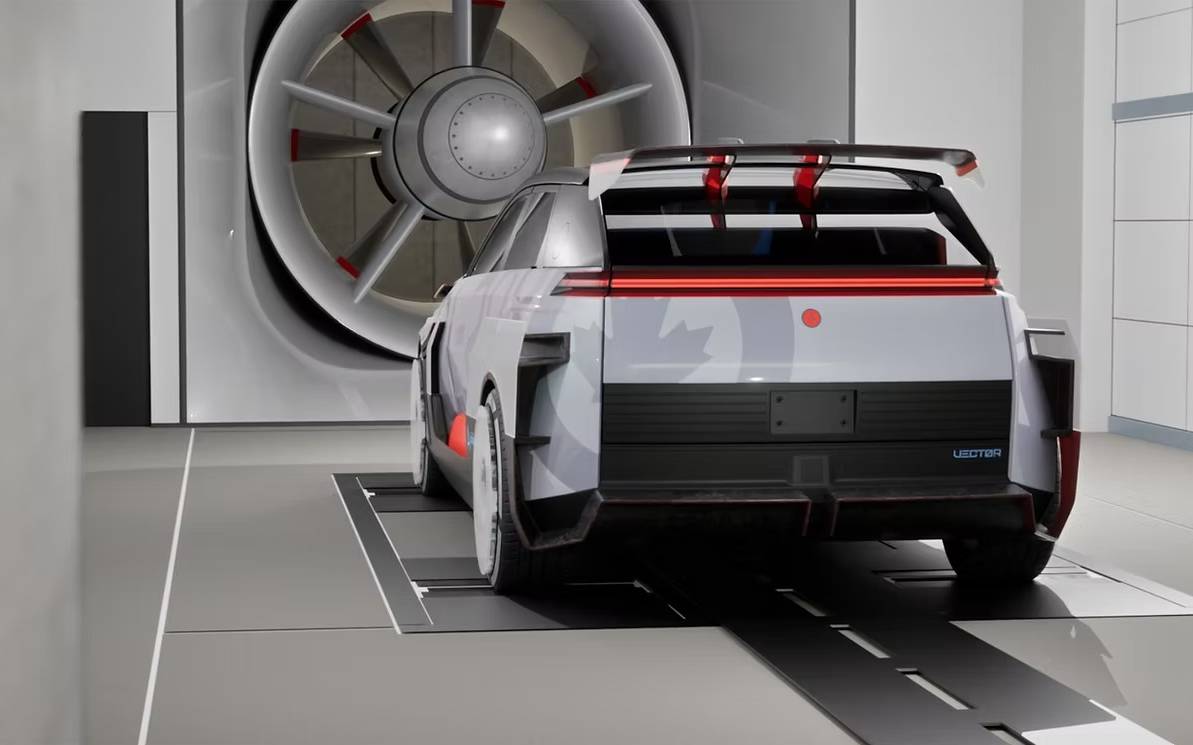
In our opinion, Vector is the coolest of the two prototypes on display in Toronto—and the closest to production. Taking the form of a sporty crossover with a design almost as crazy as the Hyundai Insteroid concept, it uses a lightweight aluminum and polymer chassis created with the help of artificial intelligence and 3D printing.
Highly explosive, Vector uses electric motors totaling 650 horsepower, and its battery, whose capacity is unspecified, is said to provide a range of approximately 550 km. Its cameras and sensors make level 3 autonomous driving possible.
Project Arrow Borealis
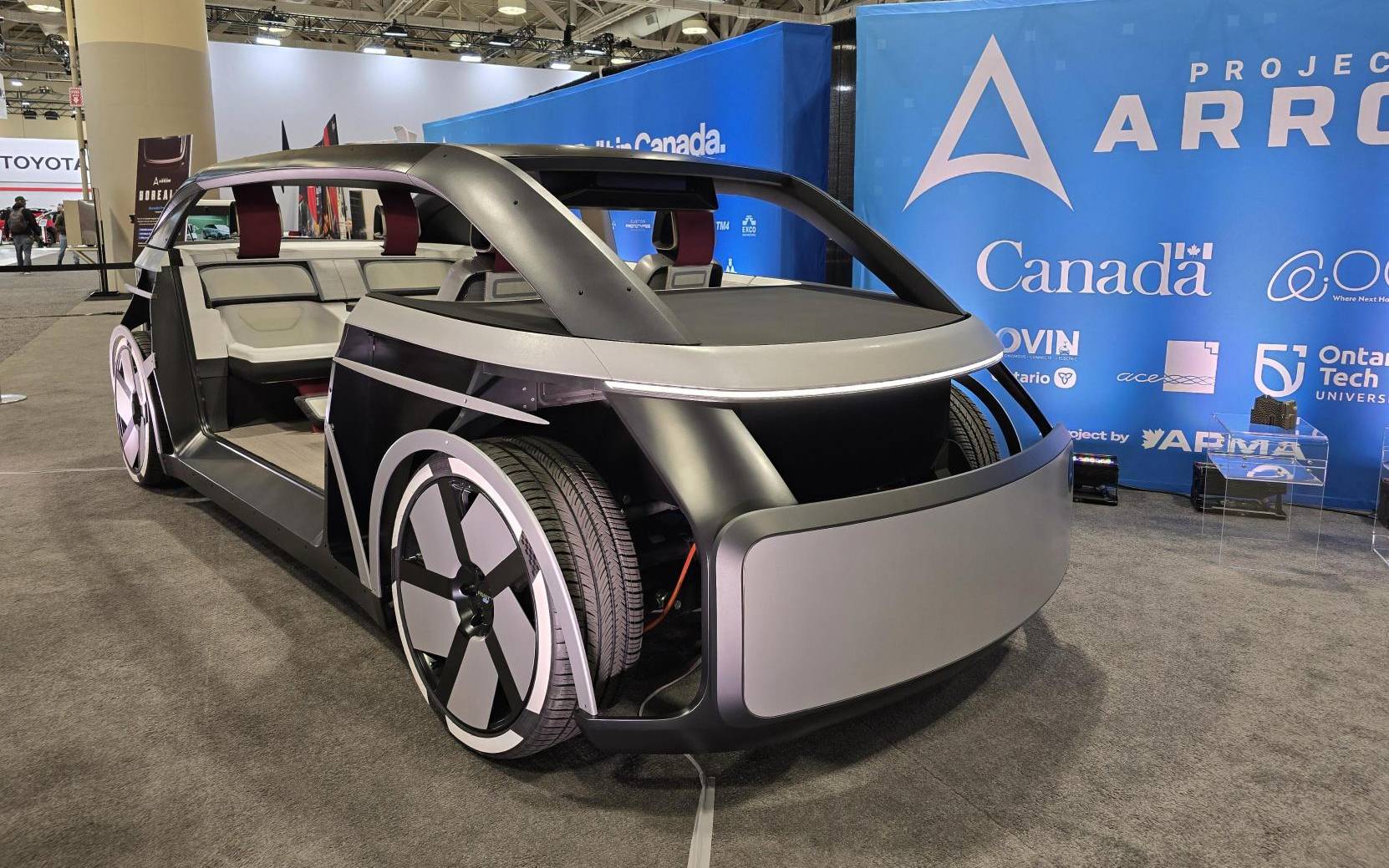
For its part, Borealis is a kind of shuttle without pedals or steering wheel, designed for fully autonomous driving (level 5). It is the ultimate connected vehicle, capable of interacting with other vehicles as well as with existing urban infrastructure and systems.
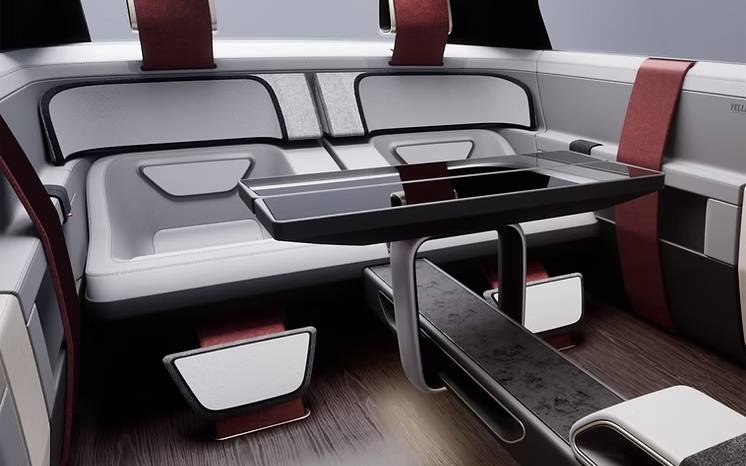
Technically speaking, the chassis is similar to that of the Vector, still featuring the magic of AI and 3D printing, but its range is said to be—brace yourself—1,500 km. Inside, the four seats face each other and are separated by a table.
“Project Arrow was born out of a national ambition to prove that Canada could design and build its own zero-emission vehicle,” said APMA President Flavio Volpe. “With Phase 2.0, we are evolving this platform toward the technologies, systems, and industrial capabilities that will define mobility in the 2030s and 2040s.”
Phase 2.0 of Project Arrow is funded in part by the Federal Economic Development Agency for Southern Ontario and the Ontario Vehicle Innovation Network.