

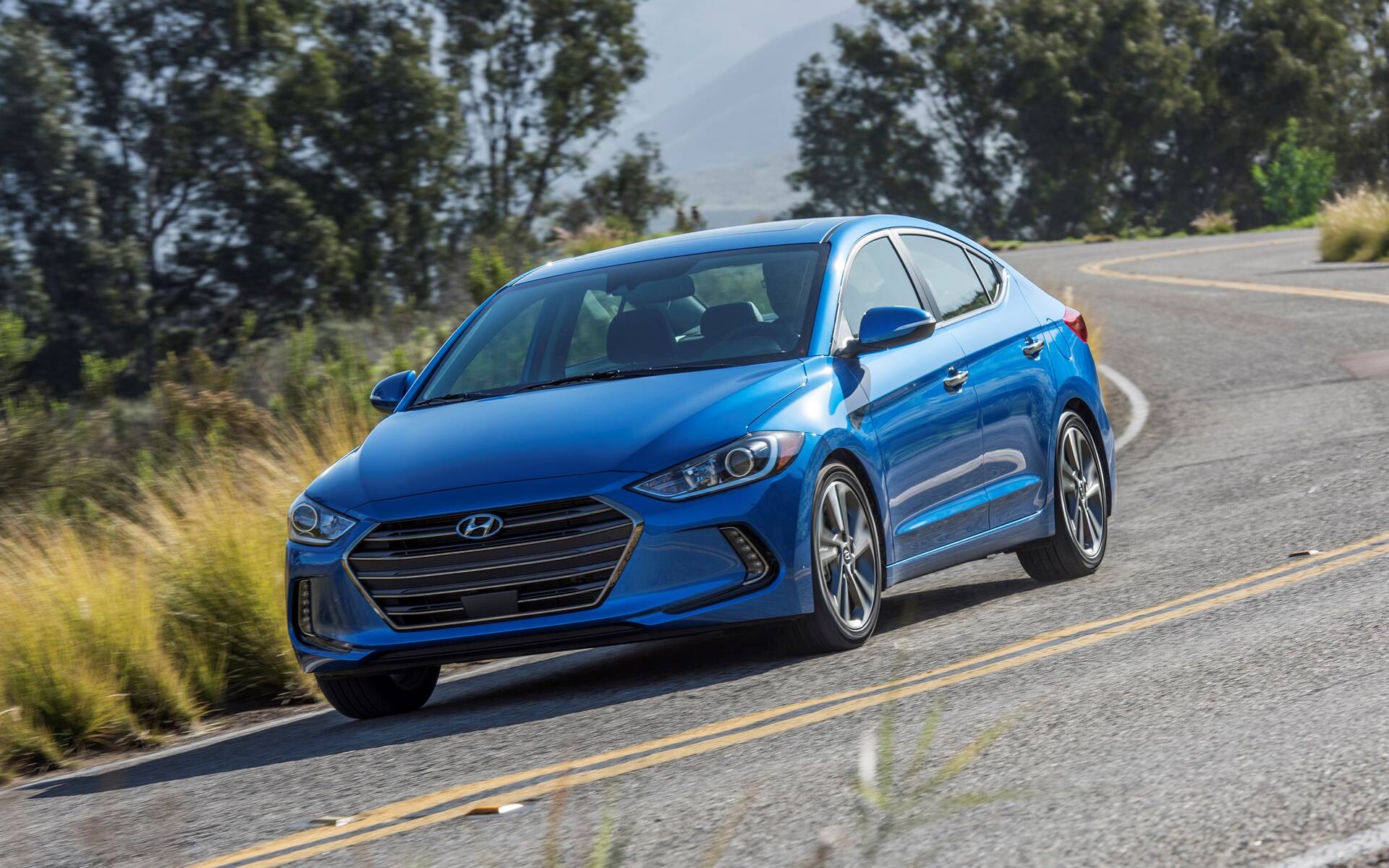
Hyundai Elantra 2017-2020: what to know before you buy?
The Hyundai Elantra is the third most popular compact car in Quebec and elsewhere in Canada, behind the Honda Civic and Toyota Corolla. Some would say that this is despite its exterior design, which is polarizing.
More conservative, the previous generation enjoyed a brief career of just four years, but that's not what should worry and hold back potential buyers looking for an affordable used sedan. Here's what you need to know about the 2017 to 2020 Hyundai Elantra...
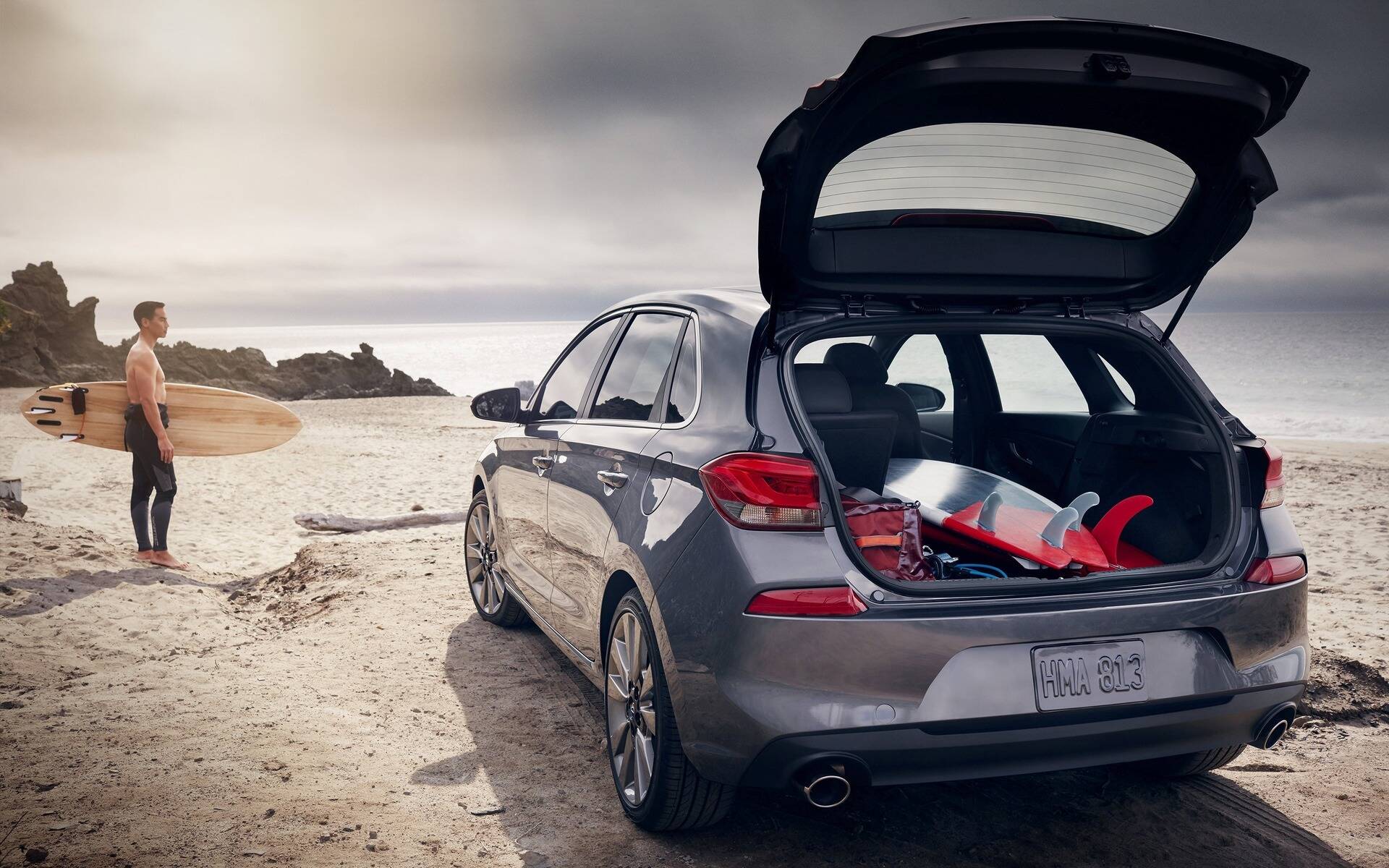
Firstly, in addition to the four-door model, the Elantra of this period also came in a hatchback format, the Elantra GT (redesigned for 2018). However, this is a car of a different design, actually derived from the Hyundai i30 sold in Europe. Its main advantage, of course, lies in its load capacity: with the rear seats folded down, the boot capacity increases from 651 to 1,444 liters (or from 705 to 1,560 liters in 2018), considerably more than the 408 liters of the sedan.
As for engines, the 147-hp, 2.0-liter, naturally-aspirated four-cylinder is used in all Hyundai/Kia models, and is rather frugal, averaging 7.4 L/100 km when paired with the six-speed automatic transmission (replacing the manual, which has the same number of gears). Its reliability record is far from spotless, but has improved since 2017.
The same engine in said Elantra GT was pushed to 173 hp in 2017, but only 161 hp afterward. Otherwise, the other alternative is a 1.6-liter turbocharged engine that generates 201 horsepower. Reserved for the Elantra Sport sedan, a direct rival to the Honda Civic Si and Volkswagen Jetta GLI, as well as the Elantra GT N Line, a rival to the Volkswagen Golf GTI, it teams up with the manual gearbox or a seven-speed dual-clutch automatic - alas, disappointing in its execution speed. It also comes with a firmer suspension setting.
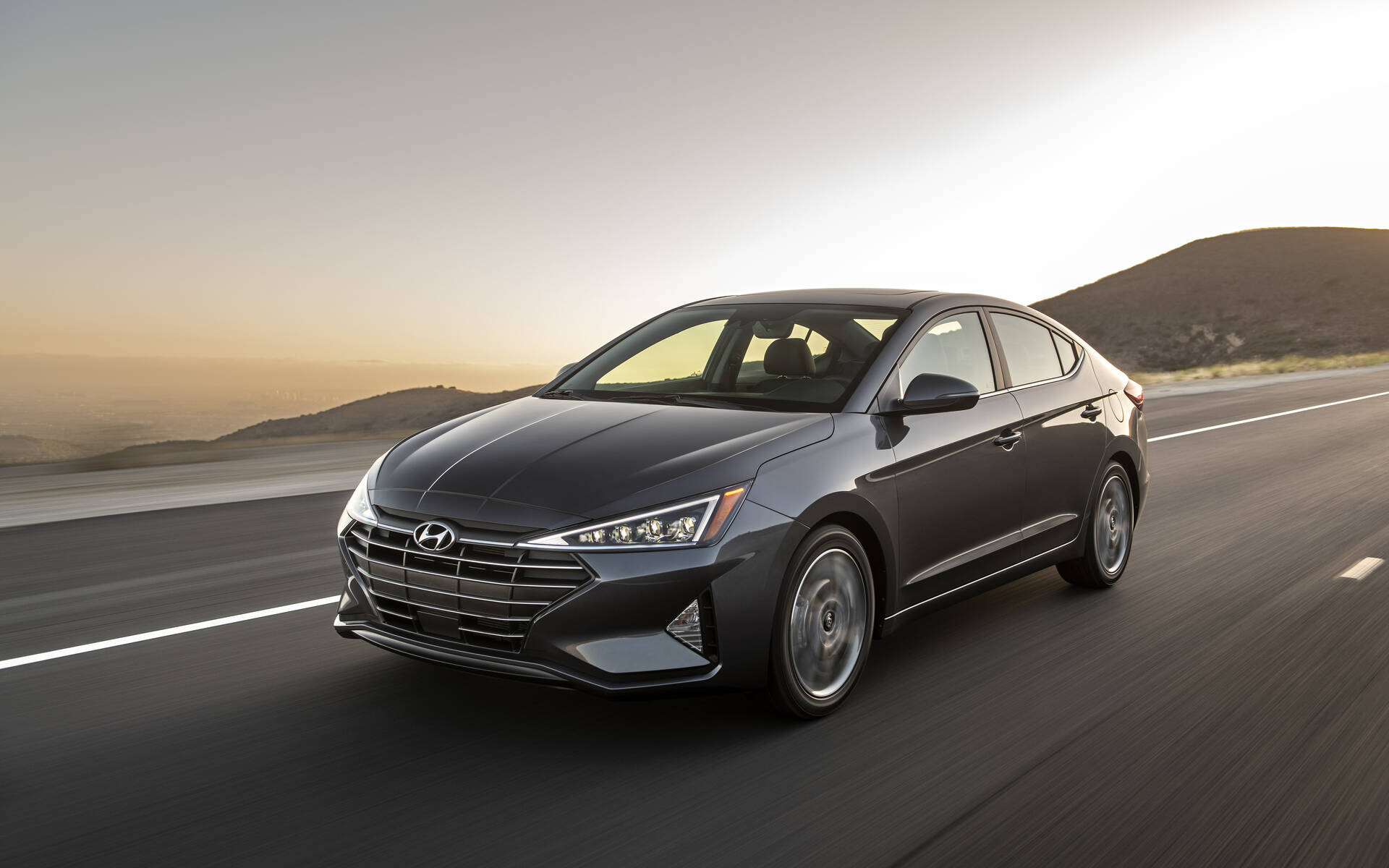
The Elantra has benefited from an aesthetic overhaul for 2019, including a much larger grille, triangular headlights and updated bumpers. Several state-of-the-art safety features have also made their appearance.
Then, in the last year of the generation, the base engine lost its conventional automatic gearbox in favor of a continuously variable transmission, all to save more fuel (average 6.8 L/100 km) but sacrifice a little driving pleasure.
In conclusion, Hyundai's compact car is an interesting choice because of its price/equipment ratio, solidity and ride comfort. That said, entry-level L versions are rather bare-bones in terms of amenities. Some competitors also burn slightly less fuel.
Happy shopping!