

How to recharge your electric car when parked on the street?
This question is worth asking when you find yourself in a situation where it is impossible to install a charging station when you live in an apartment and have to park your vehicle on the street. However, this is not necessarily an obstacle to the popular adoption of the electric car.
It depends on the overall autonomy of the vehicle and the annual mileage of the driver. For example, driving 50,000 km with a (former) Mitsubishi i-Miev (with a big 100 km range) will be quite complicated!
So let's consider a driver who travels 20,000 km per year in an electric car with an average range of 300 km (400 km in summer, 200 km in winter). A quick division brings us to 67 full recharges, or 1.28 recharges per week.
The bottom line is that under these conditions, there is no need to recharge every night. Now that the charging infrastructure has evolved to the point where you don't have to carry around a 100-foot extension cord (!), let's take a look at the main options available to drivers without a fixed parking spot.
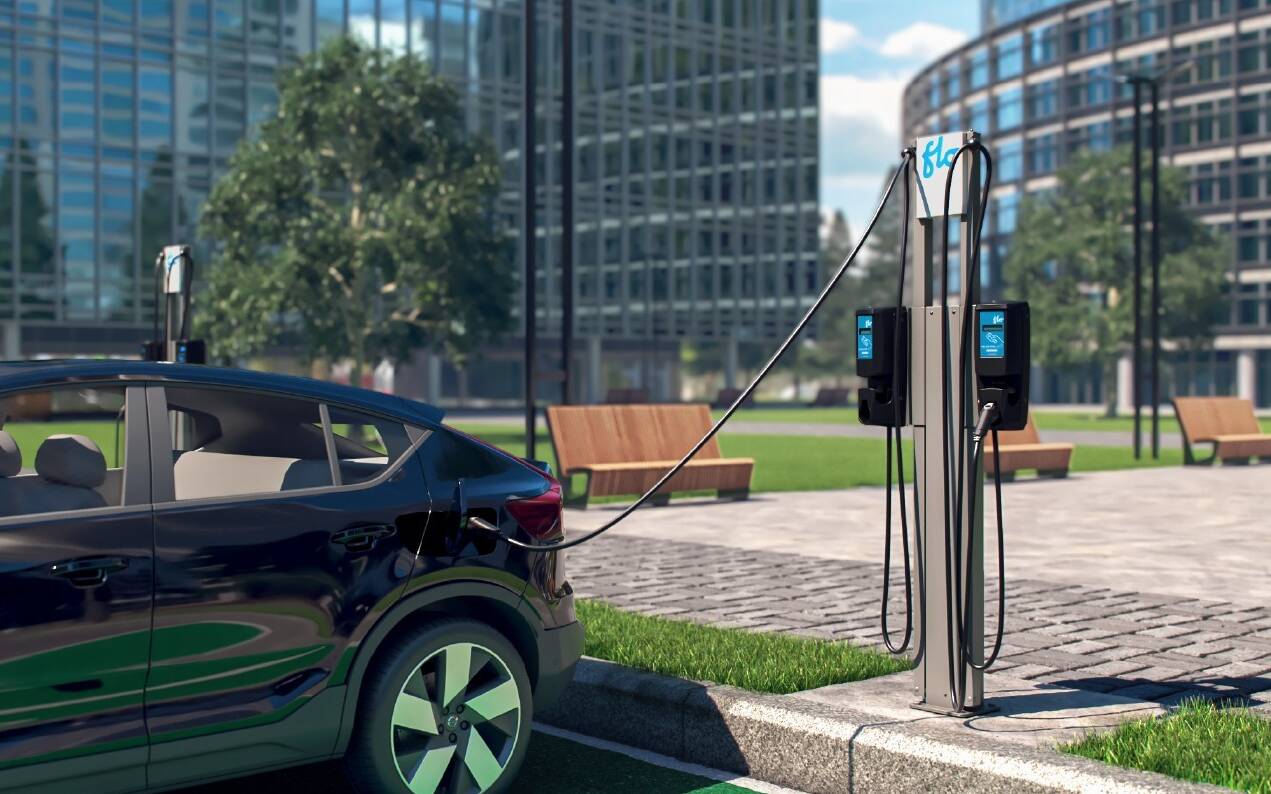
Charging with a street station
Hydro-Quebec's public charging network, the Electric Circuit, was born in 2012. At that time, there were only 34 charging stations available for electric vehicle owners. Eleven years later, there are more than 1,000 on the island of Montreal alone!
In 2014, downtown Montreal received four curbside SmartTWO-BSR charging stations from Quebec-based SME AddÉnergie. These Level 2 charging stations (7.2 kW at 240 V) are mounted on a double pedestal and equipped with 6.7-meter (22-foot) retractable cables, integrating with street furniture. Los Angeles and New York City were so pleased with the concept that they ordered several hundred units each. A great success for Quebec on the international scene!
There are also on-street electrical stations in the parking lots of several boroughs, which can be particularly useful during snow removal operations.
Nevertheless, there are some disadvantages. First, there is the obligation to unplug your vehicle if you don't want to pay for the use once the recharge is over. Second, you have to move it, and that can be difficult at night in denser boroughs, especially those that have opted for parking stickers.
Charging at work
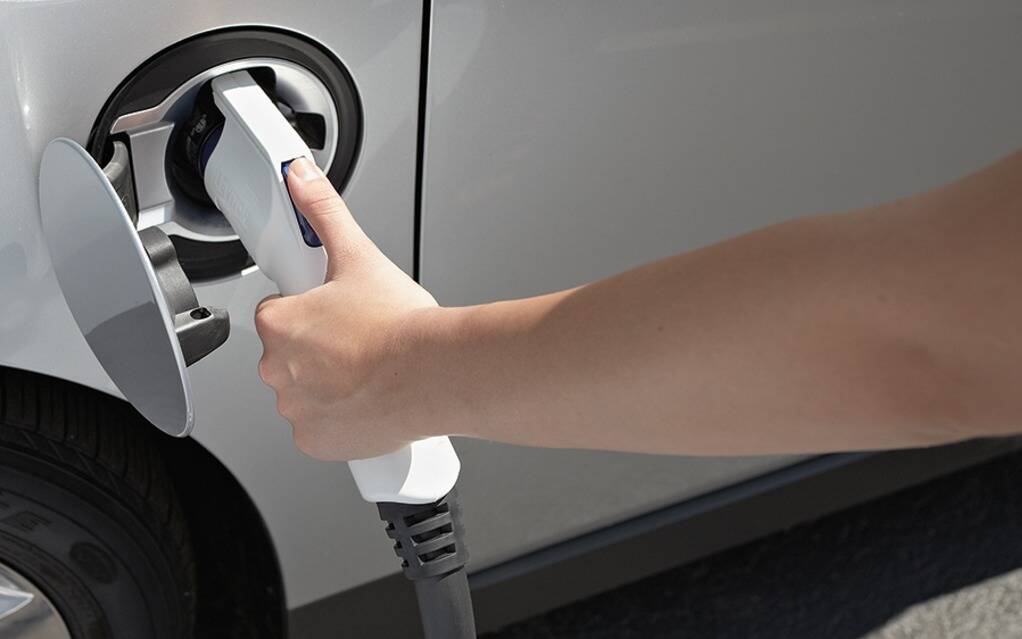
Some companies offer their employees free coffee and bagels, or soccer tables. Others are taking advantage of the Roulez Vert program grants to install charging stations (up to 50% of eligible expenses). Previously, the program required free charging for the first three years of operation, however this is no longer the case as of 2019.
That said, the cost of use is not very high: considering rate G (used by 90% of Hydro-Quebec's business customers), the cost of electricity is $5.18 after 8 hours of charging. By the way, the coffee/bagel duo is more expensive at Starbucks...
Charging at the mall
Many businesses offer charging stations to their customers. Metro Richelieu was one of the first Electric Circuit partners in 2012 to provide Level 2 charging to its customers. Eight years later, IGA went one better with ChargePoint fast charging stations with a maximum power of 125 kW. Recently, 24 kW charging stations have been introduced in some shopping centers.
The advantage? These ABB Terra DC Wallboxes can provide this intermediate power from a single or three-phase 208/240V AC power source. In other words, unlike a DC fast-charging station that requires a 480V source, the installation does not require a 600V to 480V transformer, which is much more economical.
Moreover, this is the solution that was chosen at the Domaine station in the La Vérendrye wildlife reserve, since no 600 V line serves this location. In short, with terminals of different powers, we offer more flexibility to motorists.
One last clarification...
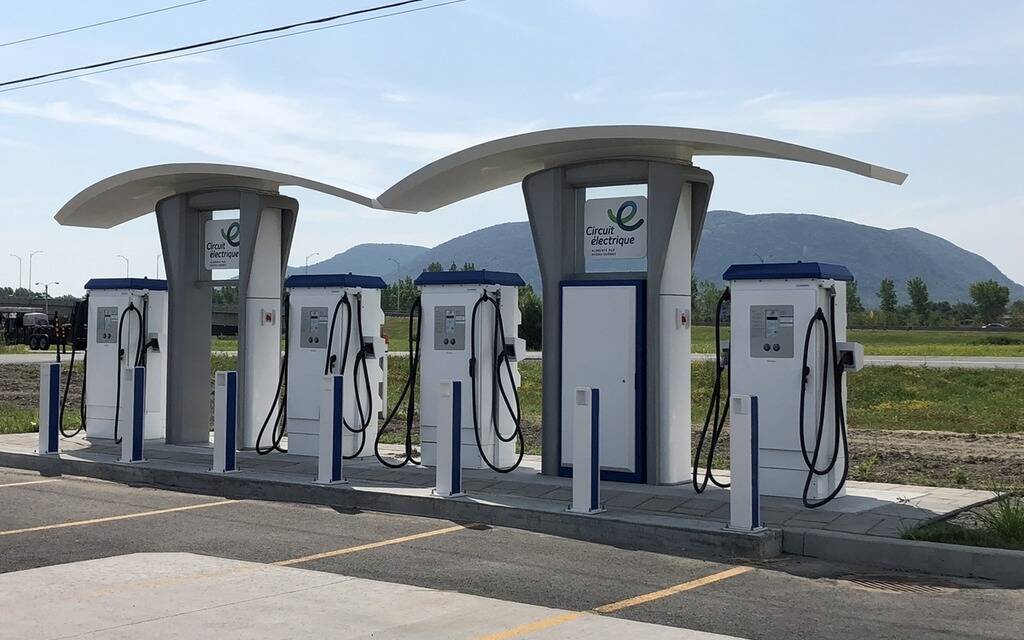
The author of these lines has deliberately omitted to mention fast charging stations. Indeed, the purpose of this article was to prove that a driver without a private parking lot could drive in 100% electric mode, and this, without using daily charging stations that are more expensive to install (and to use) and demanding in terms of electric power.
Obviously, various municipalities in Quebec are much better equipped with charging infrastructure. Without wanting to start another war between Montreal and Quebec City, in this situation, the metropolis is clearly the winner.
Provided the various levels of government continue to invest in ongoing expansion, the majority of the population can be well served by the above solutions.