


How to Calculate Your Fuel Consumption?
Whether gas (or diesel) prices are high or low, just about everyone wants to save on fuel, right? The choice of vehicle and driving habits obviously have a direct and major impact.
The fuel consumption ratings published by Natural Resources Canada are a good reference, but despite the changes made to the calculation method since the 2015 model year to better reflect reality, these ratings do not tell the whole story. How do you know how much gas your car, SUV or pickup truck is actually using at any time of the year?
All new models sold today have a fuel gauge on the dashboard. Some give the average since leaving the factory, the last fill-up, the last start, or the last reset. Others can even display the consumption in real time, which makes it possible to concretely see the effect of a sudden acceleration or a climb, for example.
How accurate are these indicators? Here too, the technology has improved considerably in recent years, and you can generally rely on it to get a good idea of your consumption.
That said, nothing prevents you from calculating it “by hand”. Don’t worry, it’s pretty easy!
A Very Simple Calculation
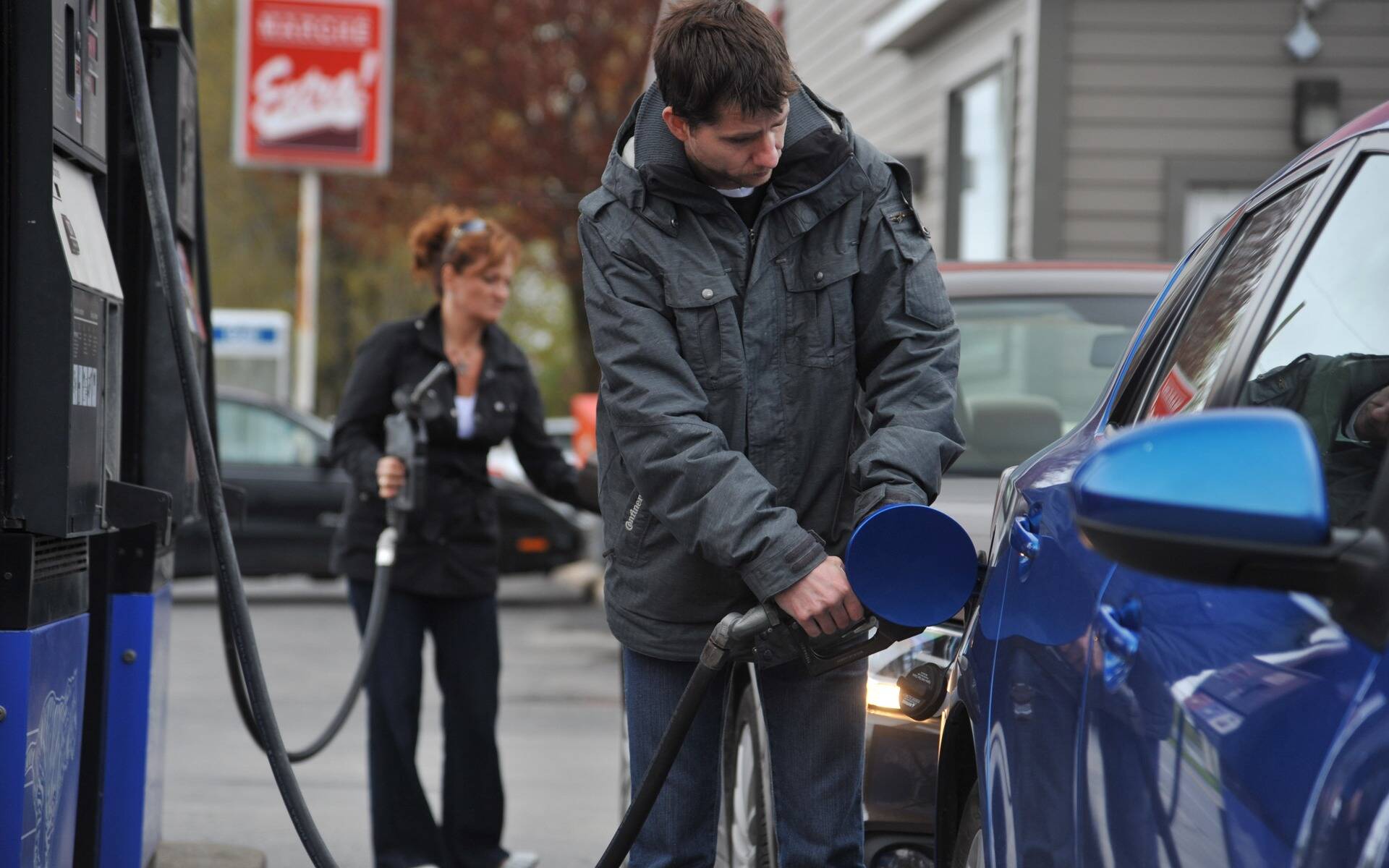
Forget about the miles per gallon from the good old days or from our American neighbours, and focus on litres per 100 kilometres (L/100 km) instead, which is the measurement of the metric system. After filling up the gas tank, write down your exact mileage, ideally with a one-tenth precision. Another possibility: reset the trip counter, do your driving, then go to a gas station to refill.
This is where the calculation begins. First note the amount of fuel you just put in your tank. Then, do the same with the distance travelled since the last fill-up. Now all you need to do is to apply a rule of three to determine your consumption.
For example, 34.75 litres were needed to fill up after you’ve driven 395.6 kilometres. So, 34.75 multiplied by 100 divided by 395.6 = 8.78 L/100 km.
Repeat the exercise a few times and compare the results with your dashboard readings. If the numbers match often enough, you can trust your gas mileage gauge … and stop bothering with the math!