

Here's why your vehicle rarely indicates the right temperature
Summer is in full swing and the hot days are multiplying, much to the delight of some, but not for others. And as we explained in a recent article, heat can have a number of adverse effects on vehicles.
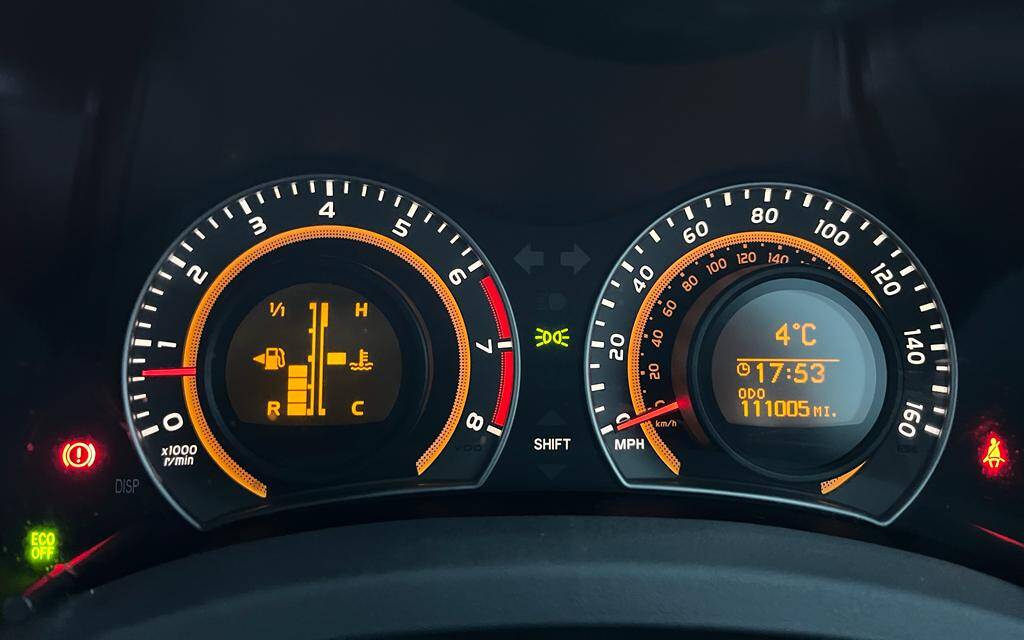
Continuing the same theme, have you ever noticed that the outside temperature gauge on the dashboard often tells you lies? Nothing major, of course, but let's just say it's rarely accurate. The reason is simple.
Cars don't use a good old-fashioned mercury thermometer to tell us the truth about the weather. Instead, they use a thermistor, a device designed to measure temperature based on variations in electrical resistance. In fact, it's one of the main temperature sensors used in electronics.

Roughly speaking, electrical resistance varies under the effect of heat and cold, which is detected by a thermistor, and with great precision, I might add.
The problem is that carmakers usually install them at the front of the vehicle, near the grille. This is an area that is quite directly exposed to the heat radiating from the road. As a result, the temperature indicated on the dashboard and the actual outside temperature may differ by a few degrees, or even more in cases of intense heat.
In winter, a driver could be misled into not suspecting the presence of black ice in certain areas.
In short, to know the exact temperature outside your vehicle, rely more on your favorite weather site... but not while driving, of course!