

How do run-flat tires work?
No driver is safe from a puncture. Are they? Some tires are able to withstand such an unfortunate event and allow you to continue driving for a good distance. So you don't have to stop immediately to change the tire. These tires are typically found on models without spare tires.
They're called run-flat tires. But how exactly do they work?
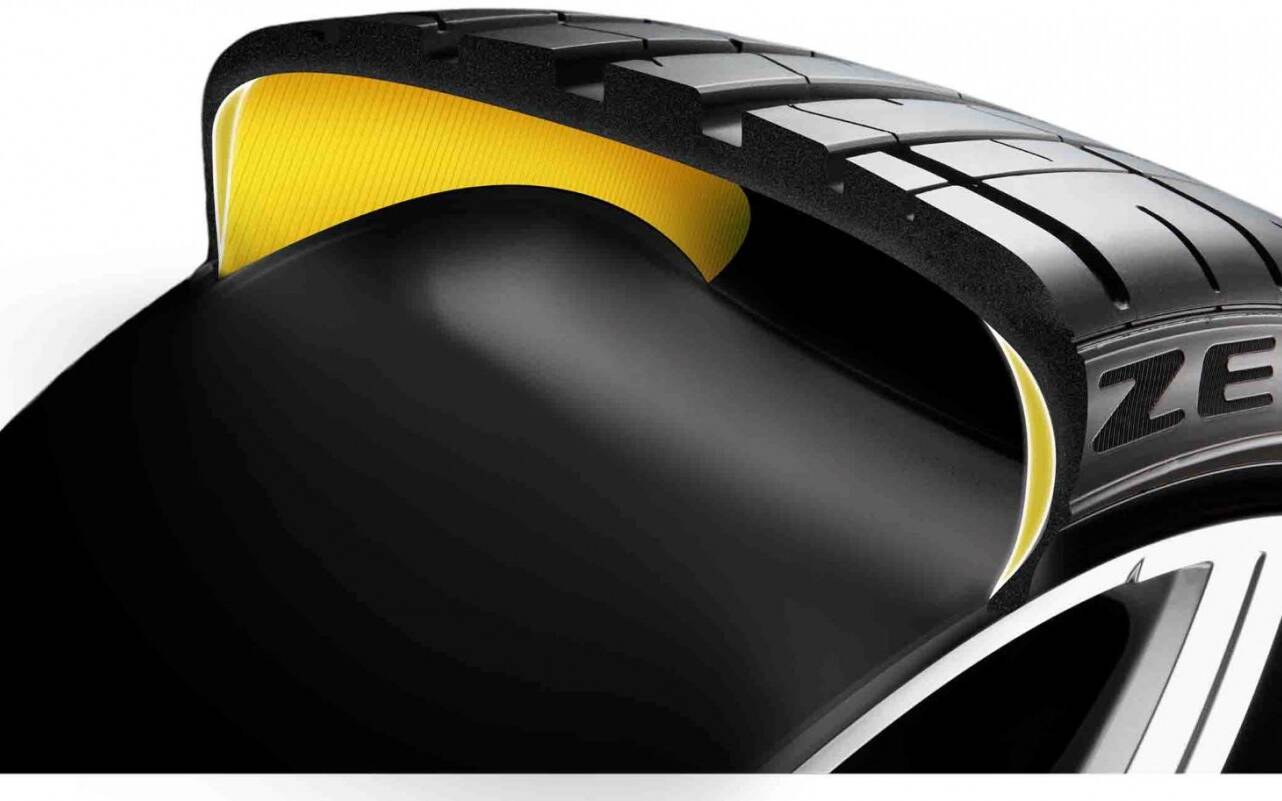
First of all, it's important to know that these tires have specific reinforcements inserted into the sidewall structure, ensuring greater rigidity. These reinforcements are designed to support the vehicle's lateral and transverse loads even in the event of a substantial or total loss of air pressure inside the tire, as explained in the following Pirelli video:
For safety reasons, run-flat tires may only be fitted to vehicles fitted with an air pressure monitoring system and an electronic stability control system.
Now, what to do after a puncture? Nokian, another tire manufacturer offering run-flat models, recommends a maximum speed of 80 km/h, or 50 km/h if the road is slippery or in poor condition. Generally speaking, you can expect to travel at least 50 km with the vehicle fully loaded, and up to 150 km without passengers or luggage on board.
This leaves plenty of time to get home or to a dealer to have the tire inspected and repaired (which is possible if the puncture is small enough and the tire hasn't run too flat), or to replace it.