

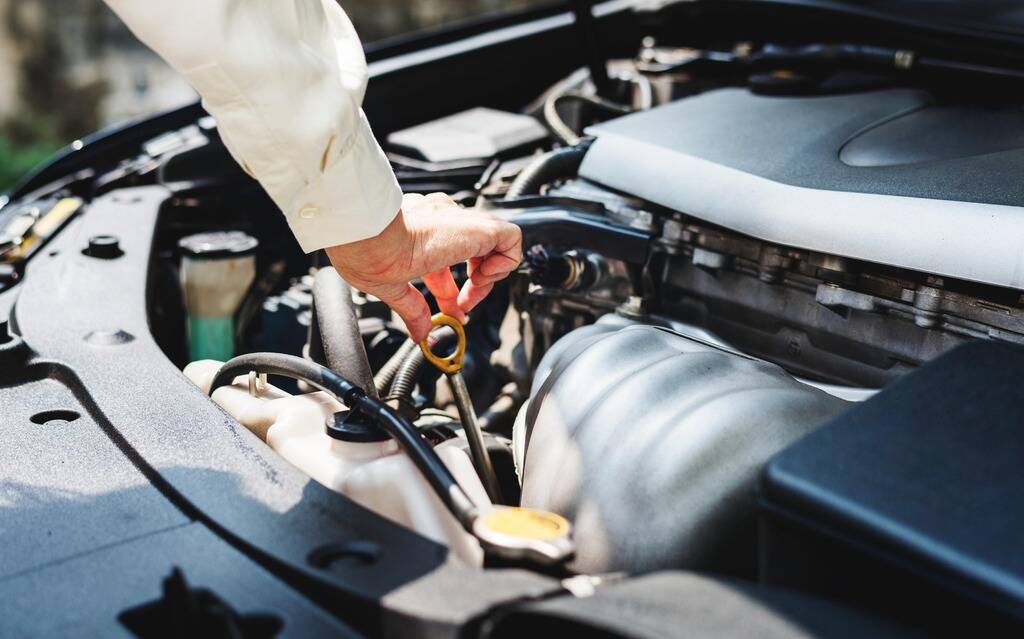
5 essential car fluids and when to replace them
Do you know what essential oils are? No, not the kind used to diffuse a sweet fragrance inside the home, but rather the kind used to keep a vehicle running smoothly.
Whether they play a lubricating or cooling role, these fluids are vital and should not be neglected. Of course, it's a good idea to follow the manufacturer's maintenance schedule. This information can be found in the vehicle owner's manual and on the company's website.
Engine oil tops the list, and should be replaced systematically. For others, an annual check is often advisable, to determine whether or not an oil change is necessary. Being exposed to the elements or subjected to more abuse, some fluids degrade more rapidly than others.
Let's take a closer look at five essential fluids in your car and when they usually need replacing:
1. Engine oil
As mentioned earlier, engine oil is the most important fluid - unless, of course, you drive an electric car! It's no longer true that you have to change it every 5,000 km, because these days, engine technology and the oil itself have come a long way. It's not uncommon to see manufacturers recommending intervals of 8,000 to 15,000 km between oil changes. It's always best to rely on your owner's manual. However, don't overdo it: over time, the oil's properties degrade and it loses its ability to lubricate surfaces properly. The result is friction, which wears down parts even more.
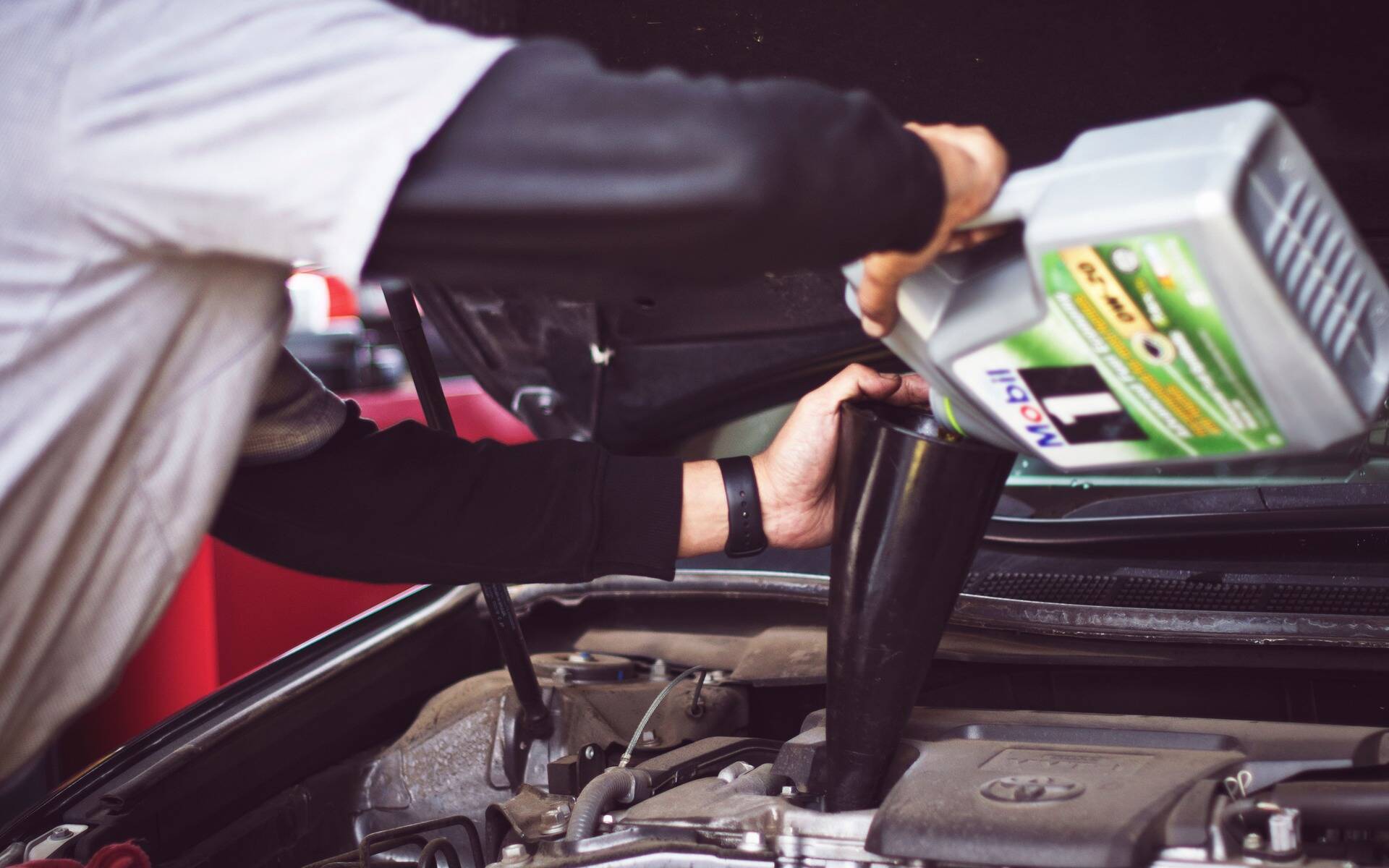
Choosing synthetic oil over mineral oil depends on your engine type, operating conditions and budget, but you should know that synthetic oil lasts longer. You'll be able to space out your oil changes. Some companies go so far as to prescribe intervals of 15,000 to 20,000 km between servicing.
2. Transmission oil
Like engine oil, transmission oil is used to lubricate transmission components. It is typically light red in color. If you notice that the level in the reservoir is low, or that the color is darkening - a sign of contamination - it's time to do something about it.
Service intervals vary widely from one make and type of vehicle to another, so it's all the more important to check the owner's manual. Manual gearboxes require more frequent replacement (often between 48,000 and 72,000 km) than automatic gearboxes (often between 96,000 and 160,000 km).
3. Brake fluid
Without this fluid, the braking system can't function, and the vehicle can't stop quickly. If you notice that the pedal is less responsive and braking distances are getting longer, you should carry out an inspection.
Once again, the useful life of the fluid depends on how the vehicle is used. If the vehicle is driven mainly in the city, and regularly under heavy braking, it will need to be replaced sooner rather than later. As a general rule, it's best to change the fluid every two years or 40,000 km, at the same time as servicing the brakes.
4. Cooling fluid
As the name suggests, this fluid is used to cool the engine, keeping it at optimum operating temperature and preventing overheating. It is typically green in color, although several other colors are also available. If the level is below the minimum indicator in the reservoir, or if the color changes, indicating contamination, it's time to do something about it.
Green coolant contains inorganic oxides such as silicates and phosphates, which form a protective barrier. It should be replaced every 3 to 5 years. A long-life coolant containing carboxylates, on the other hand, may never need replacing.
5. Power steering fluid
A vehicle's power steering system needs the right amount and quality of oil to ensure smooth, effortless operation of the steering wheel. Then again, this fluid can end up contaminated and lose its properties.
Depending on the vehicle and manufacturer, oil change intervals vary roughly from 60,000 to 130,000 km. Check your owner's manual for more details.
Oh, and last but not least, don't forget the windshield washer fluid! As the cold season approaches, make sure yours contains a low-temperature antifreeze, and keep a full container in the trunk for emergencies. In autumn and winter, the reservoir empties much faster!