

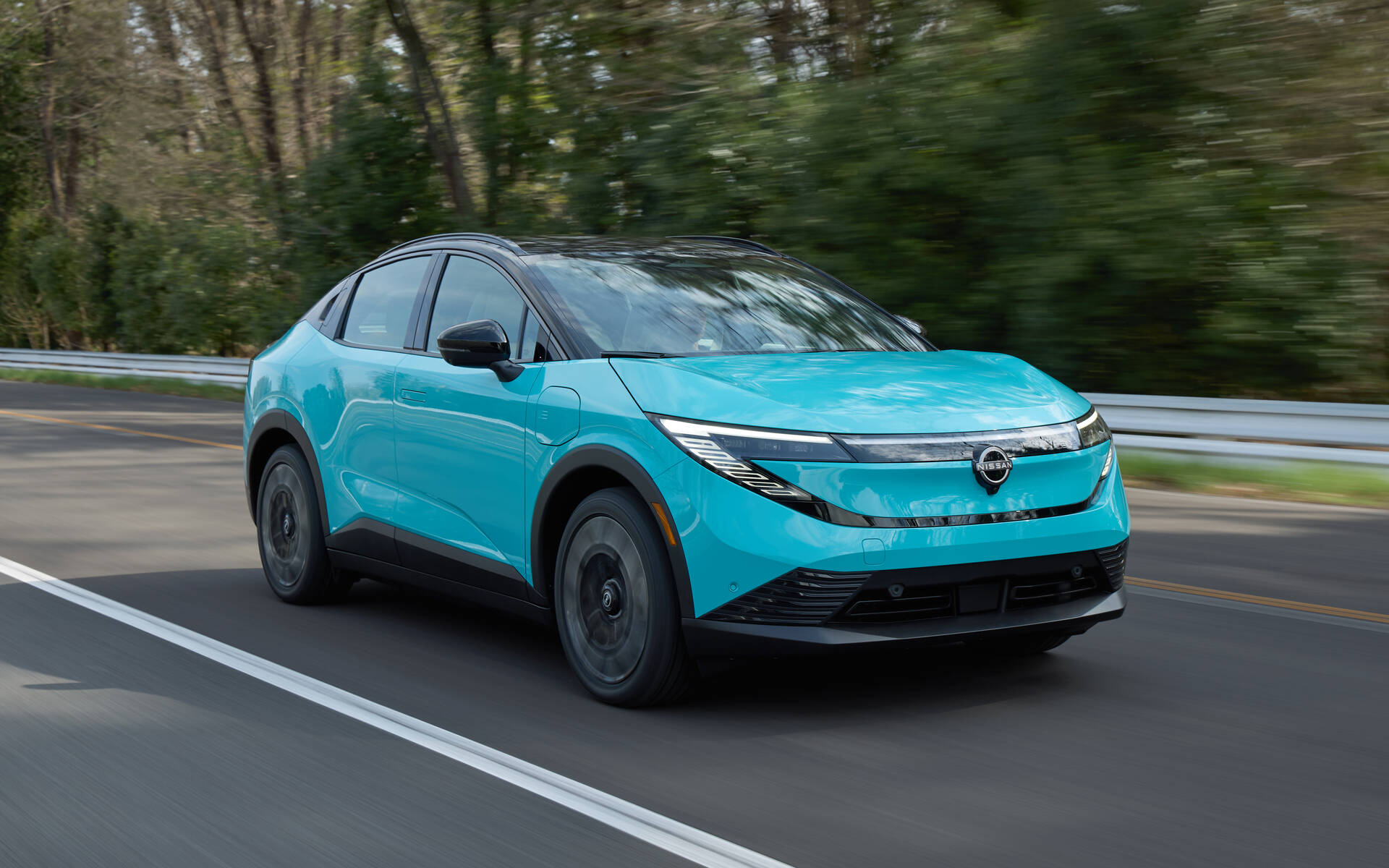
Nissan LEAF 2026: five things you need to know
The name remains, but everything else is different. For 2026, the third-generation Nissan LEAF is no longer the compact electric hatchback we've known since 2011. Instead, it's a small, coupe-like SUV whose design, technology and performance take a giant leap forward.
While we await its arrival in dealerships this autumn, as well as the announcement of prices, here are five things to know about it:
1. A smaller format, surprisingly
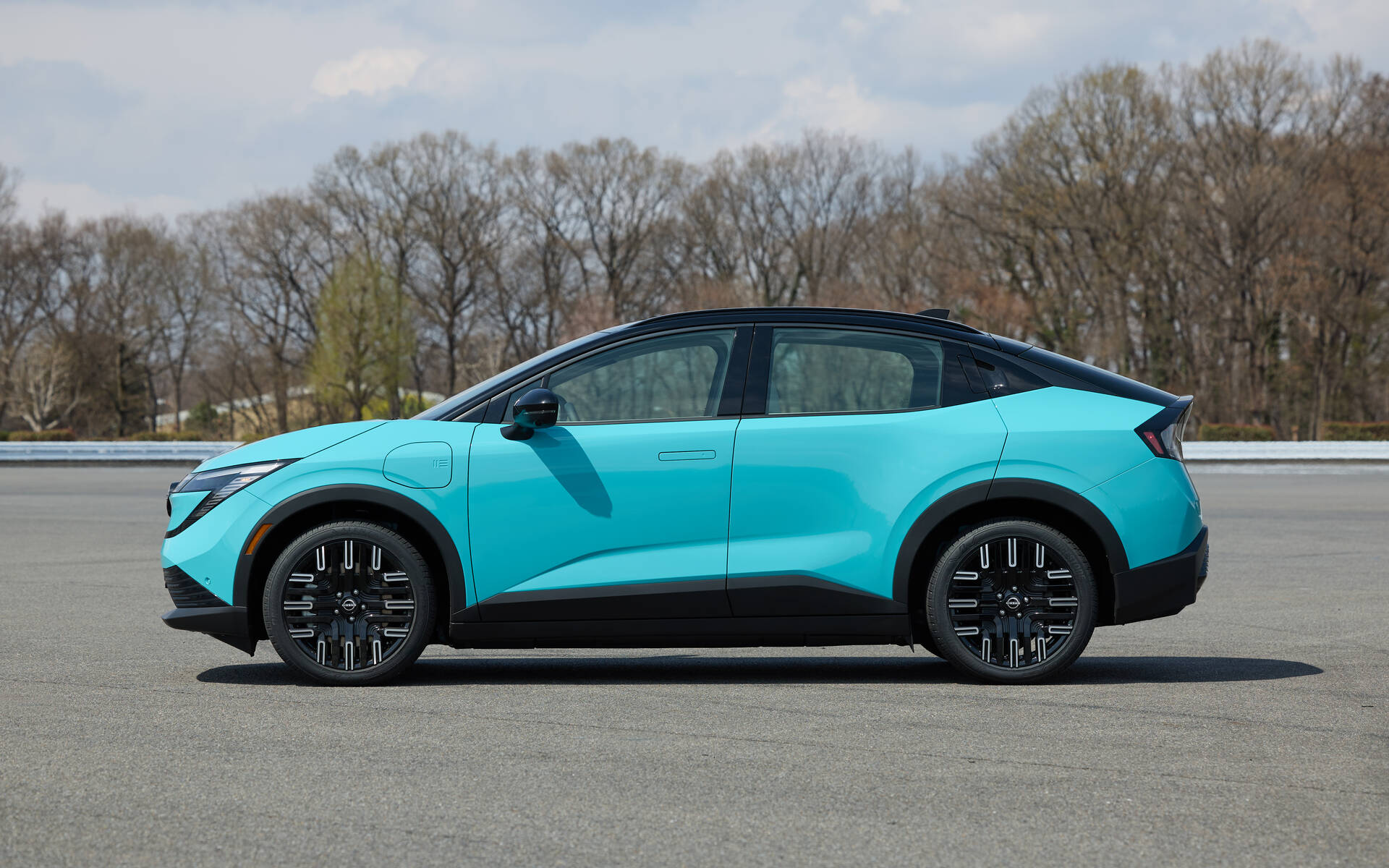
The vehicle was expected to bridge the gap between the outgoing LEAF and the compact Ariya crossover in terms of dimensions, but in the end, this is not the case. Length (4,404 mm), wheelbase (2,690 mm) and height (1,557 mm) are down by 76, 10 and 8 mm respectively. Only the width has increased (1,811 mm, a gain of 21 mm).
At the same time, the cargo area has shrunk from 668 to 566 liters. With the bench seat folded, cargo volume increases to 1,572 liters, according to Nissan. And if you think the weight has decreased, think again: instead of 1,620 to 1,773 kg, it now varies from 1,802 to 1,991 kg. Blame the new batteries...
2. Four versions, two batteries
In Canada, the Nissan LEAF 2026 will be available in four versions: S, S+, SV+ and Platinum+. The first is the only one to use the smaller of the two batteries on the menu, with a capacity of 53 kWh (formerly 40 kWh). Its range is yet to be determined, but will undoubtedly be much greater than the current 240 km. Power and torque climb to 174 hp (+27) and 254 lb-ft (+18).
The largest battery is announced at 75 kWh (formerly 60 kWh) and should provide, according to Nissan estimates, a range of between 417 and 488 km depending on version. That's much better and more competitive than the 341 km currently on offer. What's more, while the 214 hp don't change here, the torque is slightly increased to 261 lb-ft (+11). By the way, acceleration times from 0 to 100 km/h are not yet known, and only the two top versions offer steering-wheel-mounted paddles to adjust regenerative braking.
3. Better recharging

Instead of being limited to 100 kW, the Nissan LEAF 2026's DC fast-charging capacity can reach 150 kW: according to Nissan, 35 minutes will be enough to bring the battery back from 10% to 80%, instead of 45 minutes. There are two charging ports, one NACS-type on the passenger fender for direct access to Tesla's Superchargers, and one J1772-type on the driver's fender for connection at home or at work to a Level 2 AC terminal (charging time unspecified).
This is the first Nissan vehicle to offer the “Plug & Charge” function. Once activated, simply plug the LEAF into a compatible charging station and the session starts automatically, without the need for an application or payment card. In addition, the new bi-directional charging function (V2L) will enable electrical appliances to be powered or recharged using an adapter.
Other important points: the battery's thermal management system has been improved, and an energy-efficient heat pump has been integrated, which will preserve the battery's charge in cold weather.
4. Variable styling

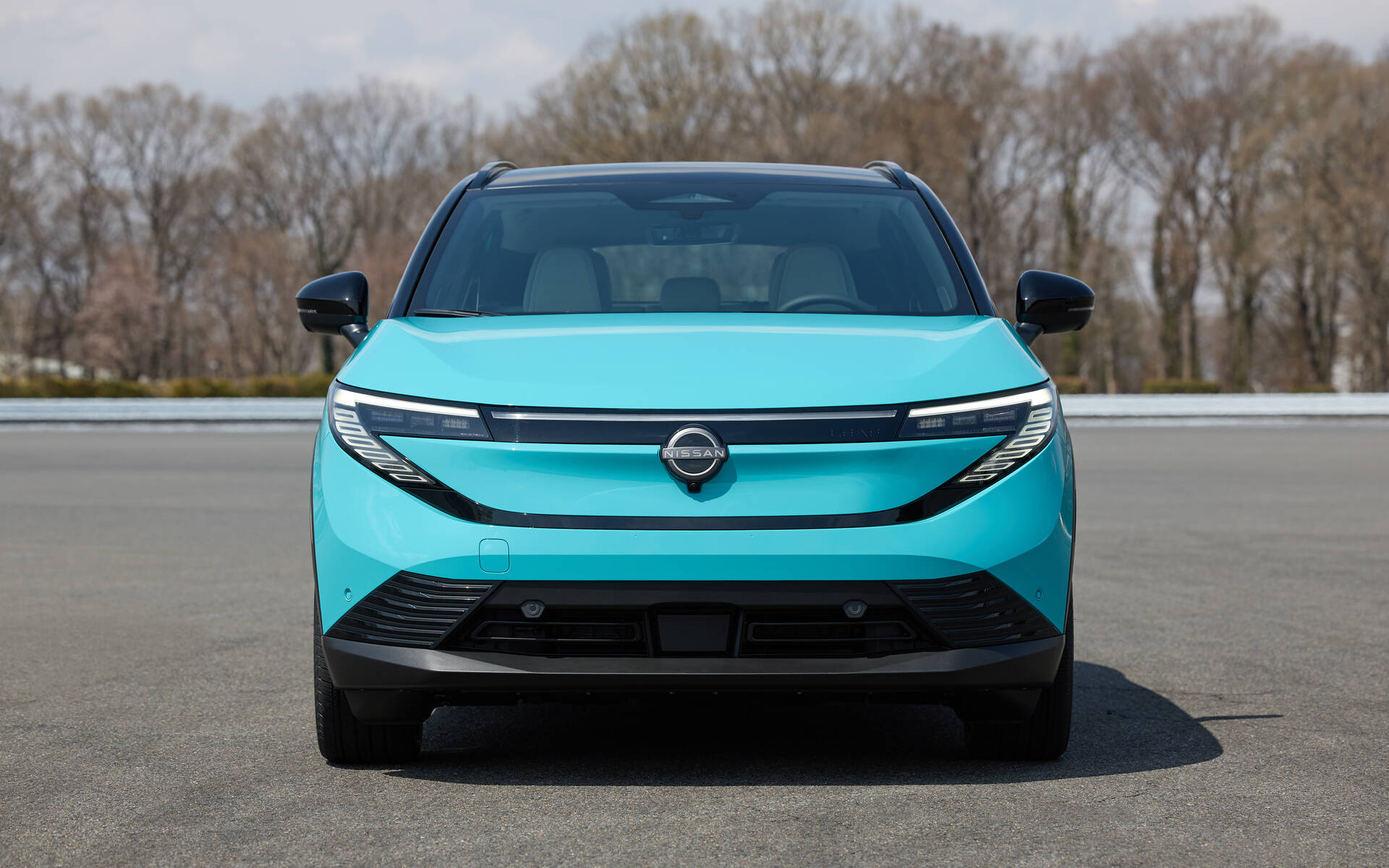
As mentioned in our previous articles, the new design of the Nissan LEAF 2026 makes it the most aerodynamic vehicle in the manufacturer's history (coefficient of drag of just 0.26) and considerably more stylish than the first two generations. However, it can differ widely.
Wheels measure 18 or 19 inches, those on the S and S+ versions being steel with hubcaps, alas. These more affordable LEAFs don't get the black treatment on the rear or the Nissan Z-inspired lights that give a sportier appearance - that's reserved for the Platinum+. Finally, eight body colors make up the palette, four of which are accompanied by a contrasting black roof.
5. Full of sight and sound
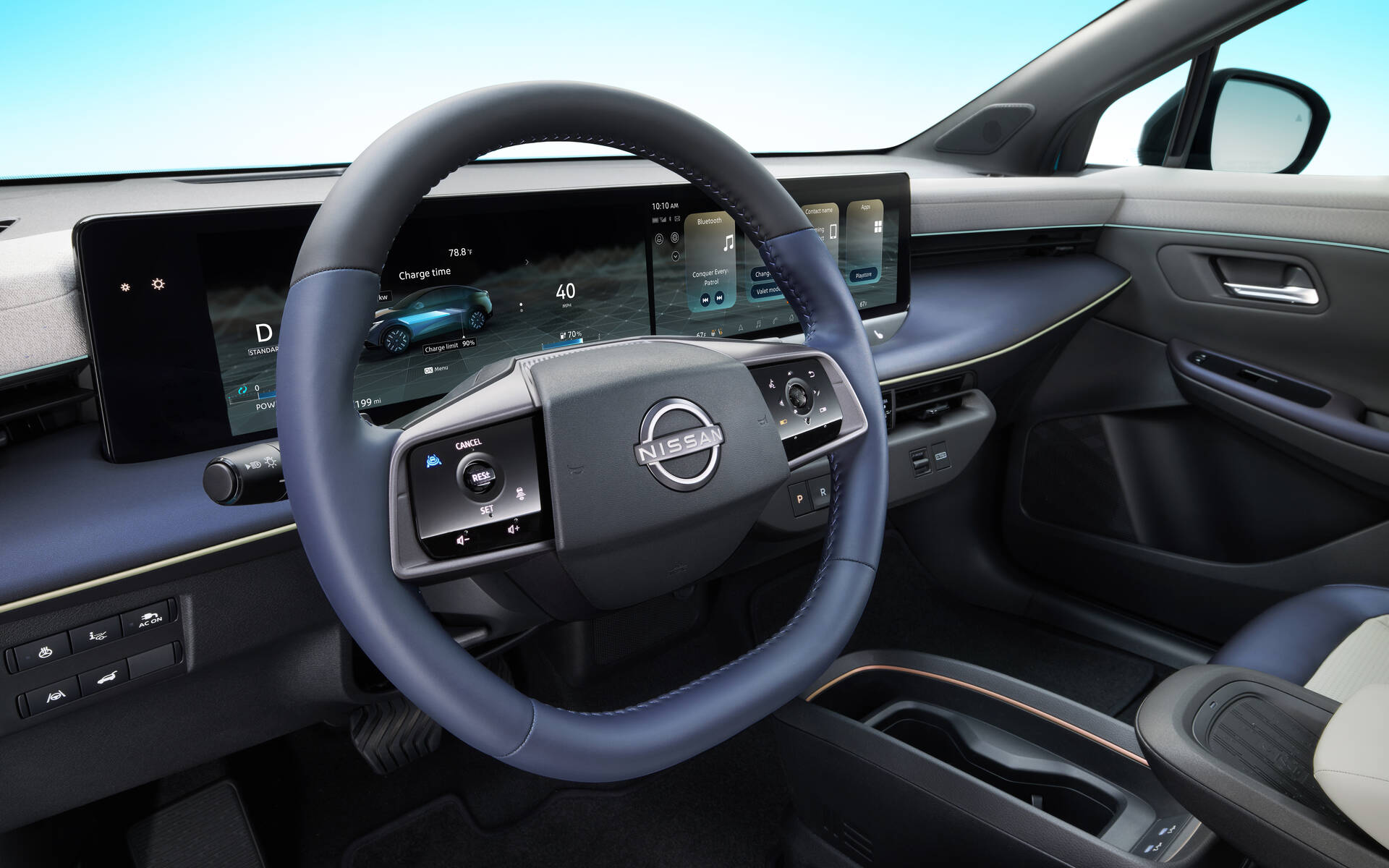
As far as the interior is concerned, the transformation of the décor is achieved first and foremost by the two large screens on the dashboard, following the industry trend. Those on the S and S+ versions measure 12.3 inches, while the SV+ and Platinum+ have 14.3-inch screens. Apple CarPlay and wireless Android Auto are included as standard.
The top-of-the-range version integrates Google functionalities right into the multimedia system. It also boasts a panoramic roof with variable opacity, 64-color ambient lighting and a 10-speaker Bose Personal Plus audio system, including speakers integrated into the front headrests, as in the Kicks.