


Car dealers will face discipline from the CCAQ
The Corporation des concessionnaires automobiles du Québec (CCAQ) is setting up a disciplinary committee to call its recalcitrant members to order, improve its public image, and preserve its business model at a time when Amazon has started selling cars online.
The Professional Conduct and Discipline Committee (PCD) will be launched in a few weeks.
Its seeds were sown in April 2023 when dealers got together to discuss the future.
"The conclusion was that we have a trust deficit with the general public. Our members have their names on their businesses, they are proud, and they did not accept these conclusions. The sustainability of our business model depends on our ability to meet the legitimate demands of our customers. Dealers have asked us to give them the tools they need to move forward. We are aware that we have things to change," said Ian P. Sam Yue Chi, CEO of the CCAQ.
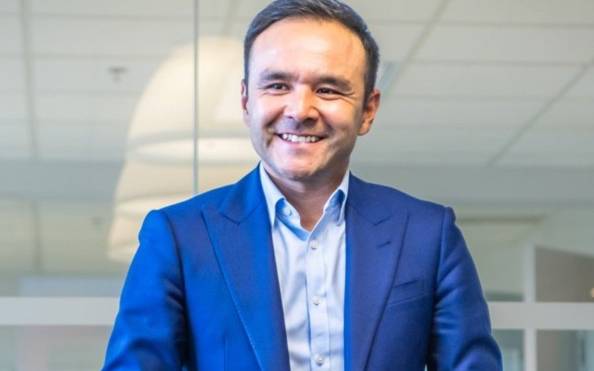
In an effort to regain consumer confidence and change the sometimes negative image of car salespeople, the CCAQ has established a certification process.
“We equip workers with the tools they need to fulfill their professional responsibilities under the laws that govern them, and we incorporate ethical considerations into their training to guide their approach to customers,” he emphasizes.
To obtain certification, dealers must also adopt a code of ethics and participate in the Office of Consumer Protection's online mediation service, Parle consommation (see separate text).
Standing FirmThe CCPD will have the power to go as far as revoking a dealer's CCAQ membership.
"Customers will have the choice between a CCAQ-certified dealer or a dealer that has been removed from the group. Decisions will be made public. We want to show consumers that yes, there are bad practices in our industry, but there is also a strong desire to do better," says Mr. Yue Chi.
The CCAQ took a step-by-step approach, first training executives and managers, then sales teams. It is now moving on to integrating technical advisors to include after-sales service and repairs in the certification process.

“We have a critical mass of dealers already on board with the initiative, with 60% of our 890 members having completed their certification and 15% currently in the process of doing so,” explains Mr. Yue Chi.
He points out that the CCPD's role is to guide CCAQ members and not to compensate aggrieved customers, “who have access to other remedies,” he says.
UpheavalsIn recent years, IT platforms such as Airbnb and Uber have had a profound impact on the hotel industry and on taxi and restaurant delivery services, respectively.
A similar trend has begun in the automotive industry. Brands specializing in electric vehicles, such as Tesla and VinFast, sell directly to buyers. And in the United States, Amazon has started selling recent used cars.
“That's one of the reasons we decided to pursue certification,” insists Mr. Yue Chi. “We want to increase the added value of doing business with a local merchant in order to counter the threat posed by other business models.”
And contrary to what one might think, it wasn't difficult to convince dealers to join the certification program.
“The conclusion was that we would not be able to change perceptions about us, which are sometimes justified, without working collectively. At our meeting in April 2023, 56% of our members were present and 97% voted in favor of our plan,” notes Ian P. Sam Yue Chi.
The Professional Conduct and Discipline Committee (PCDC)
- Will be launched in a few weeks.
- Composed of an independent lawyer with expertise in ethics as chair, a member of the public, and representatives of certified dealers.
- Will be called upon to rule on misconduct by a certified member.
- May impose penalties and even revoke the delinquent dealer's CCAQ membership status.
- The decisions will be made public.
- The list of certified dealers is available on the CCAQ website. Starting this summer, dealers will be able to display their certification on their business premises.
The dealership industry in Quebec
- 890 companies
- 63,000 jobs
- $1.5 billion in tax revenue for governments
Source: CCAQ
Already more than 500 dealers registered for mediation
Since August 2024, the number of car dealers participating in the Parle consommation online mediation tool has risen from 40 to 564 due to the code of ethics implemented by the Corporation des concessionnaires automobiles du Québec (CCAQ).
The Office of Consumer Protection (OPC) launched this platform in 2016. It allows attempts to be made to find a solution to a dispute between a customer and a merchant without going to court.
This means that car dealerships account for more than 85% of the 657 retailers from all sectors now registered on Parle consommation.
Every other time“In 2025, 591 cases closed in Parle consommation involved car dealers. The resolution rate for these cases was 47%,” explains Charles Tanguay, spokesperson for the OPC.
“Since the vast majority of the 564 car dealers participating in Parle consommation are members of the CCAQ, we believe this resolution rate to be a good indicator,” he continues.

“If mediation fails, in partnership with the Department of Justice, we have secured access to a mediator for two hours to help bring the parties together,” said Ian P. Sam Yue Chi, CEO of the CCAQ.
A good ideaGeorge Iny, of the Automobile Protection Association (APA), welcomes the establishment of the CCAQ's Professional Compliance and Discipline Committee.
“I really like the idea, but there has to be consequences for it to work. It’s not necessarily about pushing dealers out, but making them understand that they will be pushed out if they don’t change,” he says.
“It's very demotivating for dealers who play by the rules to see others cheating with hidden fees that allow them to advertise at a lower price and come out on top in web search results,” adds Mr. Iny.
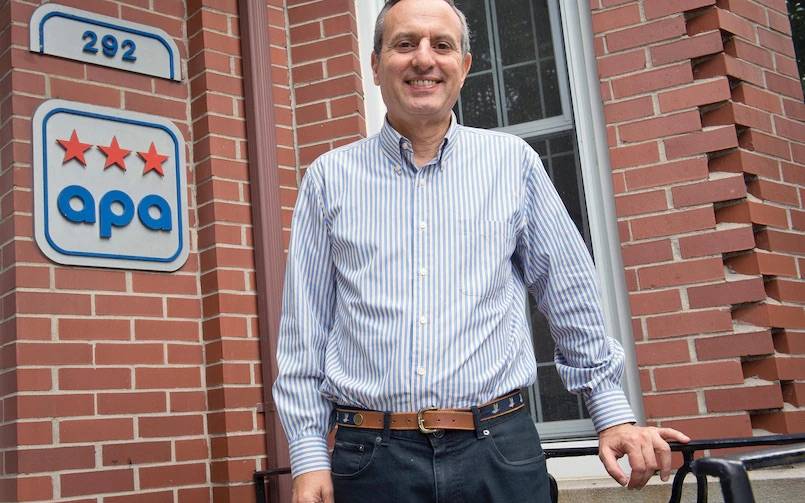
He also believes that the OPC should implement measures to block mediation for merchants with very low dispute resolution rates in order to send a clear message.
Mr. Iny does not hesitate to recommend Parle consommation to consumers. “A used car dealer told me he was very satisfied with the tool. It also helps resolve disputes more quickly, before consumers become entrenched.”
Finally, while consumers generally enjoy the purchasing experience offered by Tesla and VinFast, which sell without intermediaries, the fact that they cannot deal with a decision-maker can make the experience unpleasant in the end.
“It's like doing business with Microsoft. In Europe, branches are operated directly by manufacturers, and that's much worse than dealerships,” concludes George Iny.