

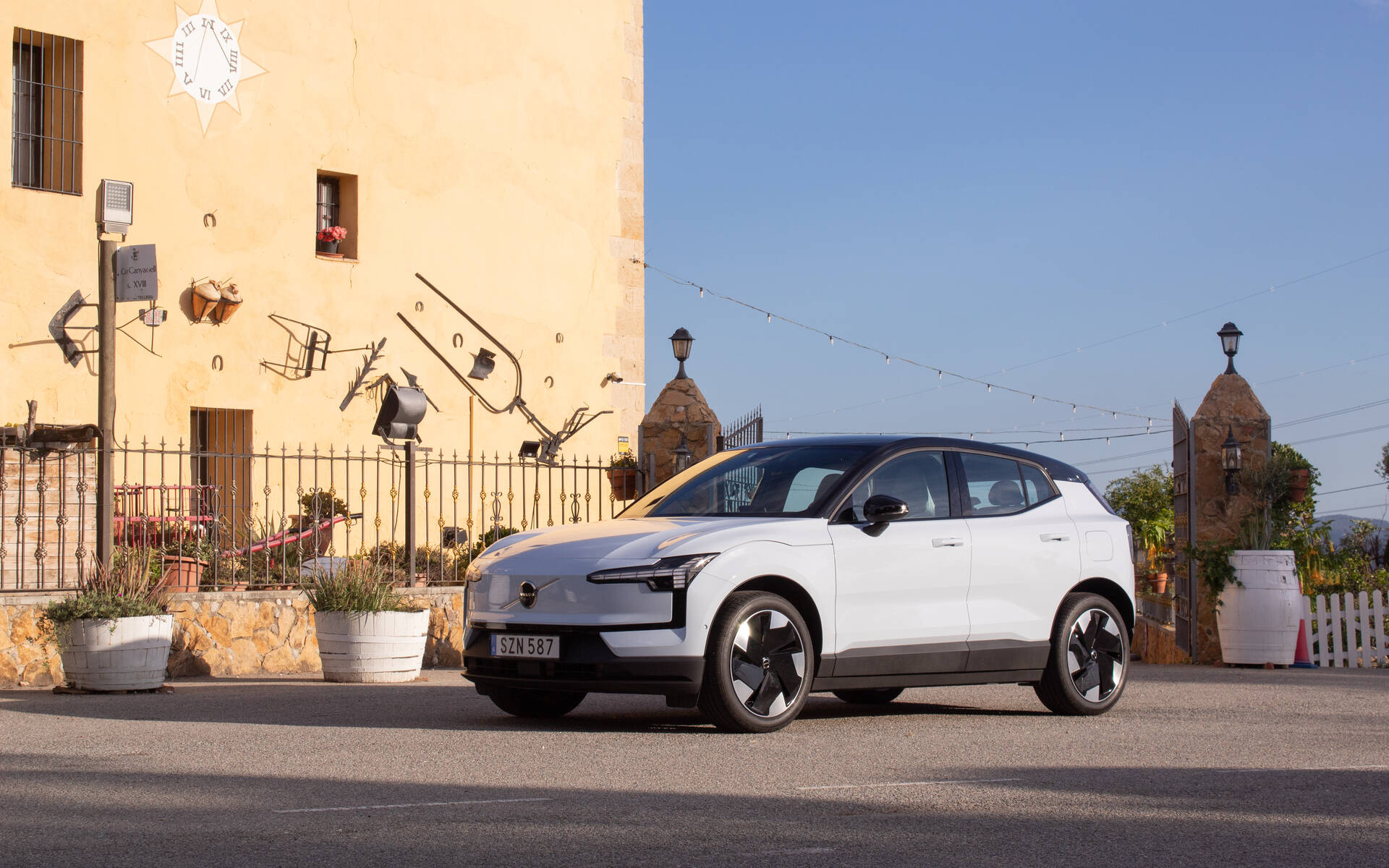
Volvo EX30 2025: a home run?
Volvo wants to do more with less by bringing to market not only the smallest SUV in its history, but also the most environmentally friendly. Positioned below the XC40 Recharge in the Volvo range, the EX30 is the first 100% electric vehicle in the luxury subcompact SUV category.
As a result, the Swedish brand is hoping to hit a home run, since demand for vehicles in this category is soaring in Canada and the United States.
After a worldwide unveiling in Milan, followed by a local presentation in Montreal, the Car Guide was invited to drive a European pre-production model of the Volvo EX30 2025 in Spain. The differences are limited to reflectors and a few technologies, so the North American version will be very similar.
Well-balanced driving
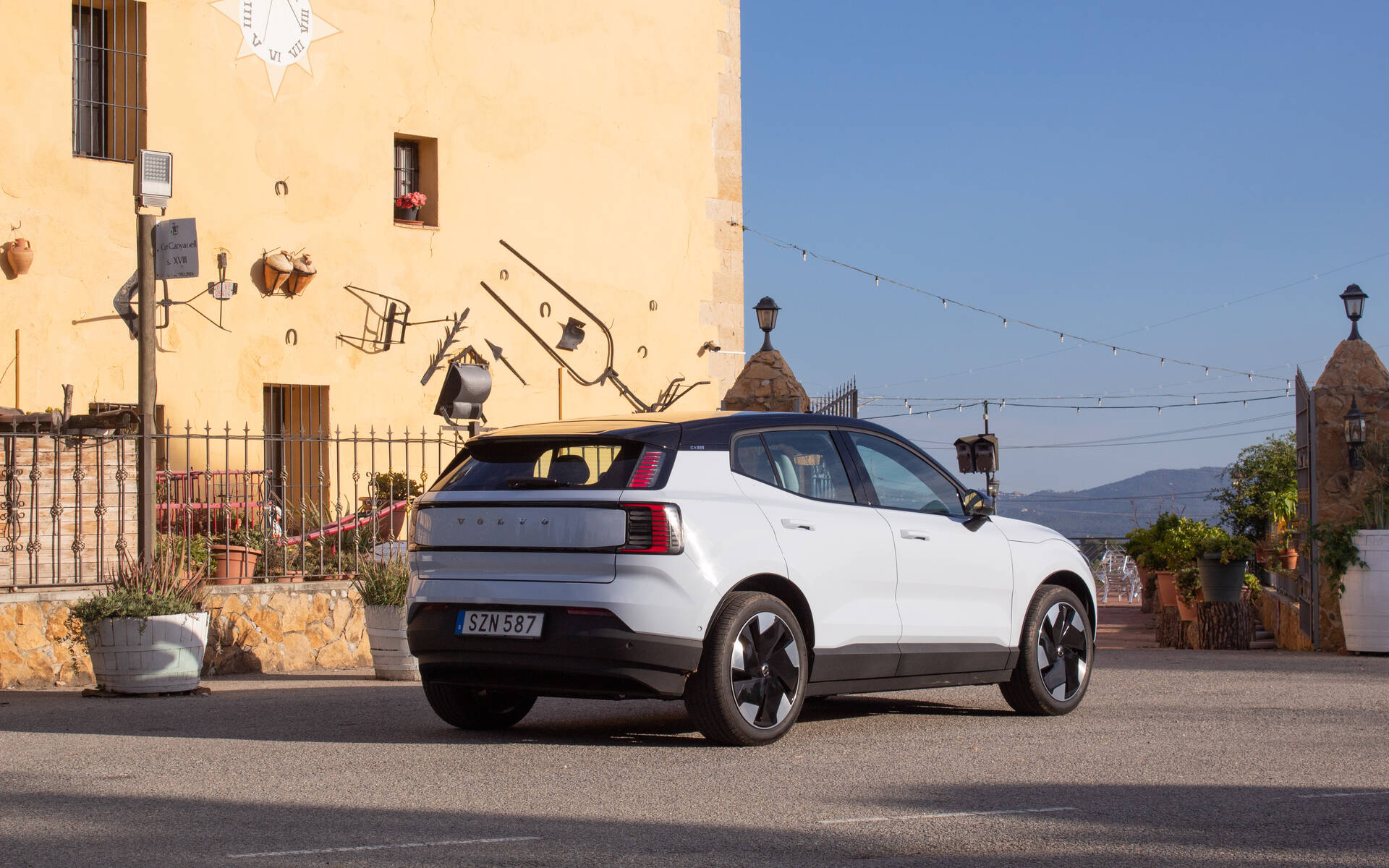
On the outskirts of Barcelona, we drive along the seafront on narrow, winding roads before heading for small towns. It's a good place for the EX30, because it's easy to get around and the handling is efficient.
Egbert Bakker, the vehicle's Technical and Dynamics Manager, explained that the SUV must be easy to drive, and must live up to Volvo's DNA. In this sense, it had to be predictable, simple to control, and comfortable. From our point of view, the mandate has been fulfilled. Passengers, including those in the second row, will find everything to their liking.
Behind the wheel, the EX30's steering is precise but a little overassisted - even when the firmest mode is selected. Its low center of gravity and reasonable weight of 1,750 kg (1,878 kg for the two-engine version) mean that the vehicle's weight is not too noticeable when driving. Mass balance is almost perfect, especially in the twin-engine version, where the rear axle is slightly heavier than the front.
Mechanically, the Single Motor model features a rear-mounted engine. This gives it rear-wheel drive. With 268 hp and 253 lb-ft of torque, acceleration is progressive yet powerful enough. According to Volvo, the 0-100 km/h sprint takes 5.3 seconds, and top speed reaches 180 km/h.
If you opt for the Twin Motor version, with an engine on each axle, the combined horsepower is 422 hp and 400 lb-ft. This means that accelerating from 0 to 100 km/h takes just 3.6 seconds!
In town, the EX30 acts in a civilized manner. Visibility is excellent, thanks to generous glazing. Regenerative braking gradually slows the vehicle down. Unlike many other EVs, Volvo has opted for a single configuration to make life easier for customers. As a result, it's impossible to set the aggressiveness of the regenerative braking. The steering wheel-mounted paddles are conspicuous by their absence.
Built on a 400-volt architecture, its 69 kWh battery (64 kWh usable) gives the EX30 a range of 442 km (426 km for the two-motor variant) according to EPA-measured data. Because of the journeys we made, we didn't drive the vehicles long enough to draw up an adequate picture of energy consumption. That said, we obtained ratings of between 15 and 17 kWh/100 km with an EX30 Single Motor. This figure was around 17.5 to 20 kWh/100 km for the Twin Motor version. These figures should be taken with a grain of salt.
At home, the battery can be fully recharged in less than eight hours. Using a 153 kW rapid charging station, the EX30 regains 10-80% of its electrons in 26.5 minutes.
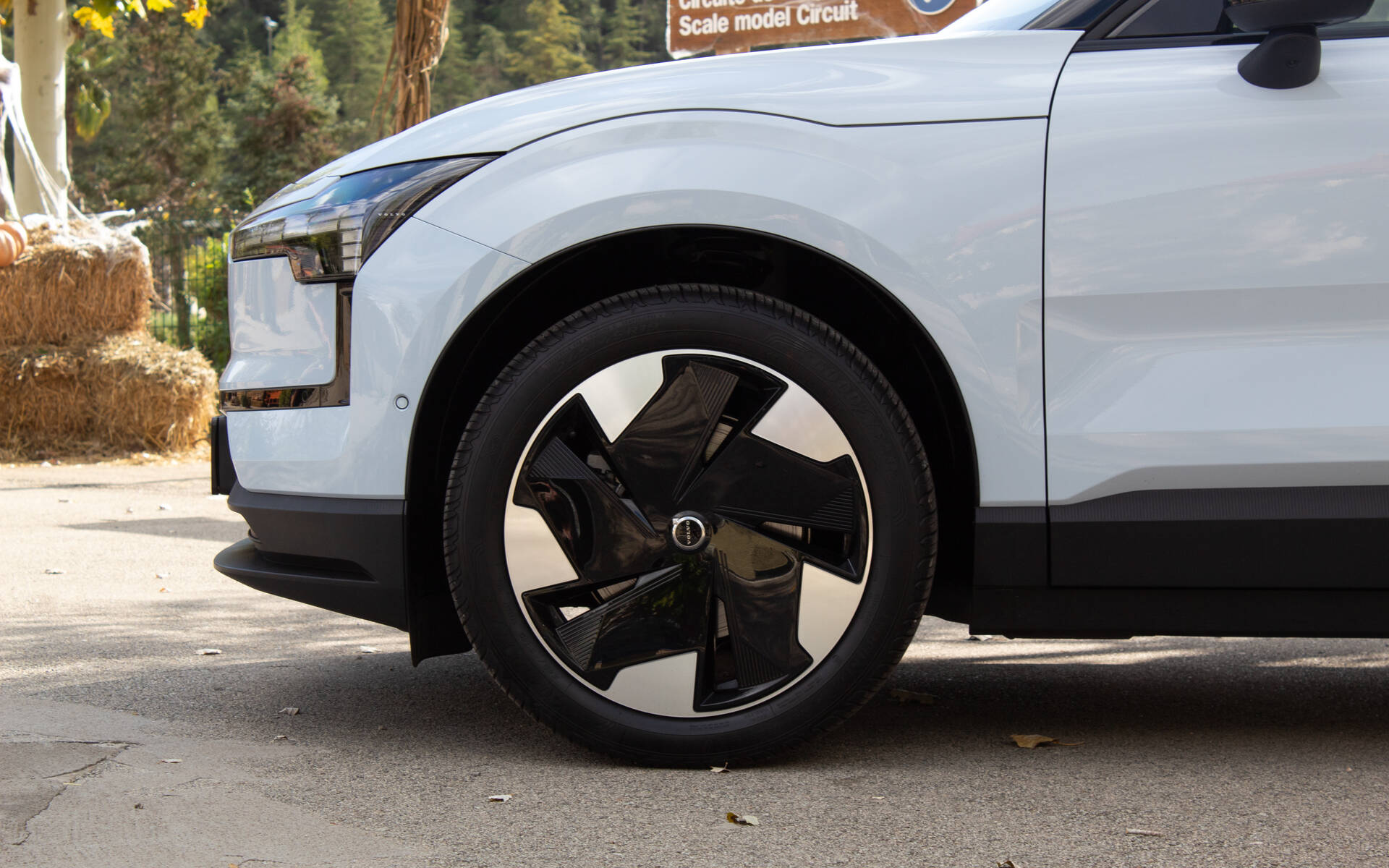
Interestingly, the Goodyear tires on the rims were designed specifically for this vehicle. The manufacturer had to meet Volvo's criteria, and followed every step of the EX30's production before submitting the final design. Finally, the towing capacity is 900 kg (1,984 lb).
Centralize the cockpit
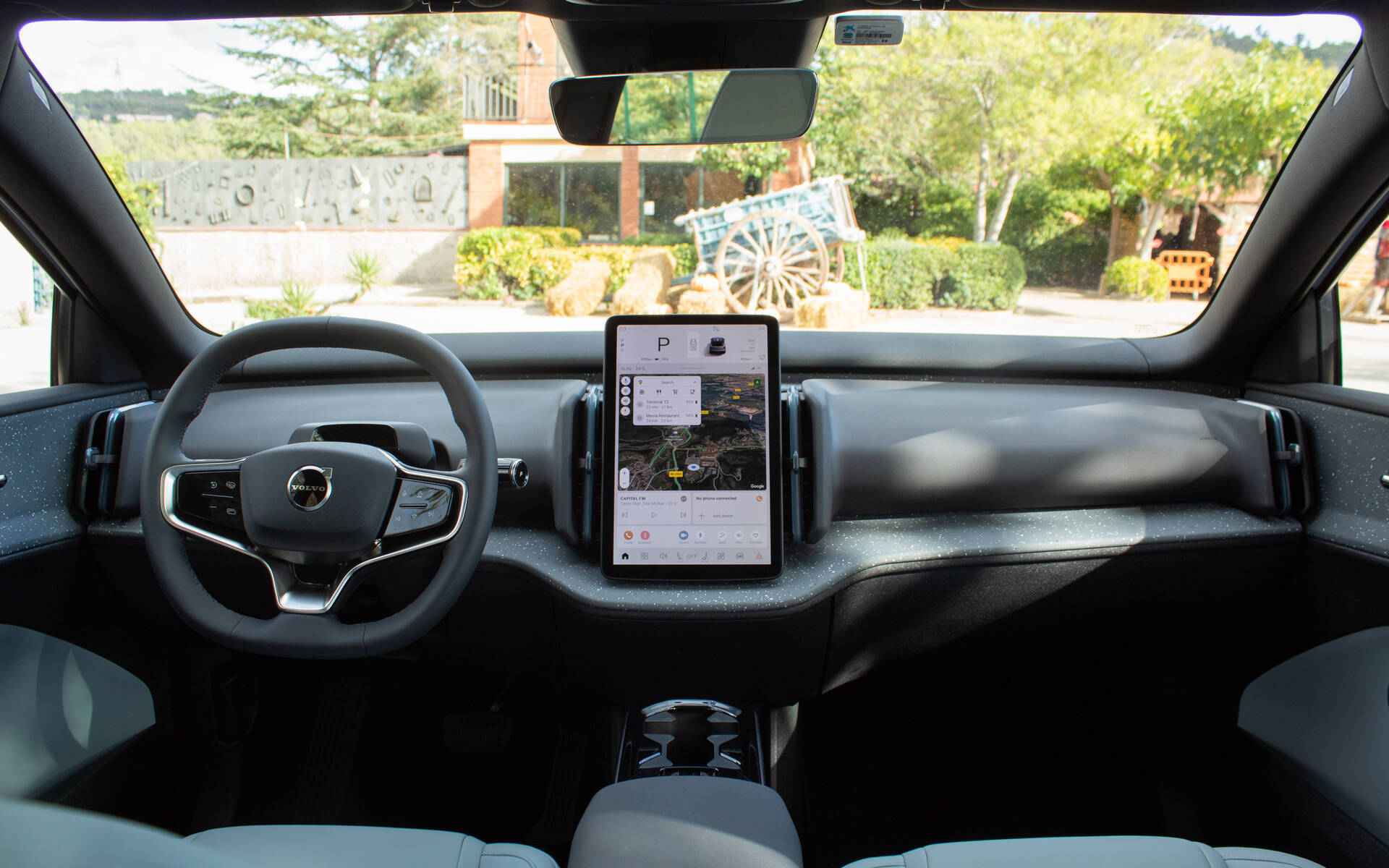
With a view to reducing greenhouse gas emissions, Volvo's designers decided to streamline the interior. As a result, occupants are faced with a minimalist dashboard. All controls are located in the 12.3-inch multimedia system, which is divided into five sections.
The upper section contains information relating to speed, range and active and passive driving aids. Unlike the rest of the screen, this is an independent system, so it will be prioritized if there is a malfunction - which was the case during our test drive. Underneath, the monitor integrates navigation, music and communications controls, the "contextual" bar and, finally, the systems bar, which groups together certain parameters such as climate control.
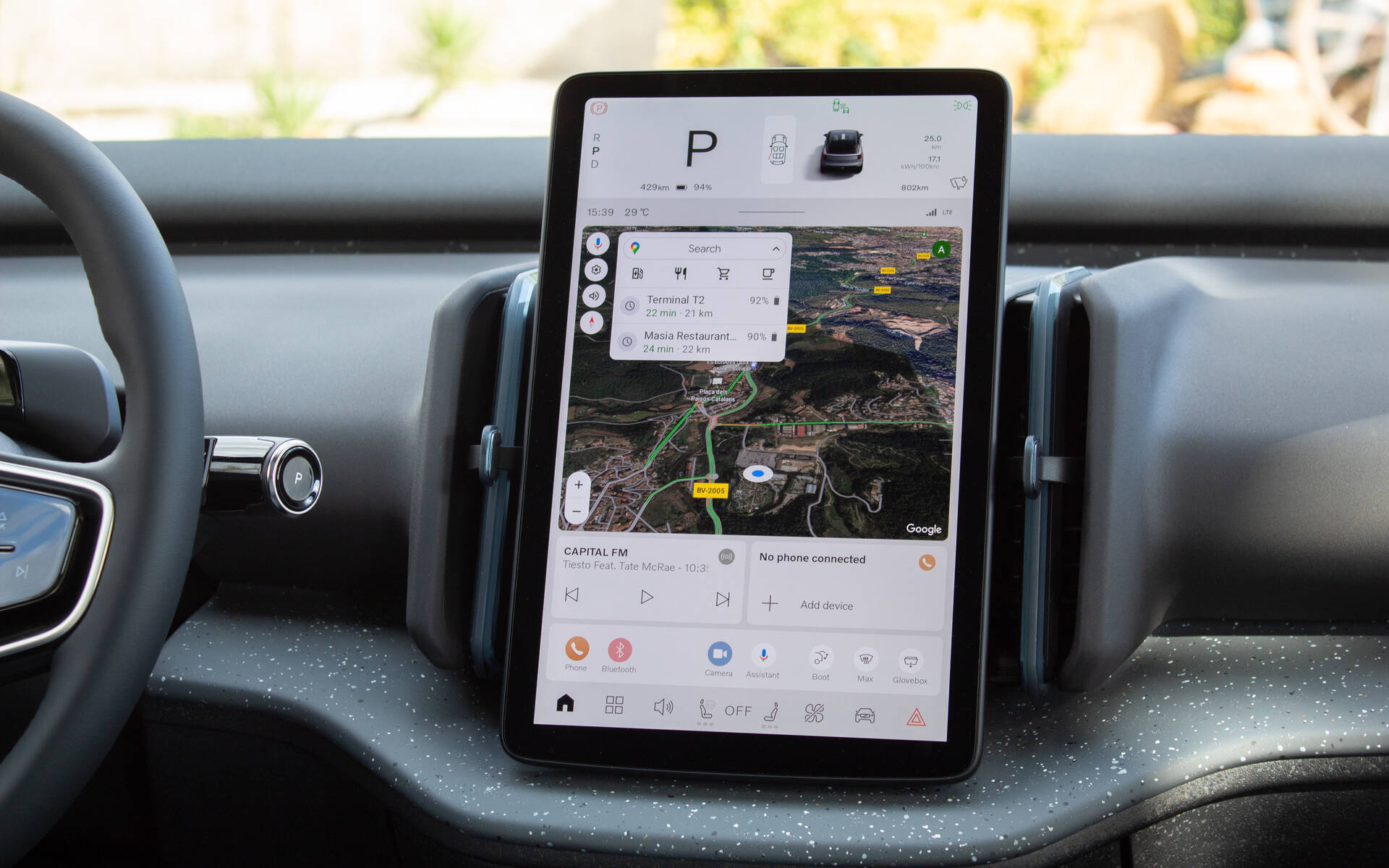
And why adopt this configuration, as Tesla has done? On the one hand, the screen is located in the driver's peripheral vision, and its layout makes it easier for the passenger to access. On the other hand, by centralizing all the vehicle's functions, it reduces the number of parts, and therefore the greenhouse gases emitted during production. It also consolidates all the electronics, lowering manufacturing costs. In this sense, we would have liked the option of a head-up display, even if it defies the philosophy of the EX30.
While the infotainment system is well designed, it does take some getting used to, because yes, the orientation of the mirrors can be configured via the screen. For audiophiles, six speakers are located at the bottom of the windshield, and subwoofers are located under the dashboard. A Harman Kardon audio system is available as an option.
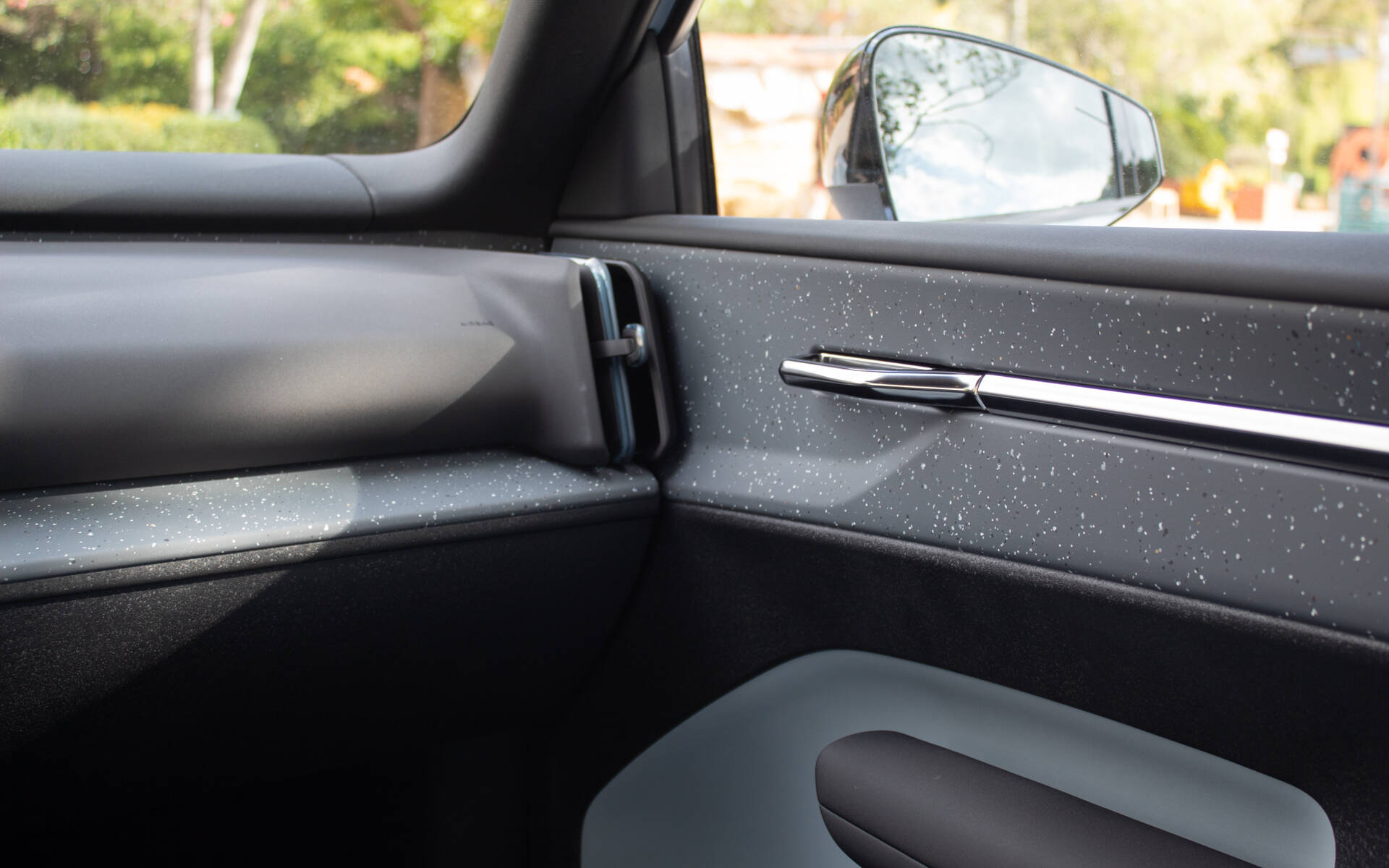
What's more, the interior is packed with environmentally-friendly materials. For example, the "mist" interior incorporates recycled polymers and polyester. The carpets, meanwhile, are made from plastic bottles. Overall, the EX30 is made up of 25% aluminum, 17% steel and 17% plastic. The lower section of the dashboard features a stone-grain pattern instead of painted plastic. The surface is rough, but the idea is to show robustness.
Eligible for government rebates
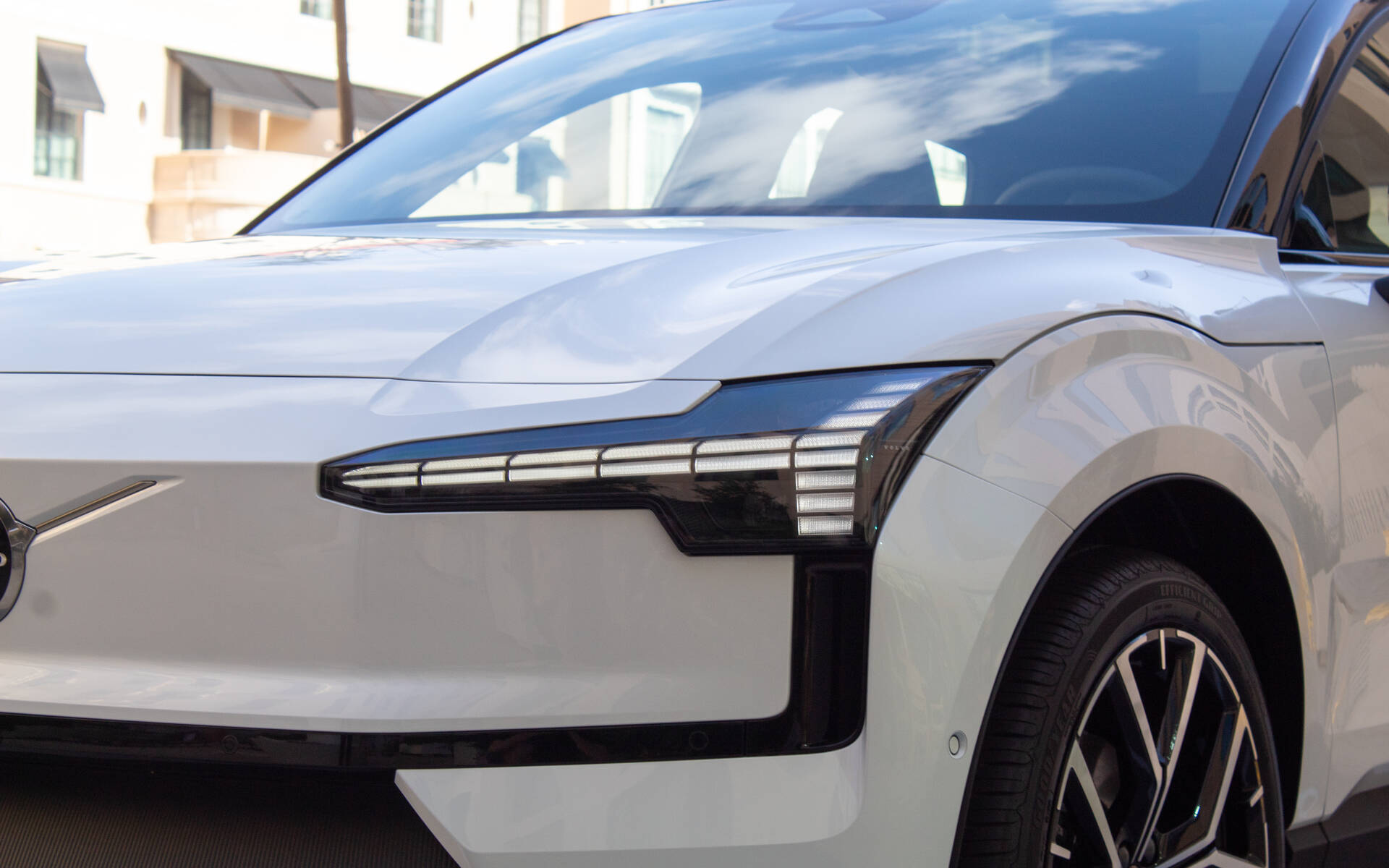
Aesthetically, customers can choose from five body colors, all inspired by nature: Mist Gray, Onyx Black, Crystal White, Cloud Blue and Floral Yellow. The latter takes its hue from the lichen found on rocks in Sweden. As for the interior, four moods are on the menu: Mist (gray), Breeze (pale blue), Scandinavian Pine (pale green) and Indigo (blue and black).
Let's not forget to mention some of the nice details to be found inside the vehicle. Under the hood, there's a seven-litre compartment for storing small items, but the upper section features a moose motif (named after Mårten) with trees. The same design is also found in a drawer under the center console, accessible to rear passengers. Finally, in the tailgate, you'll see a drawing that illustrates the objects (and their dimensions) you can store in the cargo area. Oh, and the glove compartment is located just below the infotainment system.
How much does the EX30 cost? Equipped with a single engine, the price range starts at $53,700 (MSRP) for the Core version, while the Plus rises to $56,900 and the Ultra to $59,100. Finally, the Twin Motor Plus and Ultra climb to $59,900 and $62,100 respectively. All models are eligible for provincial ($7,000) and federal ($5,000) subsidies, for a total of $12,000.
Production of the vehicle began earlier this autumn in Zhangjiakou, China. In response to strong demand, Volvo will assemble the EX30 in Ghent, Belgium, for European and global customers. To purchase a Volvo EX30, you need to reserve it on the manufacturer's website. The EX30 2025 is scheduled to hit the market in June 2024.
Will Volvo hit a home run with its EX30? We don't have a crystal ball to predict it, but considering the quality of the materials, the ride and its eligibility for rebates, it could be a great success here...if the Swedish manufacturer manages to deliver enough of them.