


The 0% return?
For some time now, financing and leasing rates have been skyrocketing, dramatically changing the real cost of a vehicle that can hardly be paid for in cash. Obviously, this has repercussions on the affordability of vehicles for customers, who also have to tighten their belts to pay the variable-rate mortgage, which hurts even more.
To give you an idea, a $40,000 plus tax model financed at 0% would cost $639 per month over a six-year term (72 months). On the other hand, the same vehicle financed at 8.99%, as I was offered this week at Volkswagen, would cost $829 per month. A monthly increase of $190, solely due to the interest rate, resulting in a total additional cost of $13,680 for this vehicle.
Naturally, the financing rate depends on the manufacturer's willingness to sell its vehicles. A product that sells by the snap of a finger, where demand is much greater than supply, often comes with a higher financing rate than a bank could offer you. For example, the Ford Escape Plug-In Hybrid 2023 is currently financeable at 7.99% over 72 months, while the regular gasoline model is offered for the same term at 2.99%. So, on the one hand, you have a vehicle that will sell, whatever the financing terms, while on the other, it needs a subsidized rate. In short, a rate so low that the manufacturer offers a rebate through financing to make it more accessible to customers.
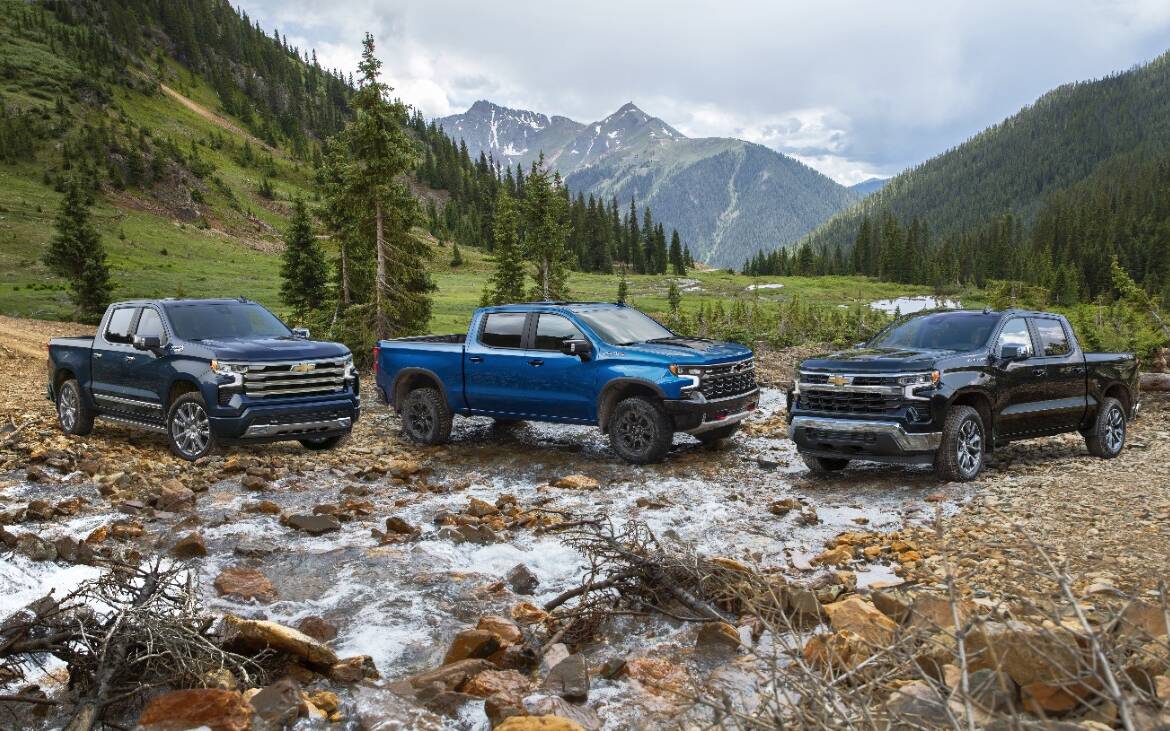
Needless to say, financing rates for a Toyota RAV4 Prime, Hyundai Ioniq 5 or Cadillac Escalade are not very attractive. On the other hand, we're starting to see very aggressive rates again in the industry, on products that need to be liquidated. Mainly, on full-size trucks. This is currently the case with Ram, which is offering a rate of up to 0% on 1500 Classic models, which can be exchanged for a rebate equivalent to 15% of the manufacturer's suggested retail price. GM's Silverado and Sierra pickup trucks are offered at 0.99% financing for up to 60 months. Meanwhile, Ford's rate is no better than 3.49%, as its inventory may not be as strong as that of GM and Ram.
One thing's for sure, as the yards fill up, you'll see reduced rates this way. This isn't an exact science, however, since Honda's CR-Vs are filling up dealer parking lots at an alarming rate. Yet the automaker still offers them at 7.29%. You may say that demand for this SUV is very high, which is true, but the rate is hardly lower than for a Passport or Ridgeline, for which you'll have to wait a very long time.
The financing rate is therefore directly linked to the manufacturer's willingness to sell its models. This willingness is based not only on a study of supply and demand but also on the anticipation of a rising or falling residual value. This means that a vehicle that might eventually be harder to sell on the used market could today see its rate fall quietly.
Of course, we're a long way from the return to floor rates we saw in 2009-2010 when there was still a crisis in the automotive world. The years when Chrysler and GM declared bankruptcy, only to be rescued by the US government. At that time, the industry's highest rates hovered between 2% and 3% (with the exception, of course, of luxury cars). However, we're likely to see a gradual drop in rates for some manufacturers, for a few specific products. So, before buying a used car with a financing rate of 8.9%, it might be worth looking at a new one. Because between a $40,000 Ram 1500 2021 at 8.99% financing and a $53,000 new model at 0% financing, the cost will ultimately be exactly the same (over a 72-month term).