


Polestar 3 2025: a new electric SUV for Polestar
Madrid, Spain - It's been a long time coming, but now the five-seat Polestar 3 electric SUV is set to make its debut here in the fourth quarter of 2024. Units destined for the Canadian market will be assembled at the Sino-Swedish brand's new plant in South Carolina.
For Polestar, which has had only the Polestar 2 sedan to offer for several years, the arrival of the Polestar 3 and Polestar 4 is part of an expansion drive aimed at the lucrative SUV market. Our first contact with the 3, built on the SPA2 platform used as a basis for full-size Volvos, took place in the Madrid region at the wheel of pre-production models.
A front wing
The Polestar 3's design incorporates various elements from the Precept concept vehicle unveiled in 2020, including the hood-mounted spoiler, which enhances aerodynamics. This addition, together with the roof spoiler and aerodynamic blades attached to the sides of the rear bumper, enables this electric SUV (whose mass varies between 2.5 and 2.6 metric tons, by the way) to boast a very good aerodynamic coefficient of 0.29.
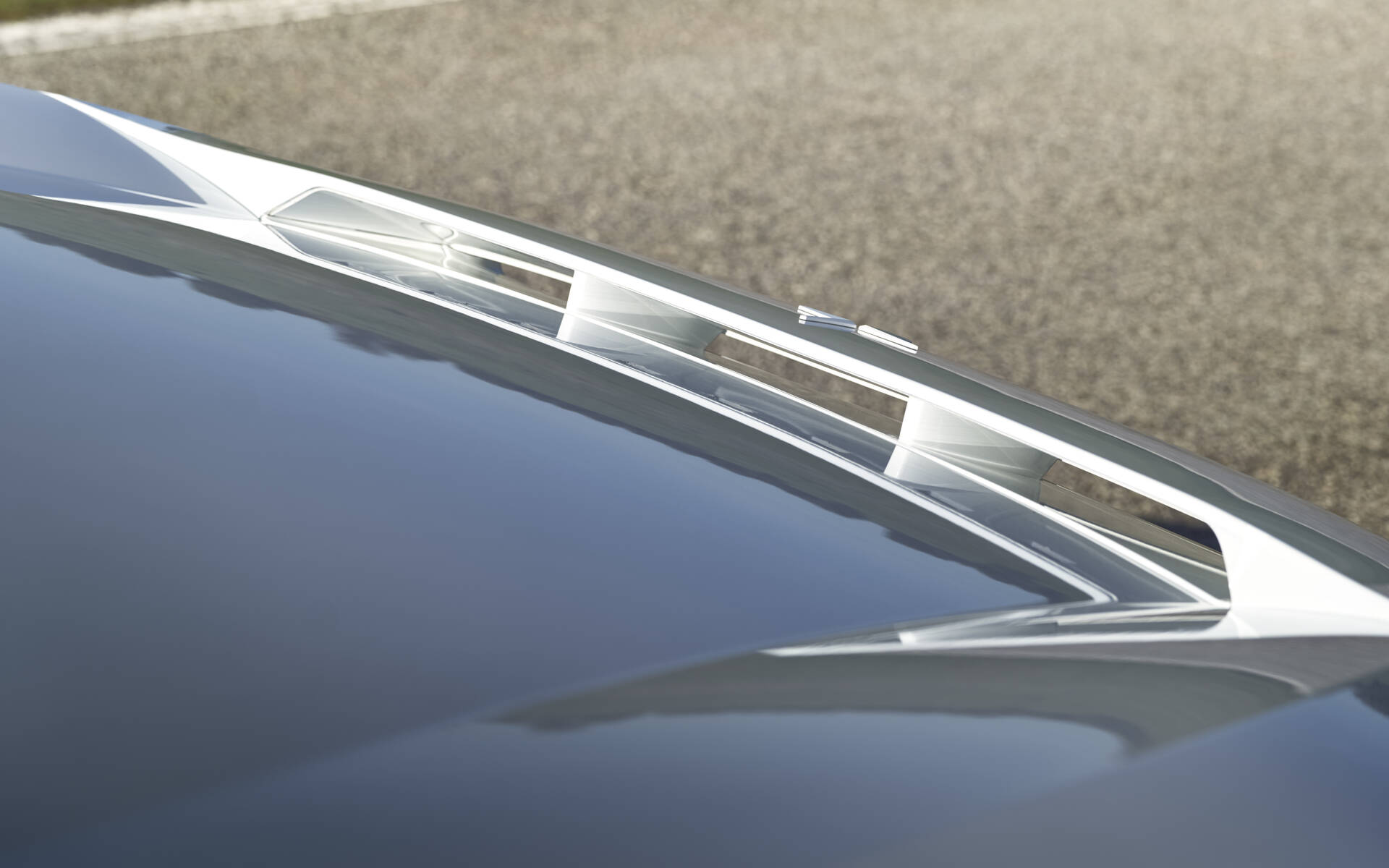
However, the effectiveness of the front spoiler in winter is questionable, as the space between it and the hood is likely to be obstructed by snow and ice. The front section features the Smart Zone, the plate covering the camera, radar and sensors for the advanced driver assistance systems.
Two engines
This five-seat electric SUV is powered by two motors developing a combined output of 489 hp and 620 lb-ft of torque. Equipped with the optional Performance Package, the Polestar 3 boosts horsepower to 517 and torque to 671 lb-ft. 0-100 km/h times are 5.0 and 4.7 seconds respectively. To enhance range, the rear engine is deactivated at cruising speed. A single-engine variant (front) will be added to the range at a later date.
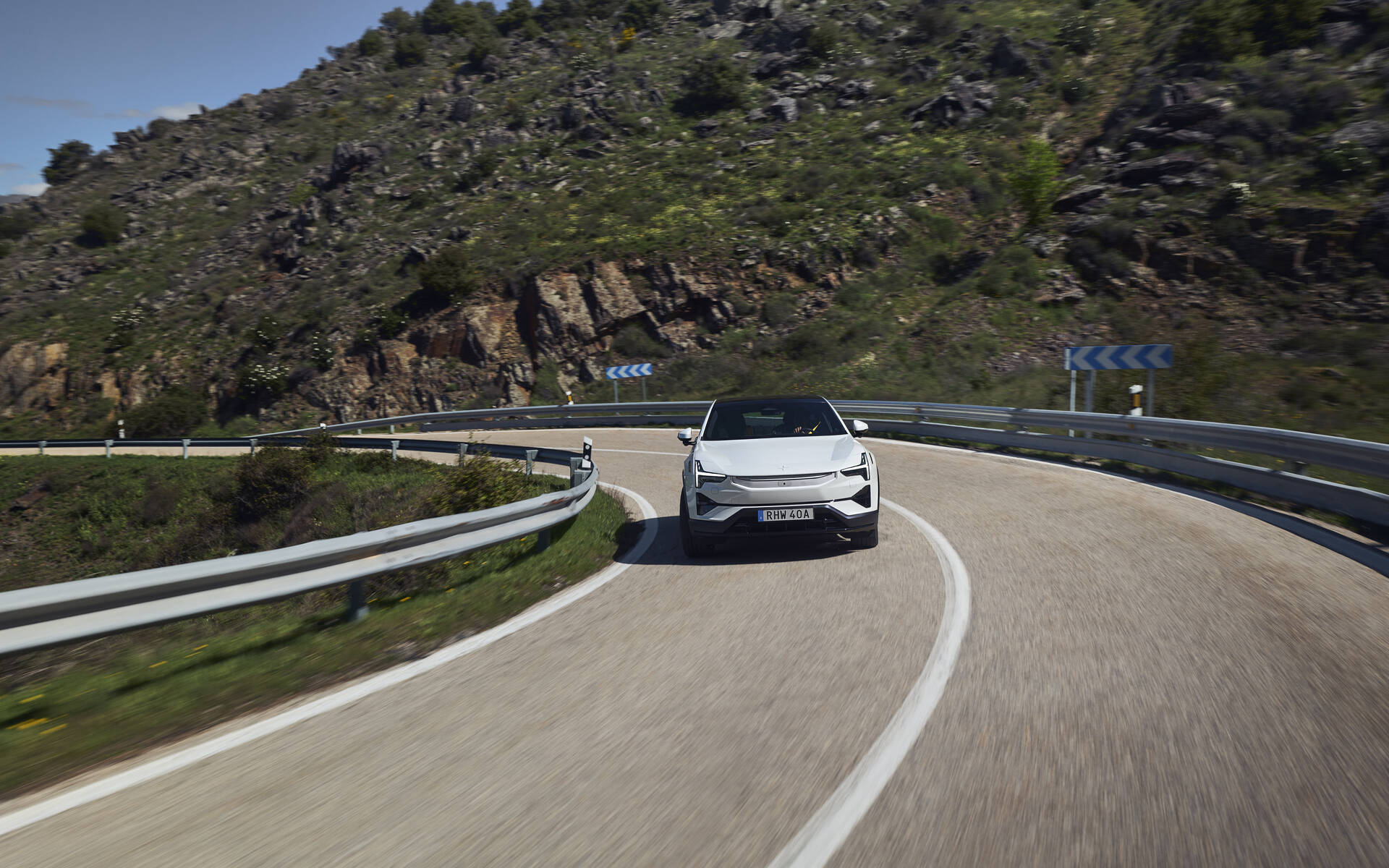
The ace up the Polestar 3's sleeve is its rear-wheel torque vectoring system. Developed in collaboration with Borg Warner, the TVDC (Torque Vectoring Dual Clutch) adds two multi-plate clutches to the rear engine to accelerate the outside wheel when cornering. At the wheel of a Polestar 3 equipped with the Performance Package, the TVDC's contribution is immediately apparent. Simply accelerate hard just before the chord point of a bend to activate this device, which pivots the vehicle and sets it perfectly on the desired trajectory.
Standard adaptive air suspension
Ground links are provided by double wishbones at the front and an integral link at the rear. The Polestar 3 is also equipped as standard with an adaptive air suspension, which allows ground clearance to be varied over a range of 60 millimeters. This allows the vehicle to be raised for off-road driving or lowered at highway speeds for improved aerodynamics and range. The suspension, like the steering, can be adjusted via the central display to three firmness settings.
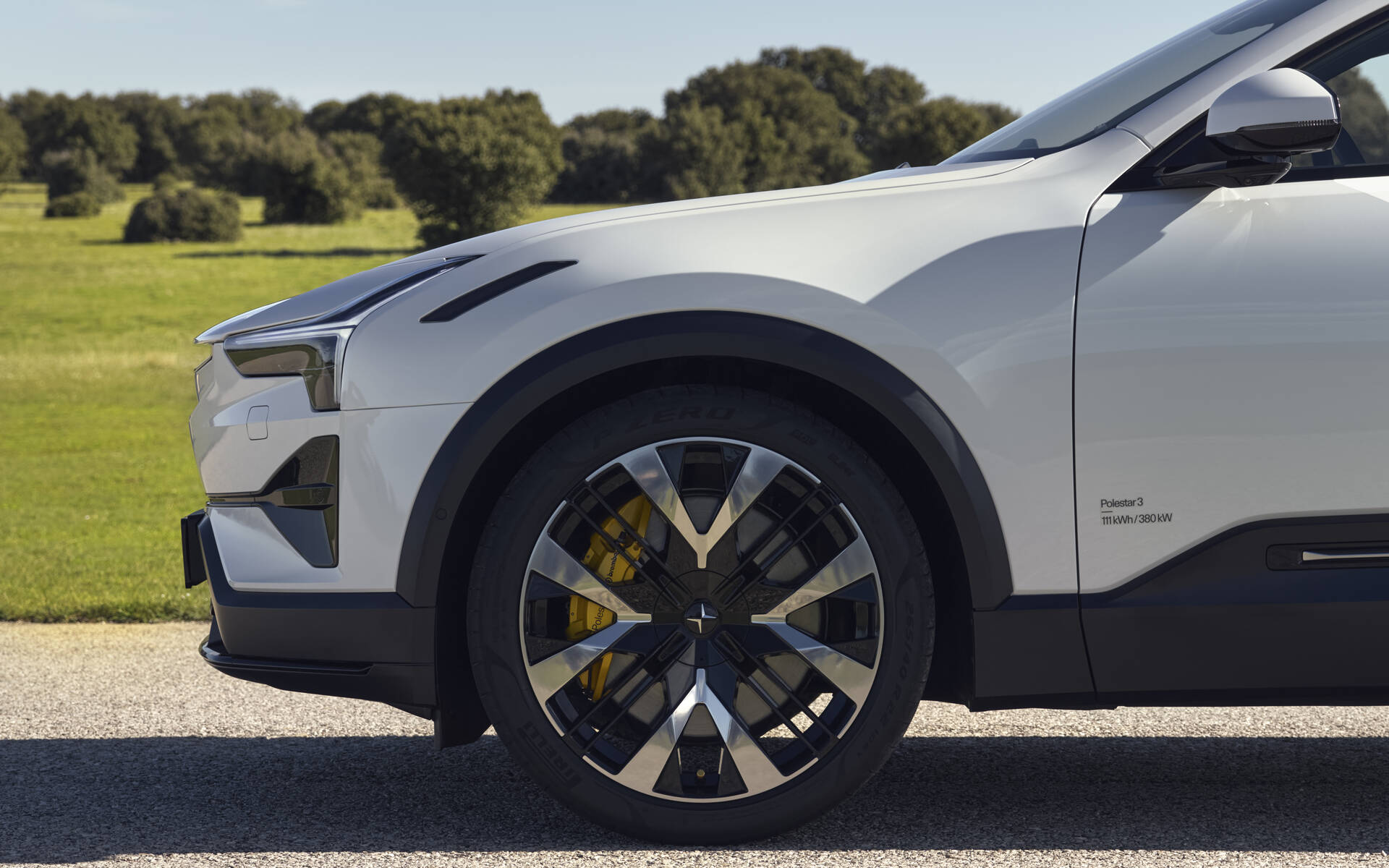
With the firmest settings and the contribution of TVDC, the Polestar 3 is impressively dynamic for its weight and size. The brake calipers are from Brembo. They are four-piston at the front and single-piston at the rear. The ventilated brake discs measure 400 mm at the front and 390 mm at the rear. The engineers have done an excellent job of ensuring almost imperceptible transitions between regenerative and traditional braking, with brake pedal feel remaining natural in all circumstances.
111 kWh battery
The battery powering the Polestar 3's motors is made up of 204 cells linked together in 17 modules. It has a capacity of 111 kWh. The range is 506 kilometers, according to the U.S. EPA (Environmental Protection Agency) standard, but the addition of the Performance Package reduces this to 449 kilometers. Recharging on a Level 3 rapid charging station is possible at a maximum of 250 kW, while recharging on a normal Level 2 station is possible at 11 kW.
Minimalist interior
The standard panoramic roof bathes the sleekly styled interior in light, the centerpiece of which is the vertically arranged 14.5-inch touchscreen with three-zone display. As on the brand's other models, the operating system is Android Automotive, but wireless connectivity with Apple CarPlay is possible. A second 9-inch screen, located directly in front of the driver, replaces the classic instrument cluster. Virtually all vehicle functions, even steering wheel and side-view mirror adjustments, pass through this screen.
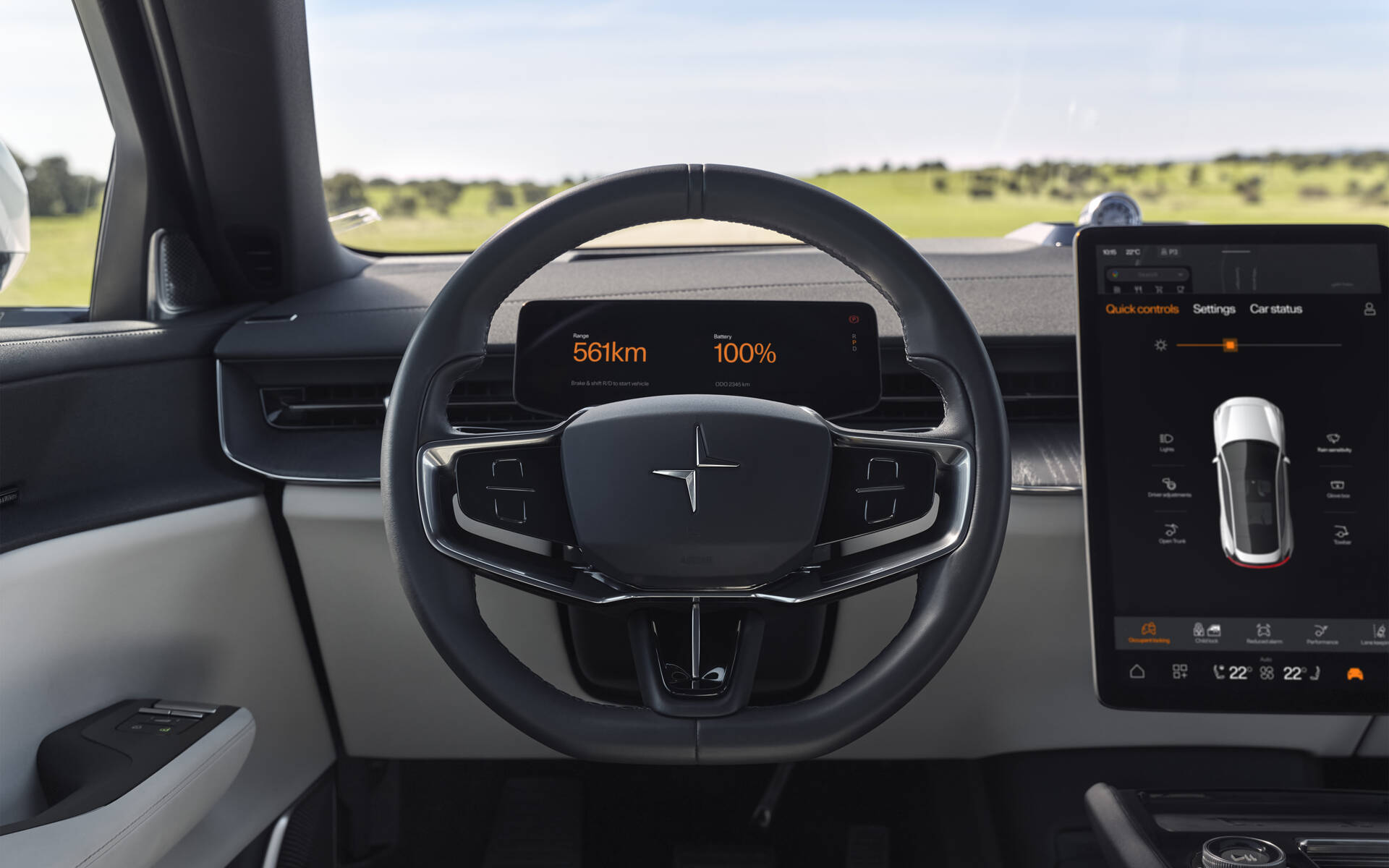
During our test drive of two pre-production models of the Polestar 3, we had to reset the operating system because the screen no longer responded to touch. Let's hope this problem is solved on production models, as it's clear that this system was not yet perfected. A floating center console incorporates two cupholders and a storage compartment, two USB-C ports and a 15-watt induction charging compartment for smartphones.
The interior layout makes extensive use of second-life materials, with appliqués made from recycled aluminum, while MicroTech fabric is made in part from recycled wool. For the optional Nappa leather upholstery, Polestar sources traceable materials from Bridge of Weir. The interior of the Polestar 3 is very spacious, both upfront and in the second row, with generous legroom.
Optional packages
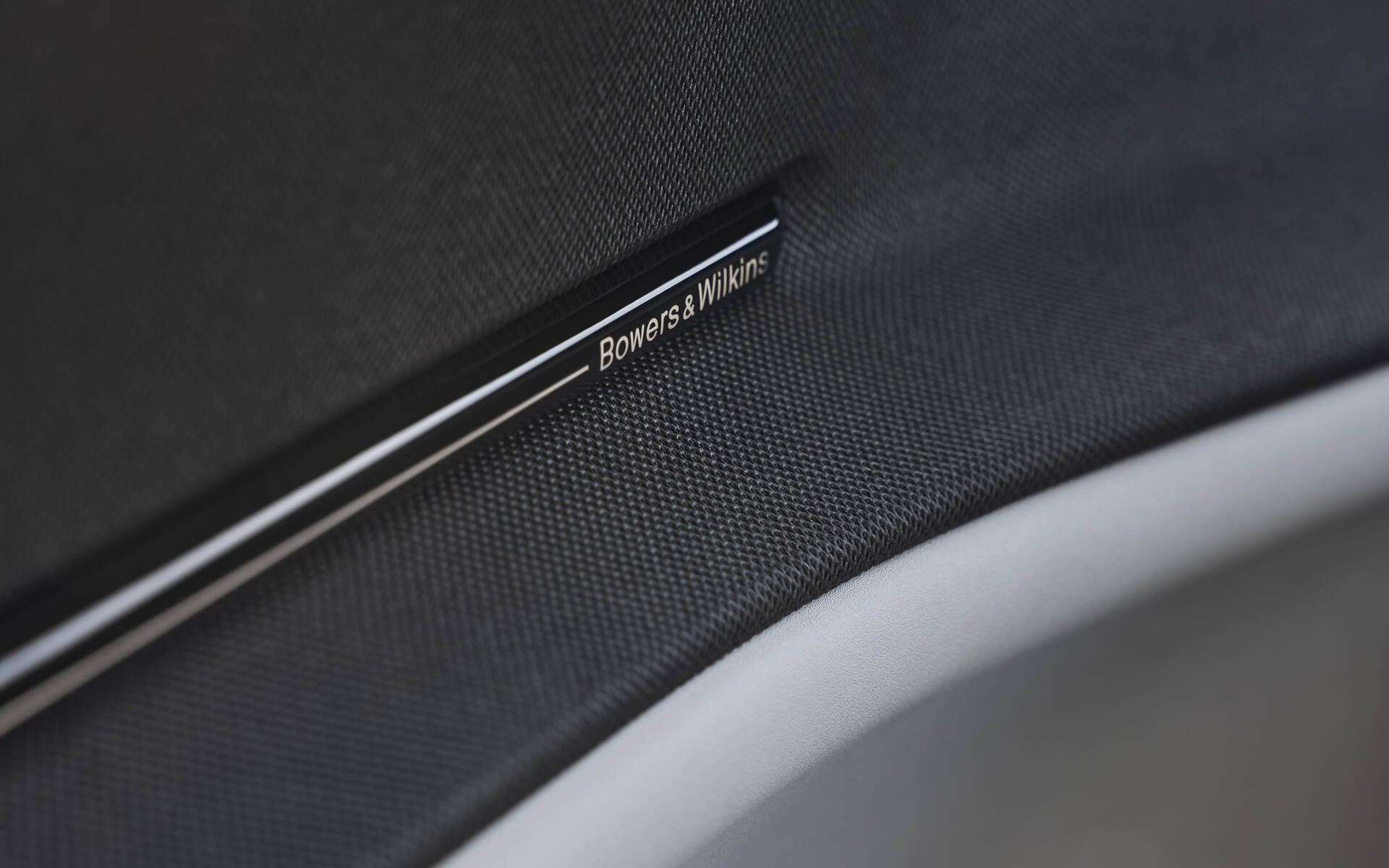
For the launch, the first models will be equipped with two packages from the options catalog, including the Pilot with advanced semi-autonomous driving systems, and the Plus with a Bowers and Wilkins 1,610-watt audio system with 25 speakers.
The Polestar 3 has a starting price of $93,200, with the Performance Package adding a further $7,000. The first launch models, with the Pilot and Plus packages, will command a price of $97,400. Of course, this price range means that the Polestar 3 is not eligible for federal or provincial government subsidies.
In conclusion, the resale value of the Polestar 2s on the used market is not very high. The brand's other models are likely to face the same situation.