


Mini 3-door John Cooper Works 2025: driving with a smile
Savannah, Georgia - After launching a new generation of Mini Cooper in 2024, the manufacturer continues its offensive in 2025 with more specific models such as the sporty John Cooper Works. Just over a year after the withdrawal of the previous generation (reviewed here), we were able to drive the sportiest version in the range.
On the outside, the Mini John Cooper Works retains the lines inherited from the first Mini, but skilfully modernized. The car may be much larger than before, but it retains the main features of its forebear. The designers have succeeded in blending the heritage of the past without sacrificing modernity, and from our point of view it's a success.
The JCW version stands out from the Cooper C and Cooper S thanks to its logos scattered all over the body (front, rear and wheel centers), its specific 18-inch wheels, its more pronounced rear spoiler and its single exhaust outlet opening out in the center of the diffuser.
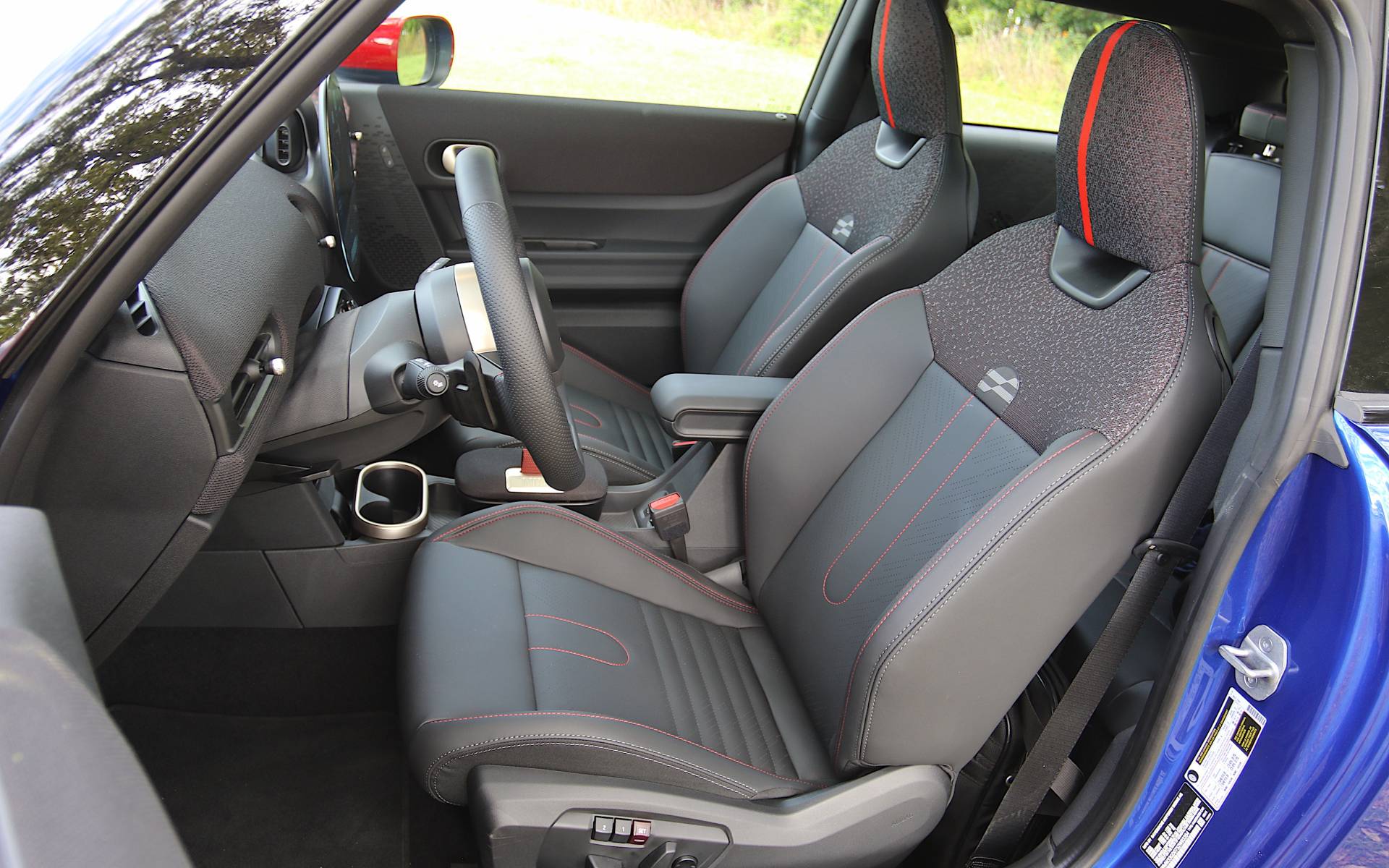
Inside, the design remains similar to that of current Mini models, but with a few subtle changes. The most visible are the special upholstery with red stitching, the sports steering wheel (heated) with an additional logo at the bottom, and a number of red reminders, notably on the right-hand side of the dashboard. The driver also benefits from steering-wheel-mounted paddles (absent from other versions) for greater control over the powertrain.
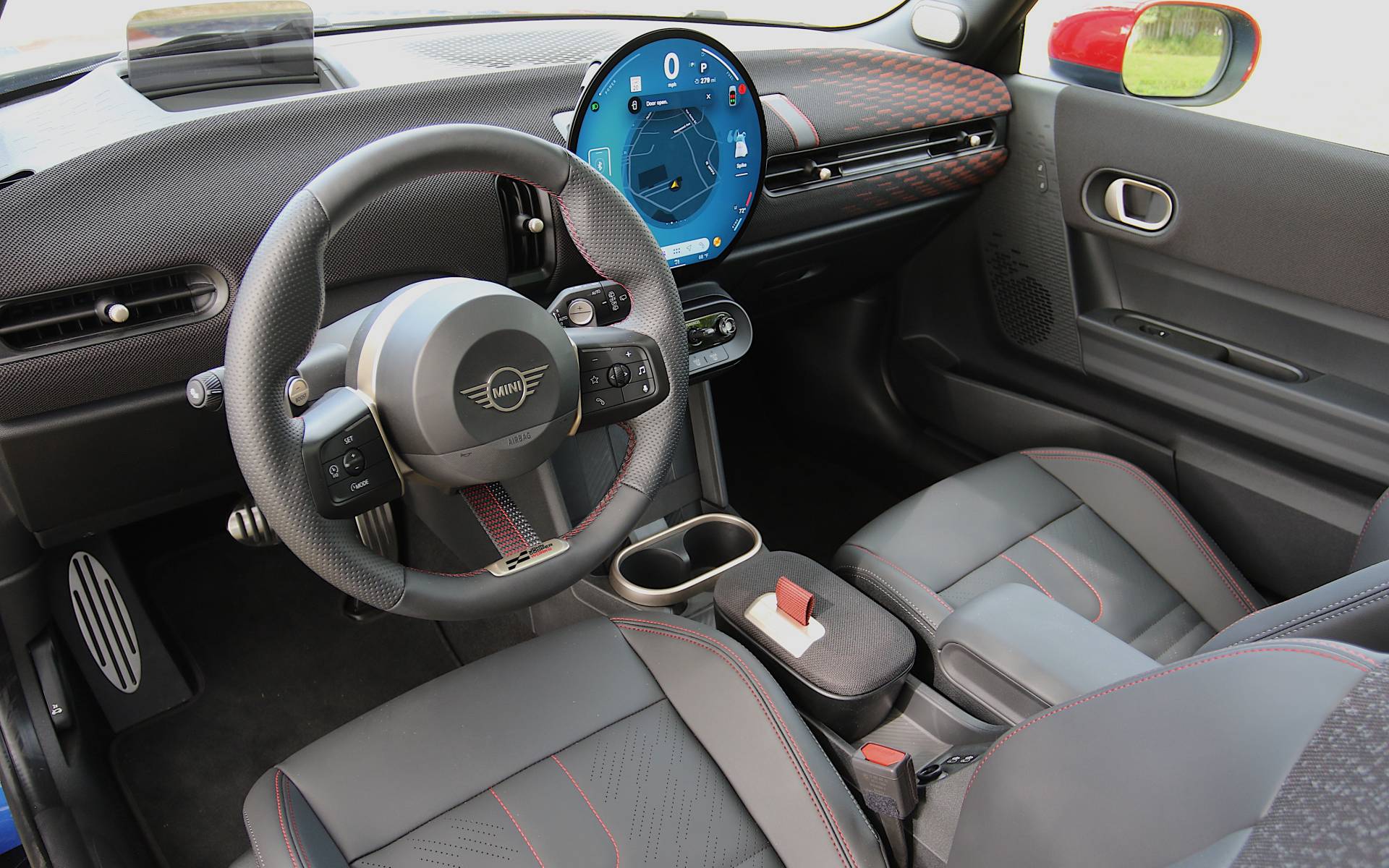
Like the other Mini models, the JCW inherits the new interior featuring a new 9.4-inch OLED screen. The latter integrates the brand's latest infotainment system, as well as Spike, a little dog who acts as a driving assistant if you so wish. The screen's resolution is magnificent, and the graphics linked to the various driving modes really change the atmosphere on board.
We regret, however, that Mini has opted for a sober, uncluttered design by removing many of the physical buttons. The rotary controls and buttons of the previous generation were easier to operate while driving. Now, most controls, including ventilation, temperature and heated seats, are operated via the screen. It is also possible to use your voice, but we have to confess that this is not our first reflex.
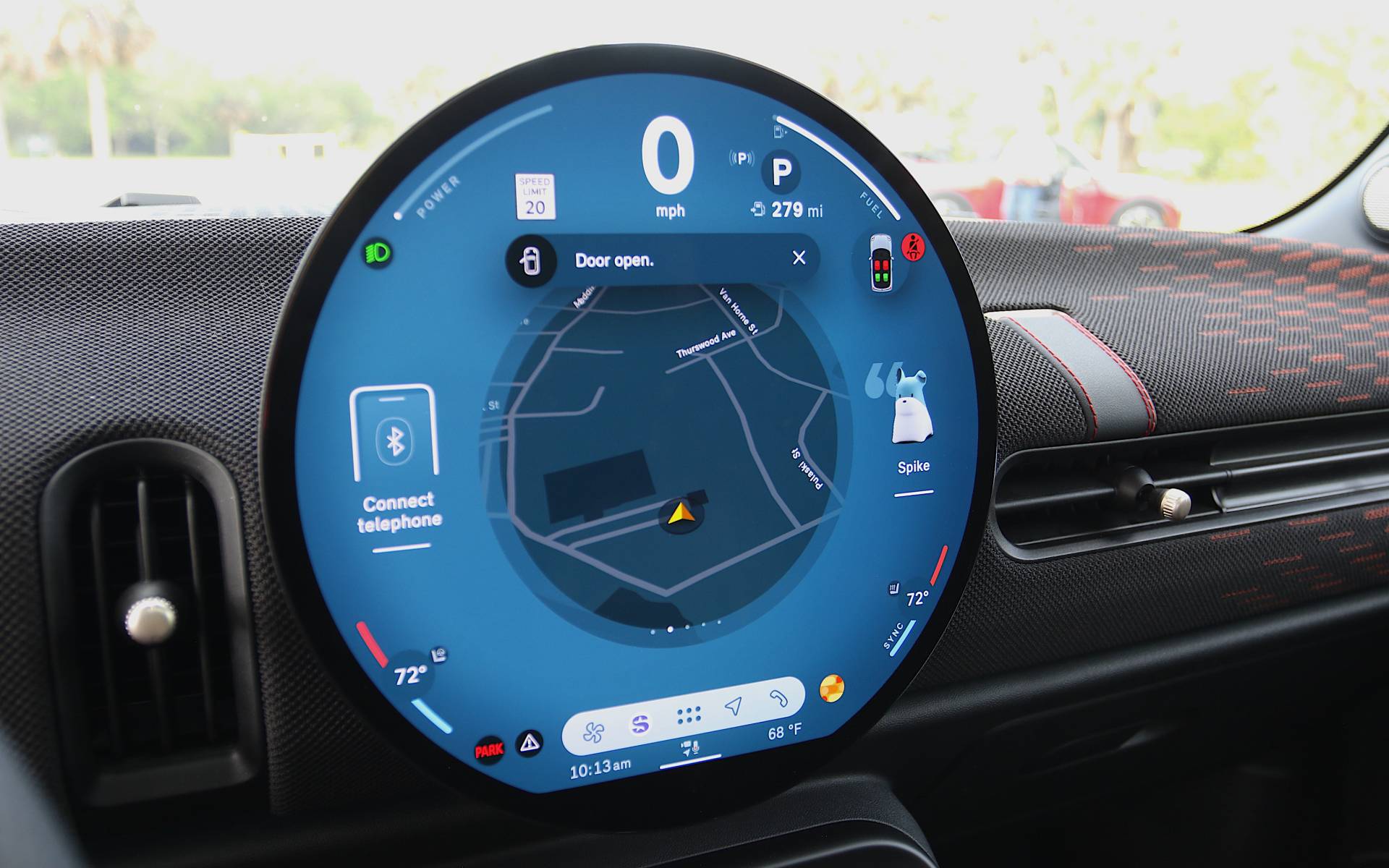
Beneath the circular screen, the main remaining physical controls are the hazard lights, the defroster (front and rear), a button for the Park function (P), a lever for forward or reverse (R, N and D), a volume knob and a key-like device that you turn to start the engine. A final lever, called “experiences”, lets you change the colors and ambience of the interface to suit your mood. For example, you can choose Timeless mode, with graphics reminiscent of the first Mini, Core mode with various shades of blue, or Go-Kart mode with red and black to suggest a sportier look. On the Mini John Cooper Works, changing driving modes is accompanied by a hardening or softening of the suspension. We'll come back to this in a moment.
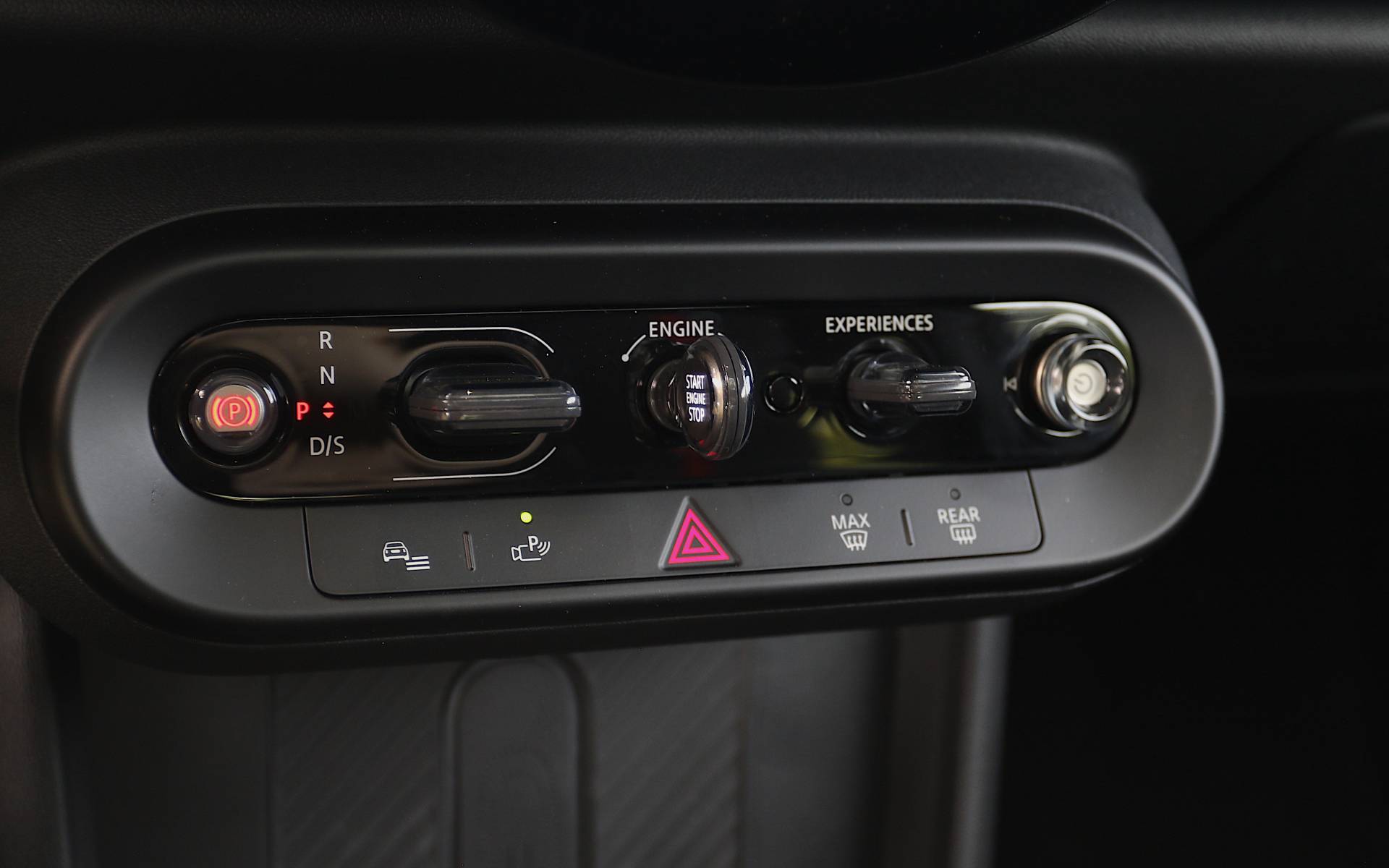
There's plenty of room up front. Your host, of average height (5 feet 9 inches, or 1.76 m), felt very comfortable on board, whether for his head or his legs. On the other hand, rear-seat room remains limited, making it difficult for adults to envisage long journeys.
The same goes for the trunk, where space is at a premium. If you're a couple without children, this may work, but for family use it seems complicated. If you like Minis and need space, you'd be better off buying a Countryman, which is much more practical in this respect.
More torque and more weight
As with its predecessor, Mini has developed a powerful car, but without overdoing it. Under the hood, the engine chosen is a turbocharged 2-liter 4-cylinder. It delivers the same power as the outgoing model (228 hp), but with more torque.more torque and more weight
Indeed, instead of the previous 236 lb-ft of torque, the driver now benefits from 280 lb-ft. A noticeable difference, and a necessary one, since the car has gained weight compared to the previous generation. In fact, the old Mini JCW weighed 1,295 kg, while the new one tips the scales at 1,382 kg. A notable difference, to be sure.
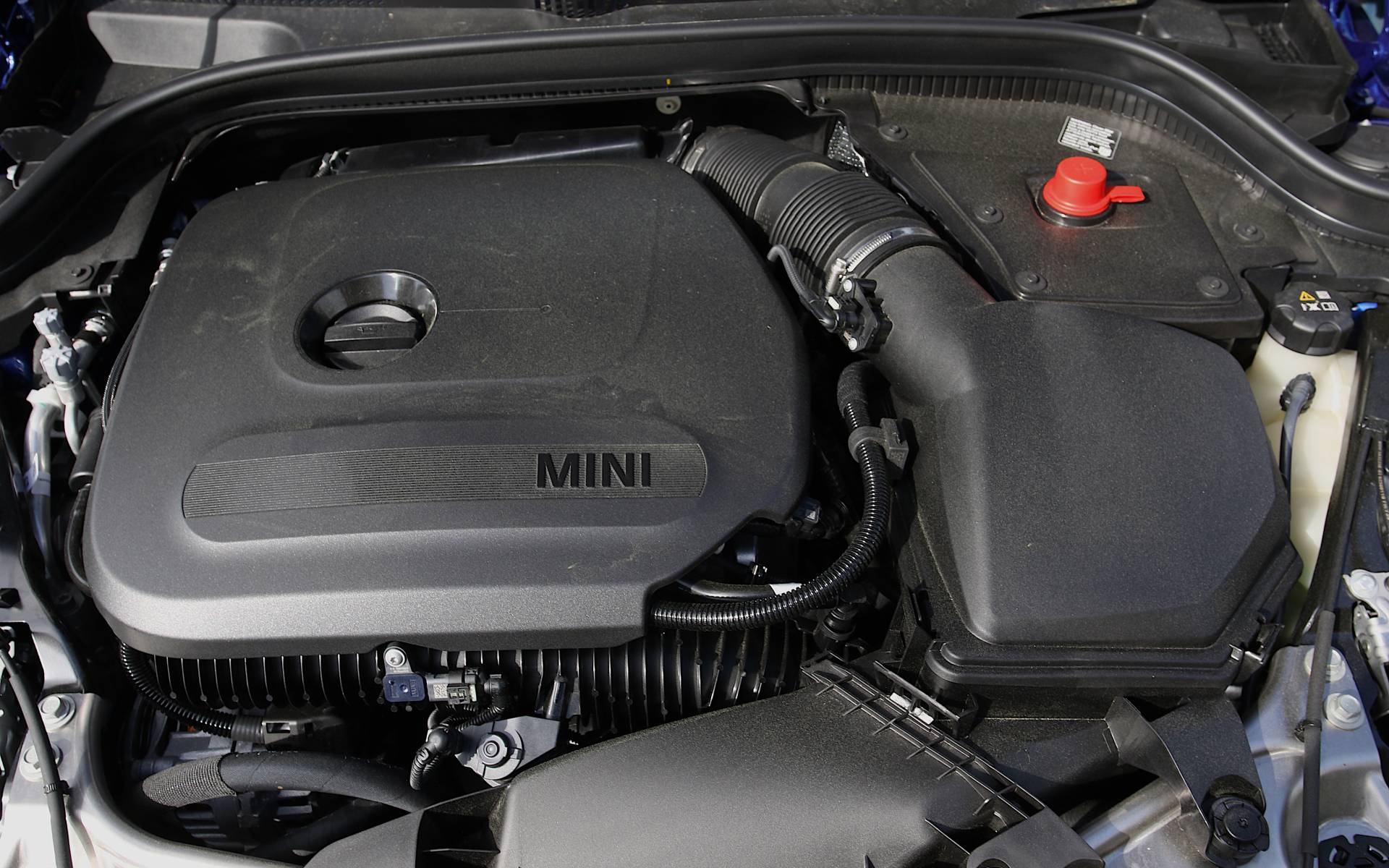
The transmission chosen by Mini is a 7-speed dual-clutch automatic. Its calibration has been revised in the JCW version to offer better responsiveness and a sportier feel. The drivetrain remains front-wheel drive, and it’s not possible to get an all-wheel-drive Mini Cooper.
For purists who appreciated the manual gearbox, you should know that it is unfortunately no longer available on new-generation Mini models. As enthusiasts of three-pedal driving, we deplore this disappearance, but low sales and rationality unfortunately prove the manufacturer right...
It has its own character
On start-up, the engine immediately reveals a more pronounced sound than other Coopers. Around town, the 3-door Mini remains a model of agility. In the midst of the pickup trucks and full-size SUVs that abound in Georgia, the little British flea can squeeze in anywhere. It's also very easy to park.
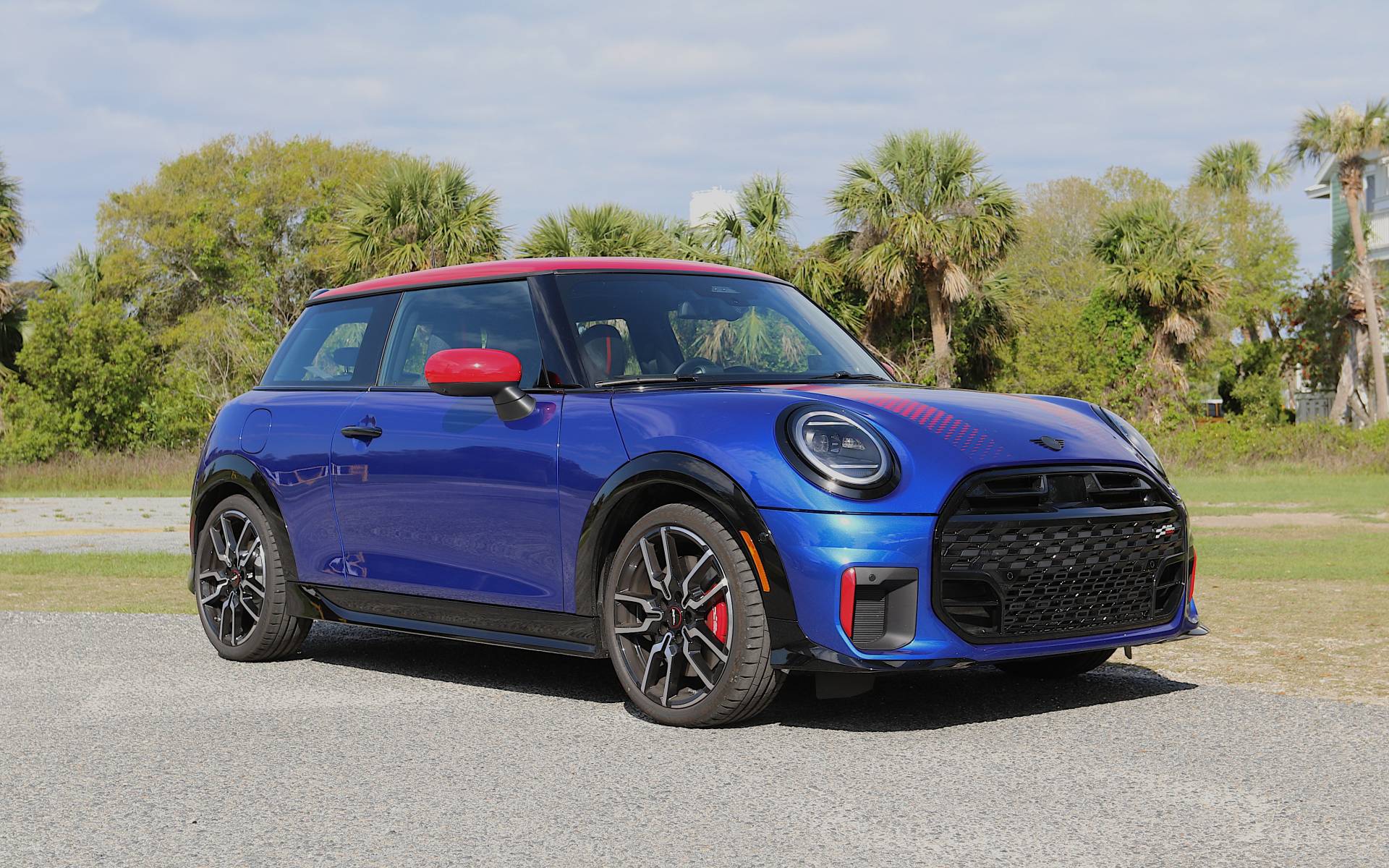
On the way out of town, the firmness of the ride quickly becomes apparent. The roads around Savannah are much better than ours, and it's only on big junctions or crossings that the shocks hit hard...even with a leisurely driving mode. So, logically, it should be worse on Quebec roads, and this factor should be taken into account before buying a car. On the highway, you also have to contend with a fairly pronounced rolling noise at speeds of 100 km/h and above.
As for the engine, the extra torque at low revs is immediately noticeable. The car is more alert than its predecessor between 0 and 50 kph, allowing you to accelerate quickly. Beware, however, when accelerating hard with the wheels turned, as the tires may squeal loudly if your right foot becomes heavier.
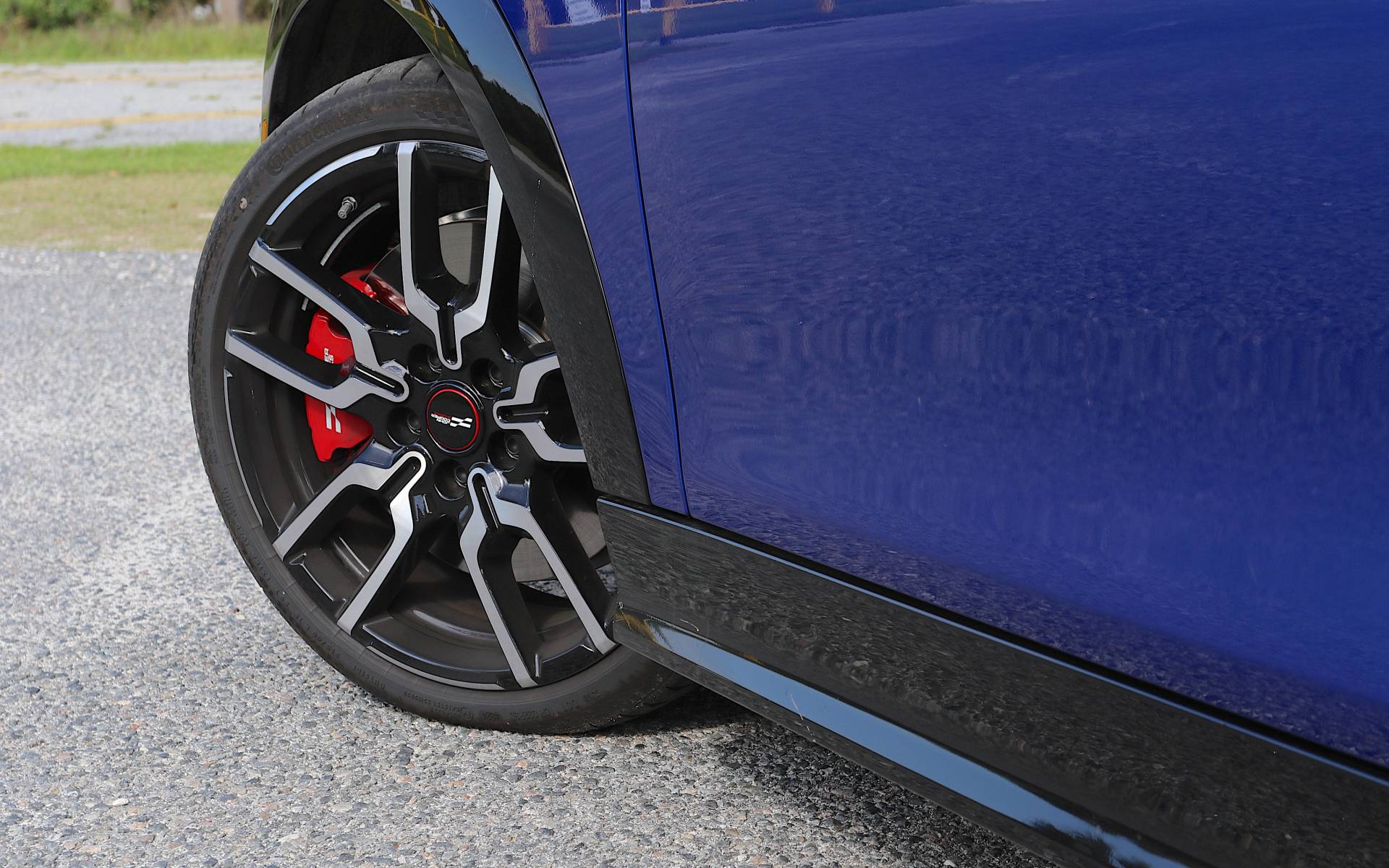
The roads we drove weren't very rich in curves, so we weren't able to push the car as much as we'd have liked. That said, we still found the steering precise and well proportioned. The front end is well guided, and the short wheelbase means that the car switches from one direction to the other quickly.
When using Sport mode and the Go-Kart experience, all the sportiness sliders are pushed to the maximum. The suspension becomes even stiffer, to the benefit of cornering speed. On the other hand, the gearbox stretches the ratios even further, and the sound becomes more evocative. This is especially the case on deceleration, when the foot lever is heard to be backfiring. Much quieter than those of the now-defunct Ford Focus RS, they add to the sporty ambience without becoming caricatures.
Using the steering wheel-mounted paddles, the drive is more interesting, even if we did notice some jerking up the gears in the sportier modes. Driven at a more enthusiastic pace, the Mini JCW doesn't rip your head off with every acceleration. The 0 to 100 km/h time of 6.1 seconds (6.2 for the convertible) bears witness to this. But the beauty of this car, when compared to 500, 600 or 700 hp models, is that it gives you pleasure at legal speeds. And there aren't many sports cars that can say that anymore.
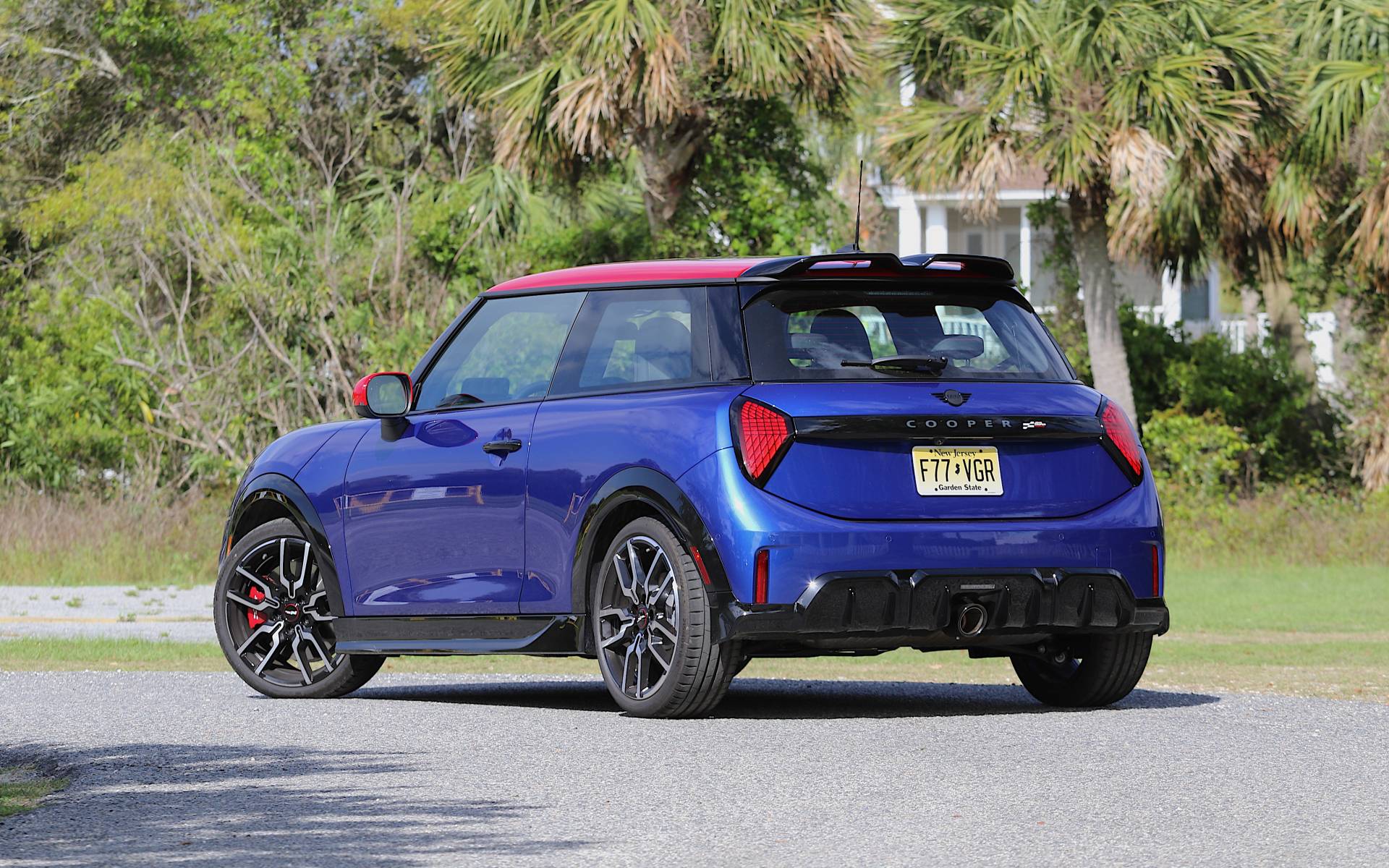
At the end of this first test drive, we find that the new Mini John Cooper Works is a car that stands out in current production. Admittedly, the loss of the manual gearbox does take some of the engagement out of the driving experience. But its efficient handling, peerless agility and pulsating engine give it a personality all its own. And even if it also suffers from marked shortcomings, such as a firm, noisy ride at higher velocities, this is part of its character. And if you're prepared to live with it, which won't always be easy on our rough roads, the Mini JCW should put a smile on your face on every ride.
But before that, you'll have to write a check for $51,990, to which you'll have to add shipping and preparation costs, as well as taxes. That's a hefty sum, making this version more of a passionate than a rational purchase. But when you love it, you don't count!