

Honda Passport 2026: adventure in the spotlight
Once popular, the two-row mid-size SUV segment is becoming less and less attractive to families. So much so that some manufacturers have simply jumped ship, or chosen to give their products a new vocation. So, while the Ford Edge and Toyota Venza are no more, there's a change of vocation for the Hyundai Santa Fe or the future Subaru Outback.
Noting the success of the Toyota 4Runner and the Bronco/Wrangler, Honda has decided to take a different direction with the Passport, though without making too many drastic technical changes. The idea is to offer the versatility and capabilities of these more adventurous SUVs, while retaining the comfort and versatility they can't offer.
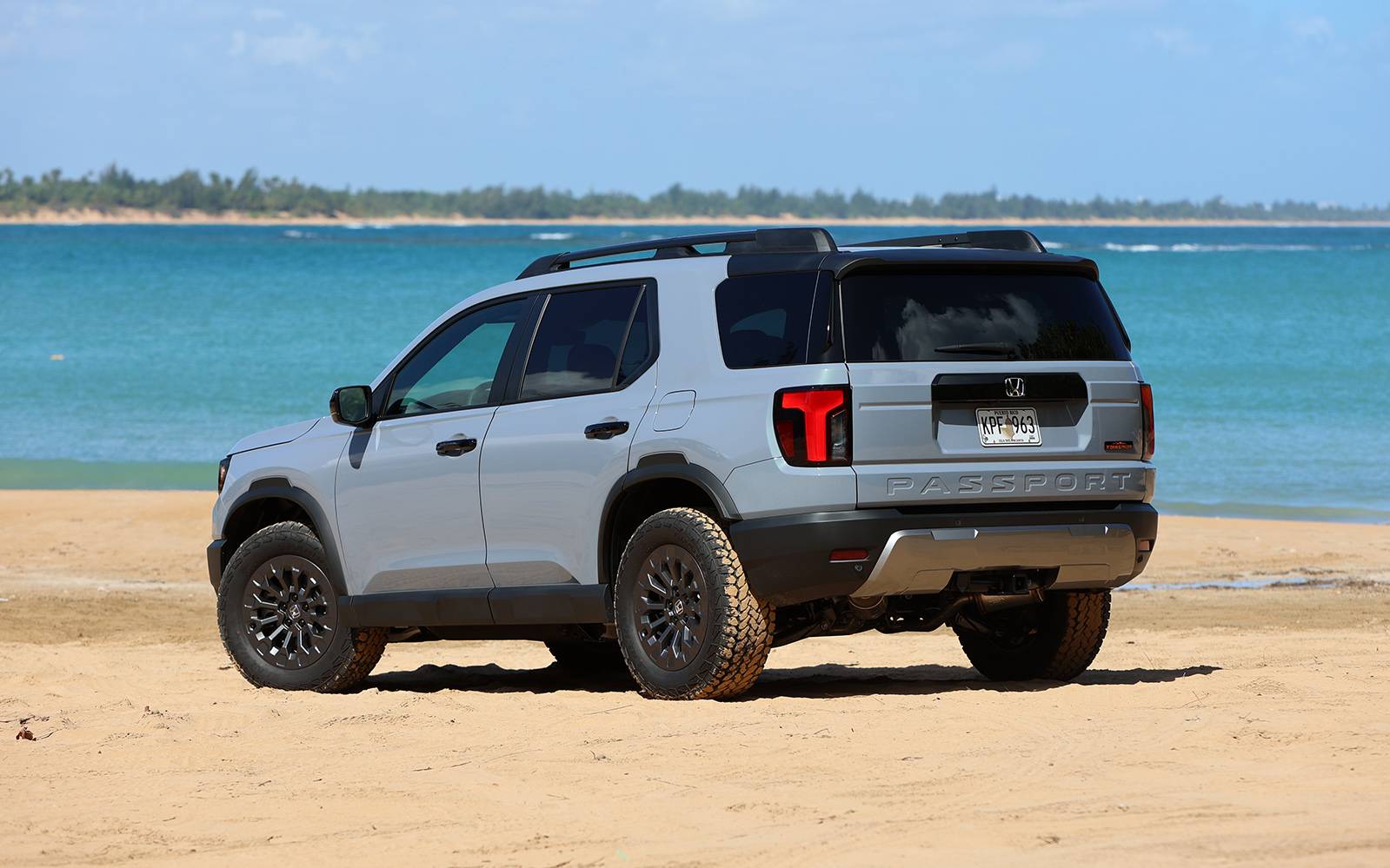
Rivaling the Volkswagen Atlas Cross Sport and the new Nissan Murano, the Passport is one of the few mid-size SUVs this year to feature a six-cylinder engine. This engine also nests in the Chevrolet Blazer, Jeep Grand Cherokee, Ford Bronco and Jeep Wrangler. That said, we're clearly targeting 4Runner buyers, who in 2024 were still buying them in large numbers.
In the Pilot's shadow?
Almost three times less popular than the Pilot, the Passport has until now been regarded by many as a two-row Pilot. Not only is it not necessarily less expensive than its big brother, but people found few advantages in it, as in the case of the Mazda CX-70/CX-90.
This is why, without denying that the Passport is derived from it, Honda is attempting a distinctly different approach, one that will create a larger gap between customers seeking a family-oriented SUV and those looking for a versatile and adventurous vehicle.
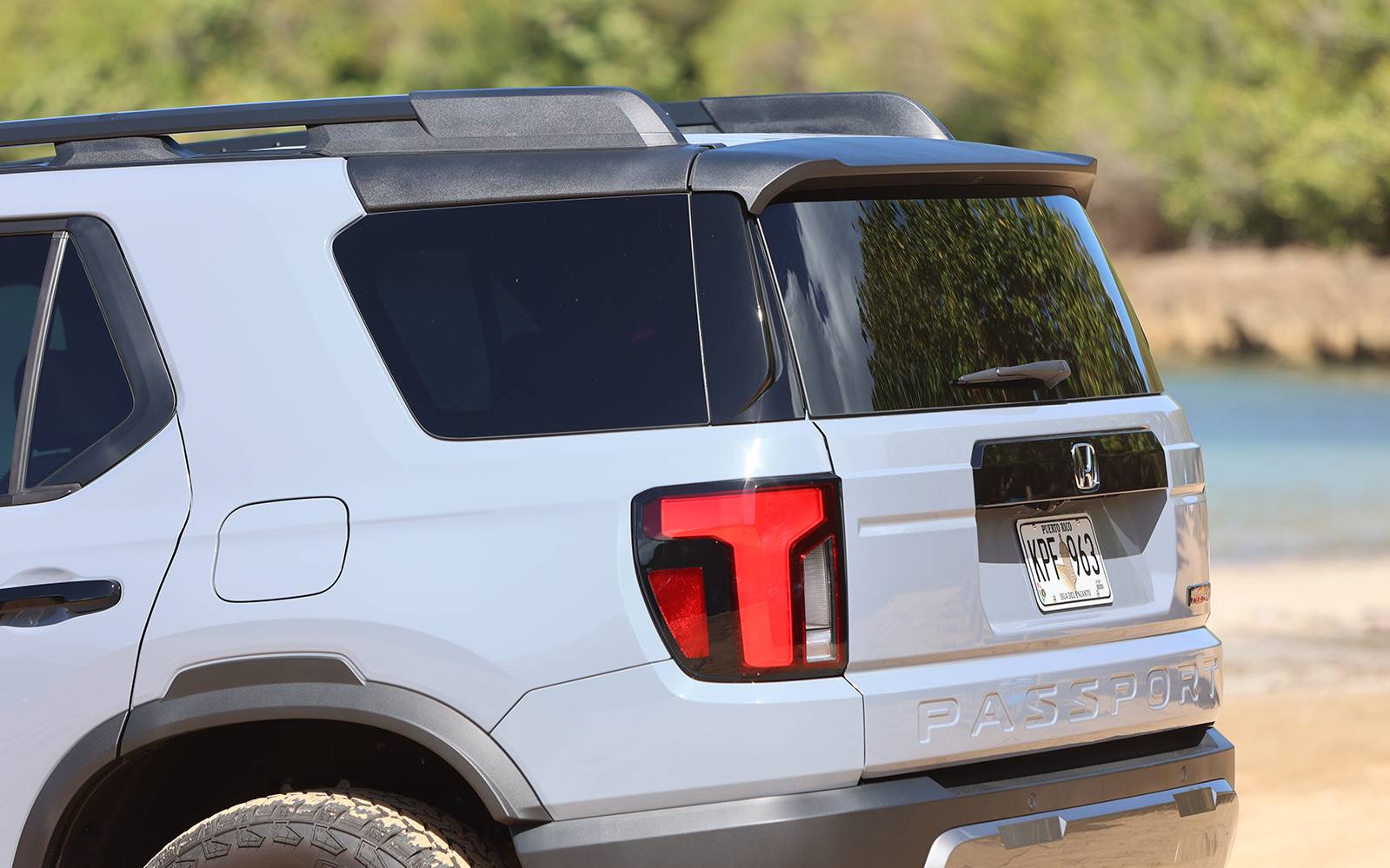
Don't be surprised: the Passport still uses the same chassis, engine and many of the same technical components as the Pilot. If you look closely, you'll see that everything between the A and C pillars (windshield pillar and the pillar separating the rear doors from the quarter windows) is identical to the Pilot. On the other hand, Honda has completely reworked the front end, where the hood air intake, front-end stance and orange daytime running lights contribute to a more rugged appearance. The same goes for the rear end, which is truncated and angular, with a satin-black painted beltline.
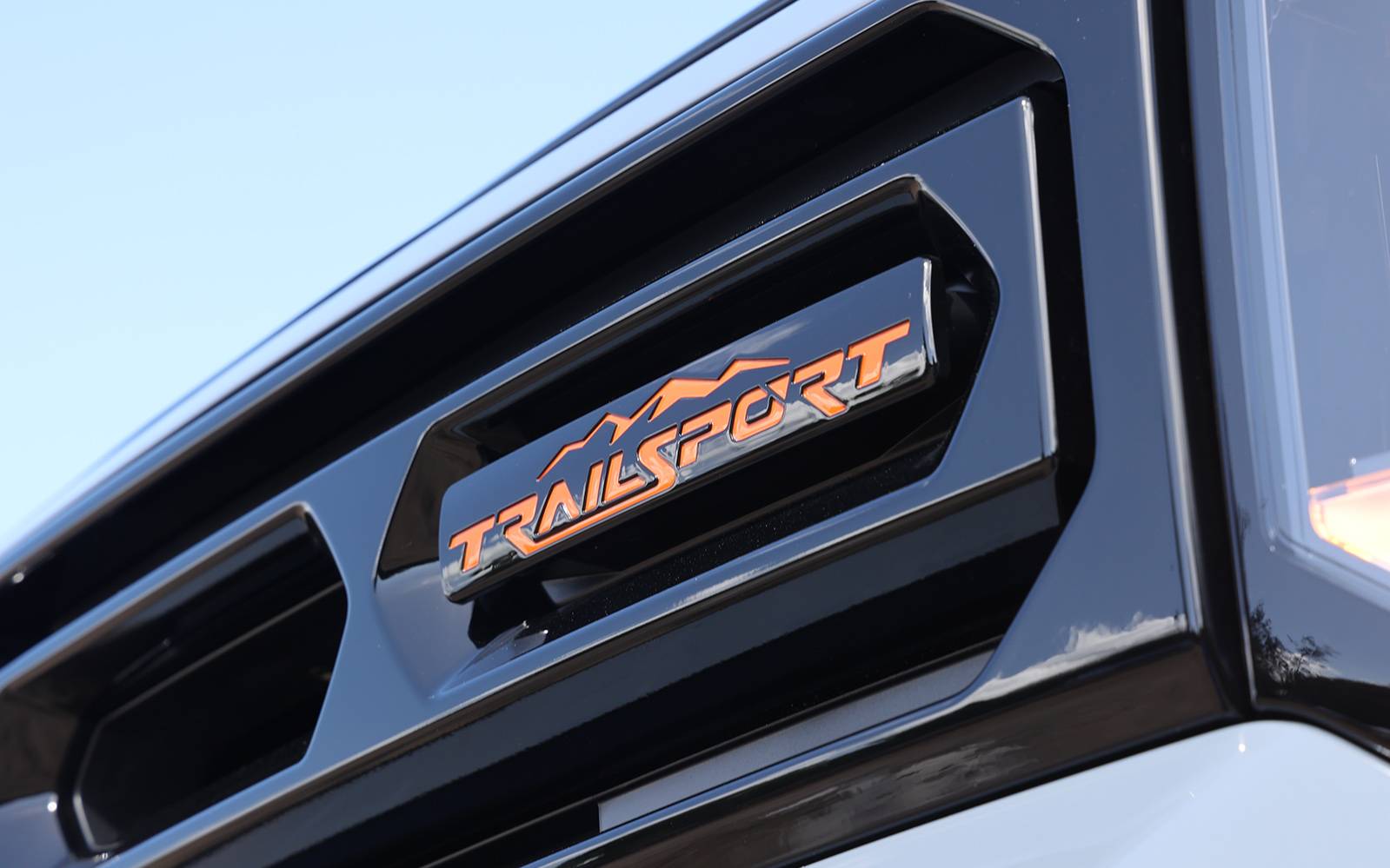
And because the Canadian versions are now all identified as TrailSport models, a number of TrailSport-related aesthetic elements have been added. For example, the 18-inch wheels, the orange emblems and tie-down hooks, the larger roof rack, the bumpers incorporating metallic devices, and the underbody plates. Then, as a matter of fashion, Honda offers a Blackout variant, with black rims and emblems.
More imposing, more competent
As you know, the Passport was first launched in 1993 as a clone of the Isuzu Rodeo, for the US market only. This vehicle never crossed our borders in this form, but it enabled Honda to quickly replicate the success of the Ford Explorer, Jeep Grand Cherokee, Nissan Pathfinder and Toyota 4runner. The manufacturer stopped selling this model in 2002, only to relaunch it this time with an in-house product, for the 2019 model year.
Today, however, the Passport does more than simply respond to market success. It's forging a stronger character, which we're sure will be particularly appreciated by customers who aren't always keen on turbocharged 4-cylinders. Adopting the Pilot's wheelbase, the Passport boasts better angles of attack (31 and 31.1 degrees), as a result of smaller overhangs.
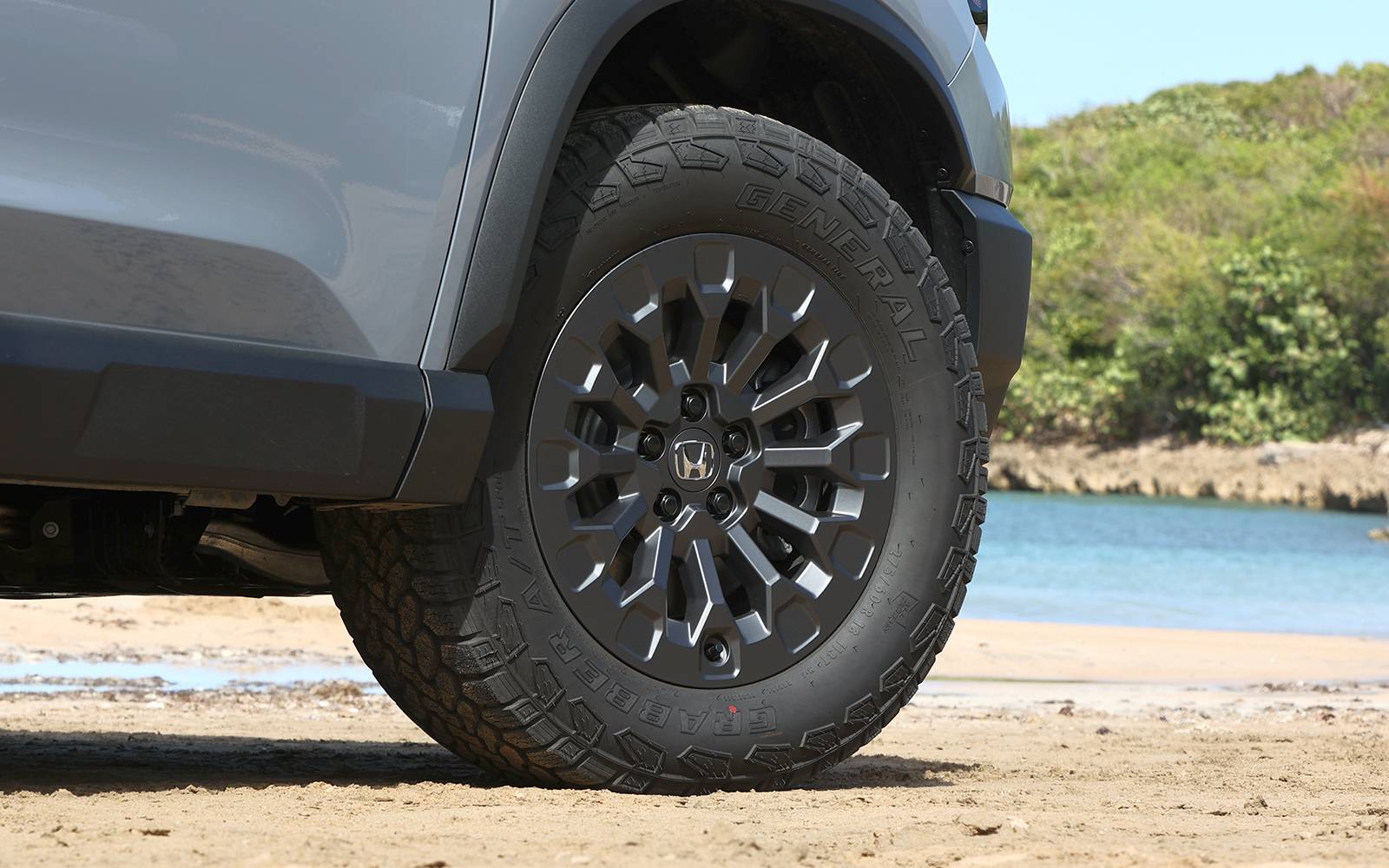
Equipped with General Grabber A/T tires, it can also be fitted with a dealer-installed HPD (Honda Performance Divison) package, which includes a number of aesthetic touches, as well as reinforced sill protectors. Exclusive wheels and a black hood decal are also part of this package, which many enthusiasts are likely to add to their order.
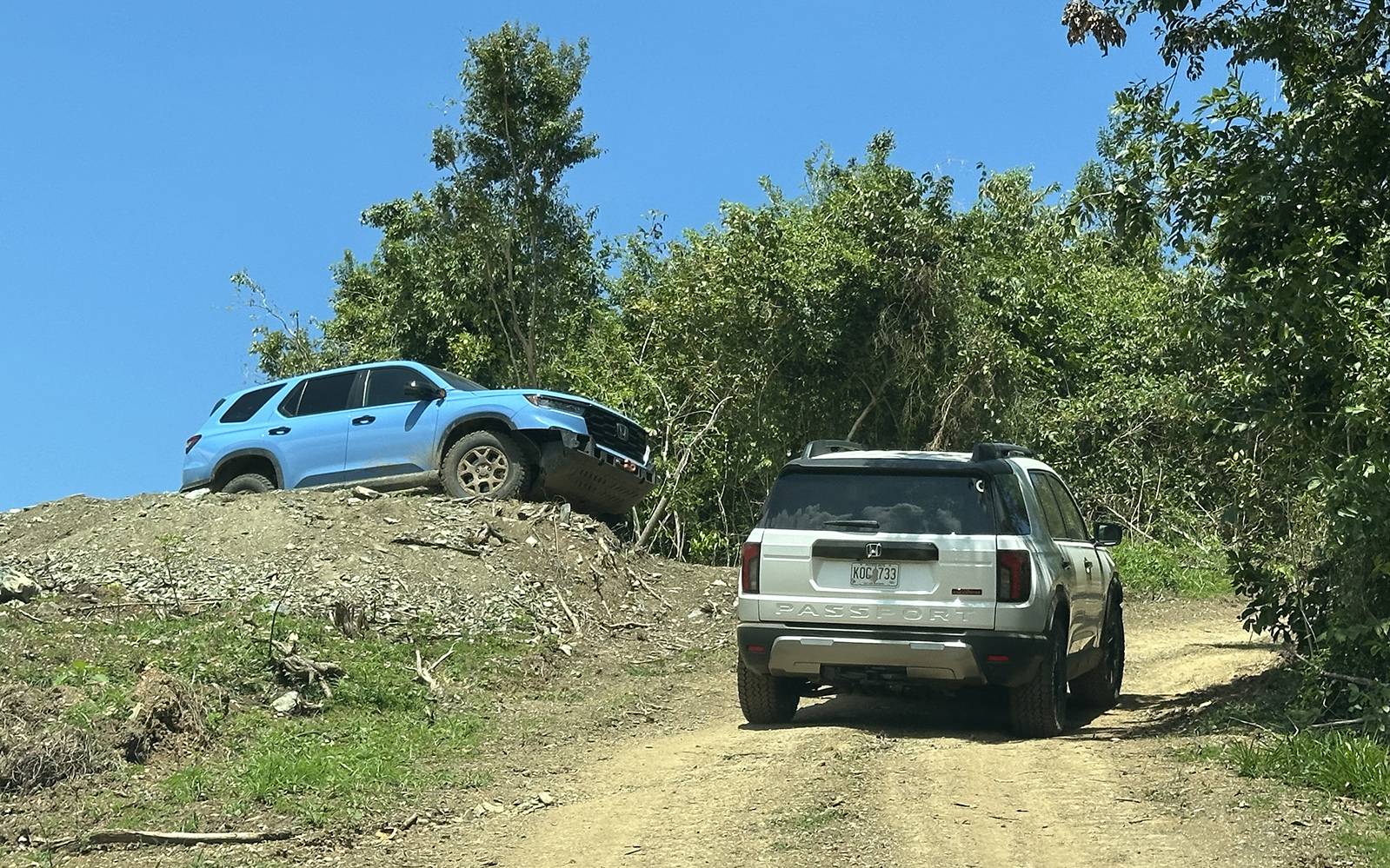
Honda's strategists invited us into an environment where off-road driving had been brought to the fore. This was a first for Honda, which has never before offered adventure-oriented automotive products. The purpose of this exercise was, of course, to highlight the effectiveness of the various driving modes, including Hill Descent Assist and Trail mode, with which you get digital instrumentation featuring an inclinometer and elevation indicator. The TrailWatch camera shows you what's ahead, while the front is in the air. Very handy when you're venturing out where the hills are steep and the ground sometimes loose.
As a result, the exercises also involved proving the vehicle's efficiency in mud and sand, allowing us to see the advantage of the tires specific to TrailSport models. It's worth noting that our neighbors to the south also offer RTL models for normal use, with the option of front-wheel drive. Honda Canada explains that these versions would have had little success here, and that the bulk of buyers will be more attracted to TrailSport models. It also admits that profitability remains higher with these models, which are positioned at the top of the range.
3.5 liters... all with smoothness
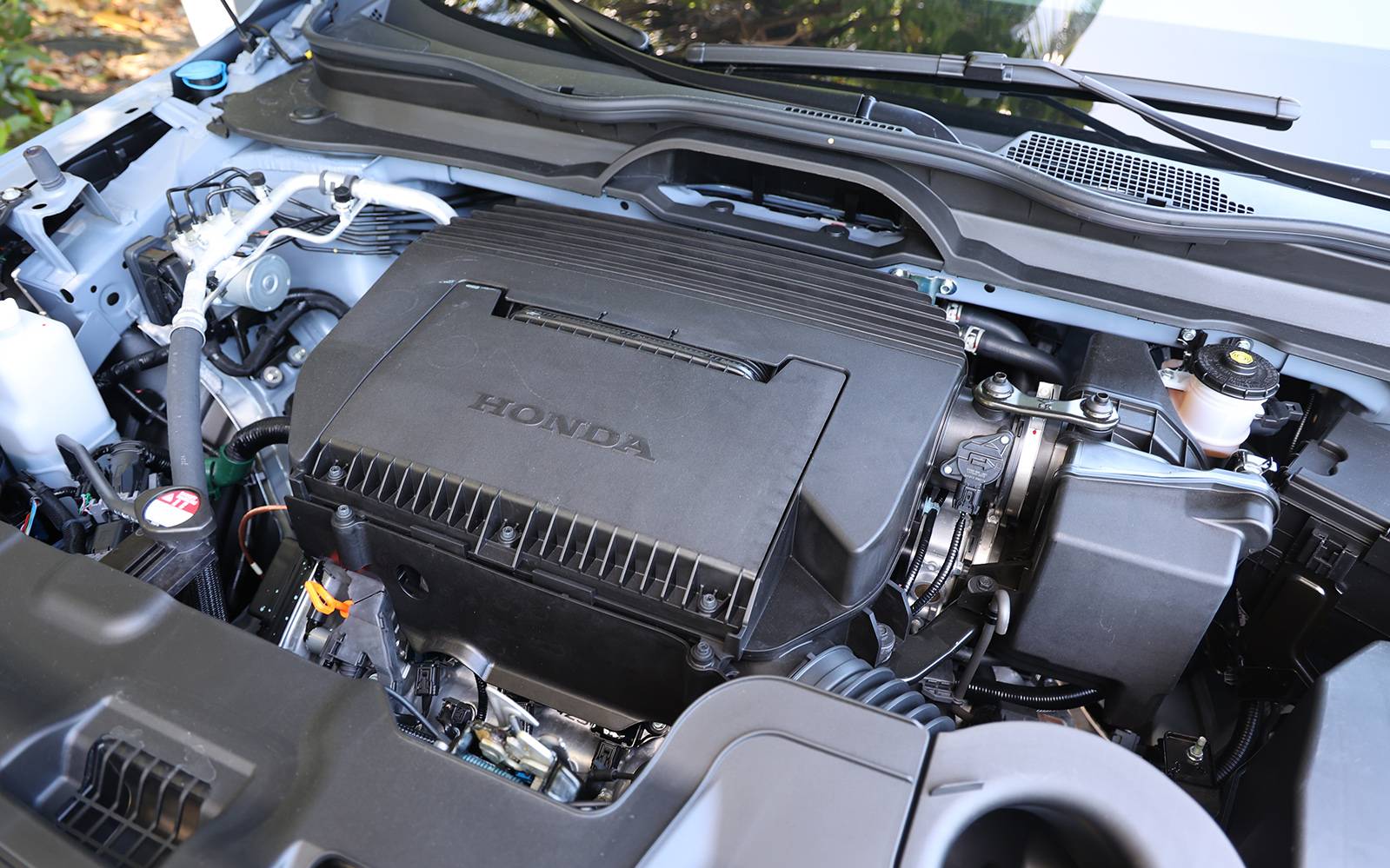
Honda offers a familiar V6. It's the same one used on the Pilot, Odyssey and Ridgeline, but with 5 fewer horsepower. The 285 hp output is therefore quite respectable, although torque is considerably lower than that of the Toyota 4Runner's turbocharged four-cylinder (262 lb-ft vs. 317 at Toyota). Nevertheless, the V6 consumes little more than the 4-cylinder of the 4Runner, with an average rating of 11.4 L/100 km, and 9.9 liters on the highway.
The benefits? Incredible smoothness and flexibility, making for a much more enjoyable ride, especially at cruising speed. An engine that sounds great under acceleration, but is discreet once up to speed. Admittedly, the ten-speed automatic gearbox has a negative impact on economy, sometimes proving hesitant when it's time to downshift. A problem you'll never notice in extreme situations, where the gearbox's S mode eliminates this delay while maximizing efficiency. You can even shift gears manually, which comes in handy on steep inclines.
As for on-road driving, this is without doubt its greatest asset. Despite the use of firmer shock absorbers, the Honda Passport is comfortable and quiet, not to mention the fact that its steering remains extremely precise. Of course, you won't feel like you're driving a Ford Bronco-style truck, but the trick is to strike the perfect balance between the two worlds, not to mention the fact that few buyers overexploit their vehicle.
Plenty of room!
The Passport boasts innumerable storage spaces, as well as some of the most impressive cargo volume on the market. No less than 1,246 liters of volume behind the bench seat, which folds flat to offer 2,356 liters. In short, there's no shortage of space. What's more, the rear seats can easily accommodate three booster seats. As for the driver, he benefits from a rather sober, no-frills cockpit, where decorative elements are limited to a few orange accents and TrailSport emblems.
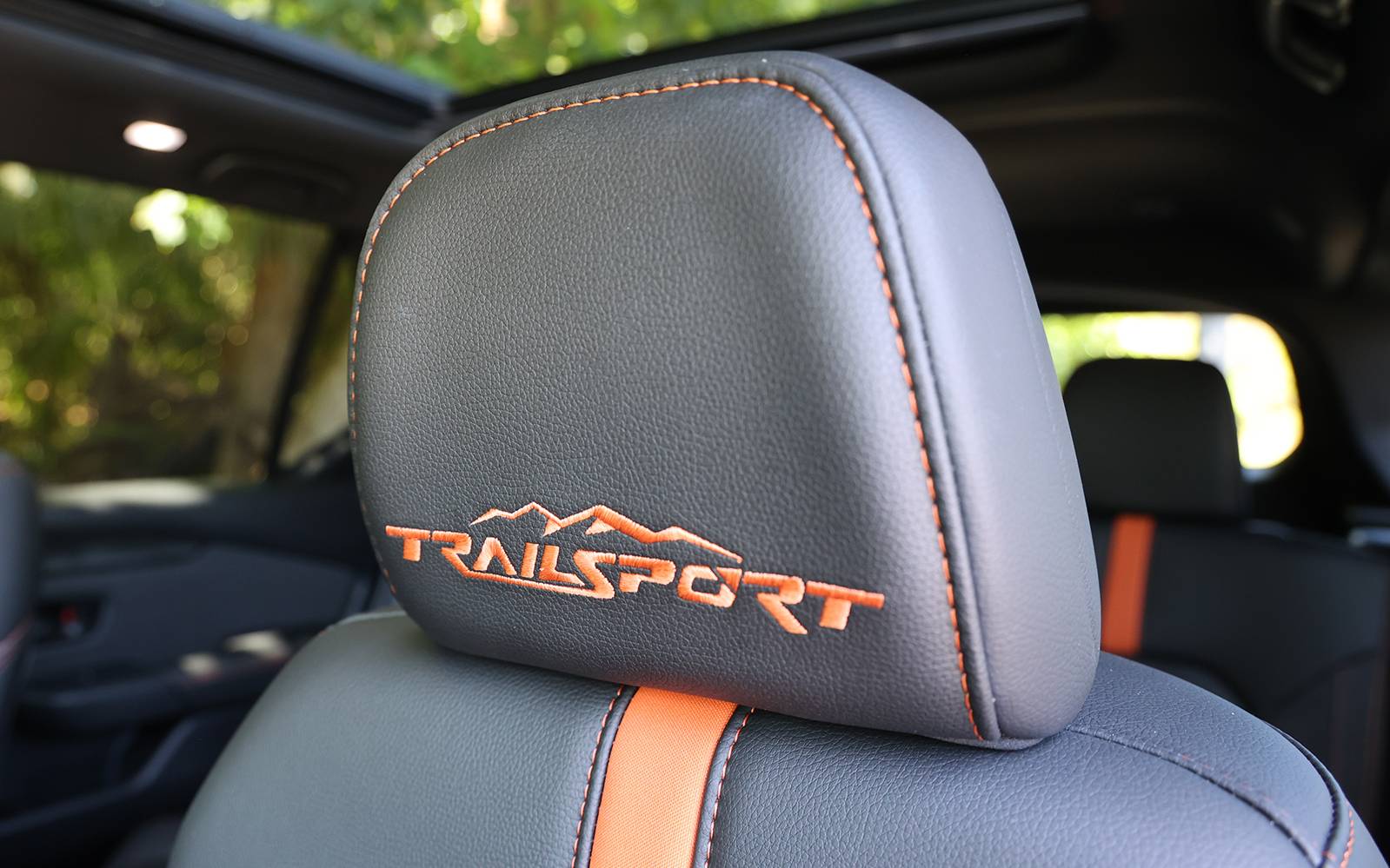
With the Touring package, you get perforated leather upholstery with stitching, and adjustable ambient lighting. This is in addition to the 12-speaker Bose audio system, ventilated front seats and rear-seat heating control. The basic equipment is already very comprehensive, including a panoramic sunroof, induction charger and 9-inch central screen with wireless Apple CarPlay/Android Auto.
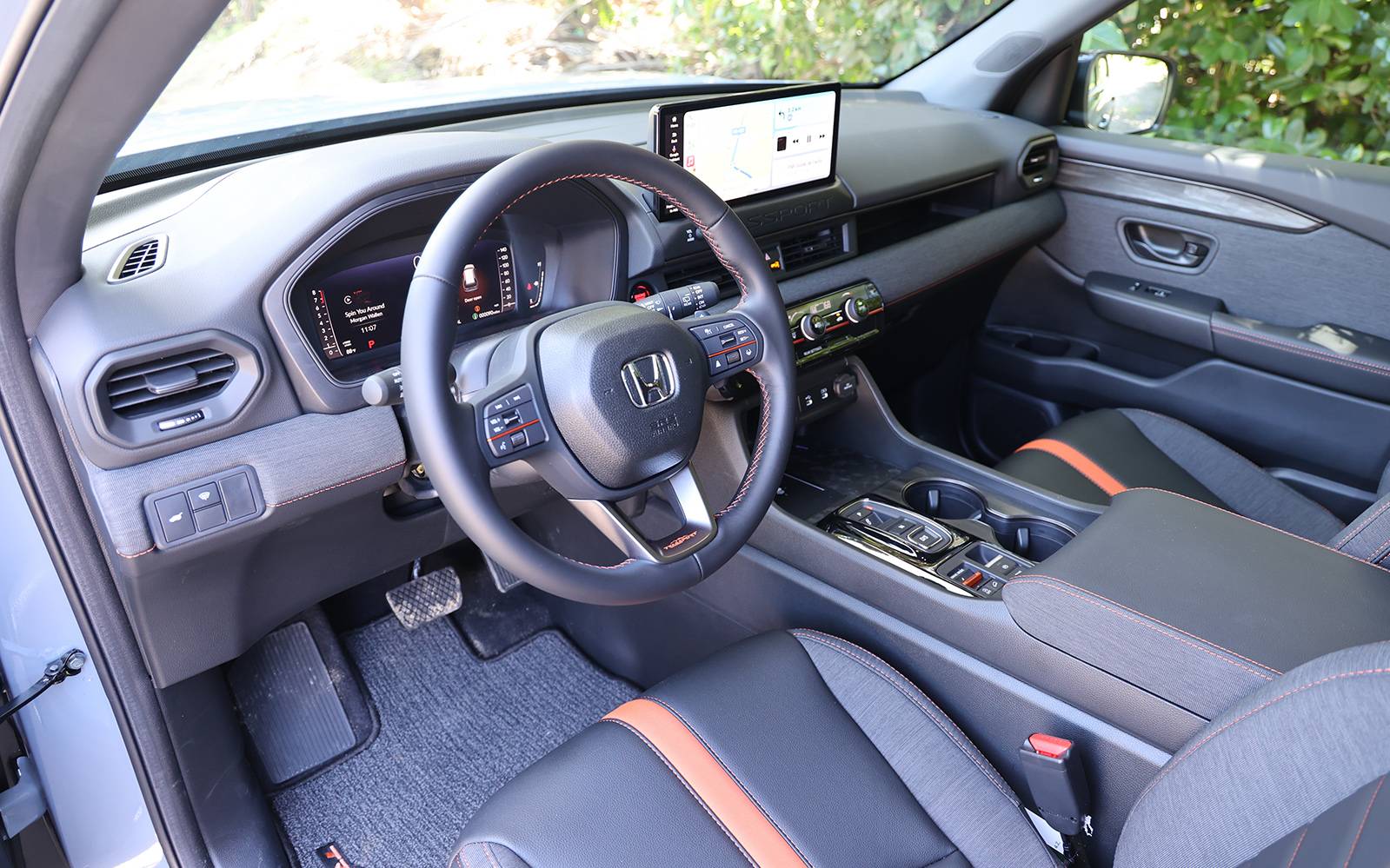
Including all costs, the invoice should be in the region of $60,000 for the regular version, and $64,000 for the Touring. That said, following the announcement of the tariffs imposed by the Trump government, Honda Canada has re-evaluated its price range, which could of course rise in relation to that initially forecast. The manufacturer is expected to unveil the official invoice on April 4, after which it will release the units currently arriving at Canadian dealerships.
A few hundred dollars won't change people's perception of the product, but it does illustrate the extent to which manufacturers have to deal with circumstances beyond their control. Like the Passport, most of our rivals - including the Toyota 4Runner - are assembled in the USA, which could mean higher prices.
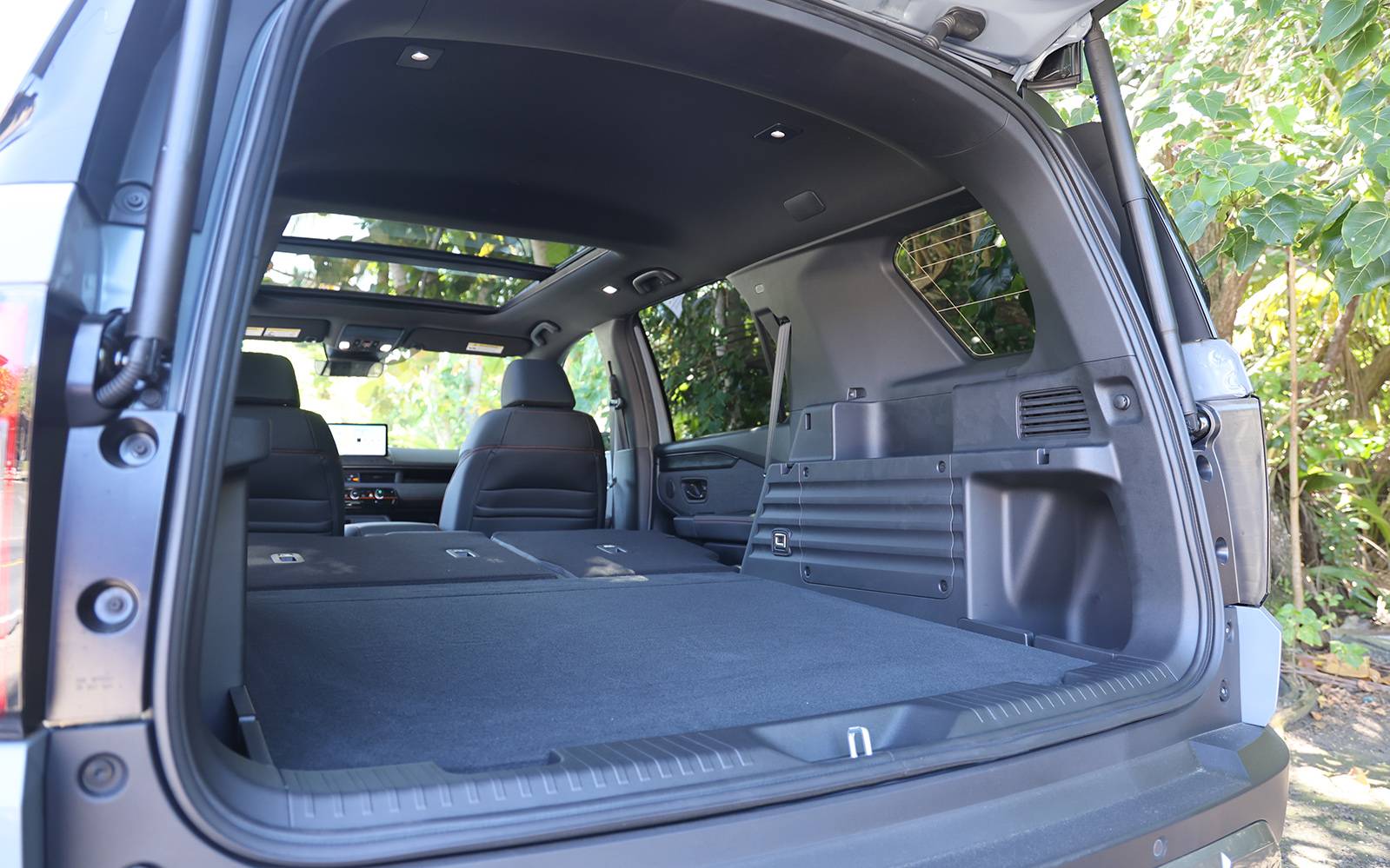
In conclusion, the Passport is an SUV that is more focused, more convincing and stronger in character, which is likely to convince more buyers. It remains to be seen whether dealers will get the desired number of units, which has long been a problem for vehicles assembled at the Lincoln plant in Alabama.