

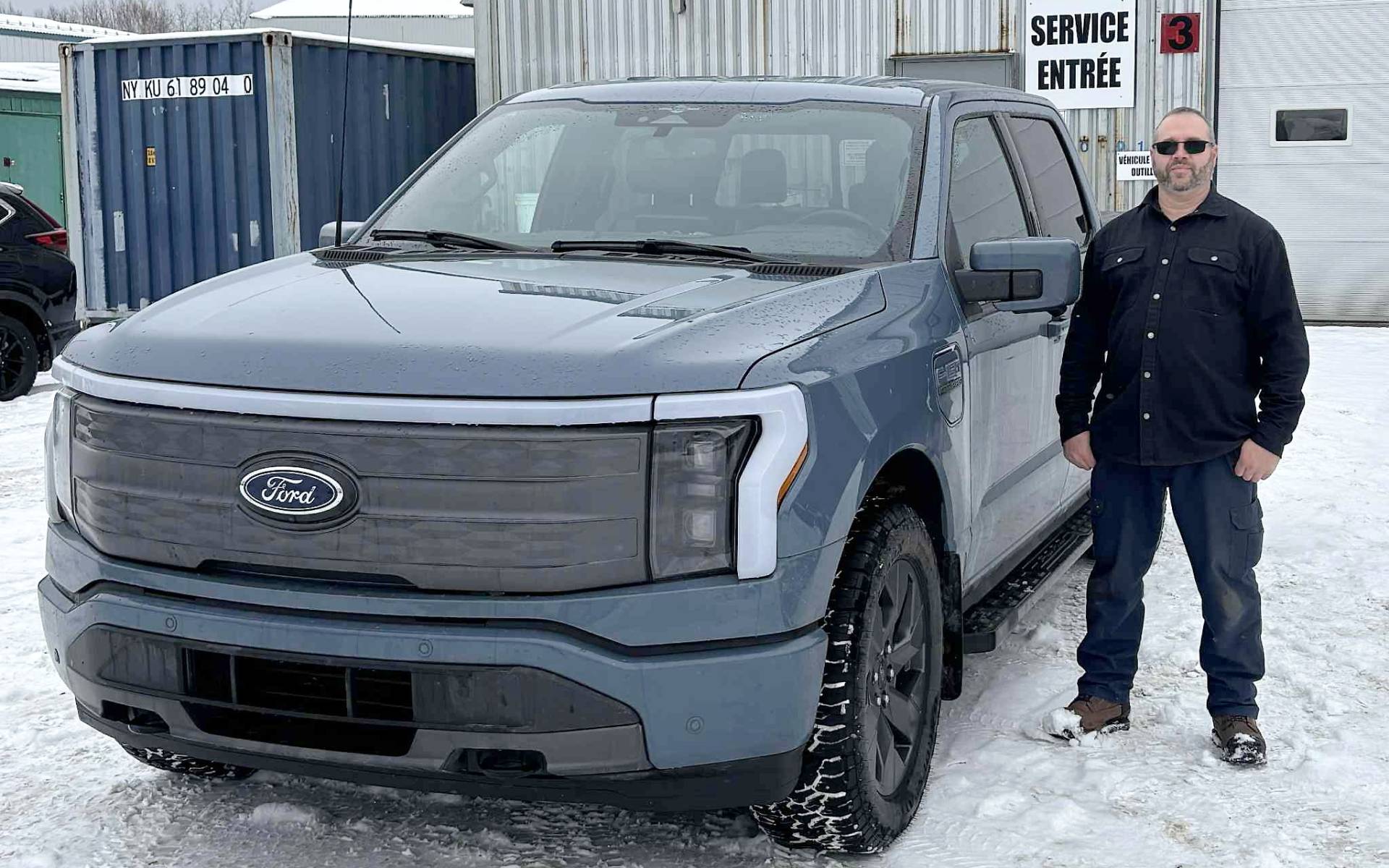
Ford F-150 Lightning owners who will not go back to gasoline
Yes, electric pickups currently lose more range when towing and in winter than their gasoline counterparts, and it is not yet possible to recharge them everywhere. But Le Journal contacted members of the Ford F-150 Lightning EV Facebook page in Quebec and could not help but notice the enthusiasm of these owners, who are ultimately saving money.
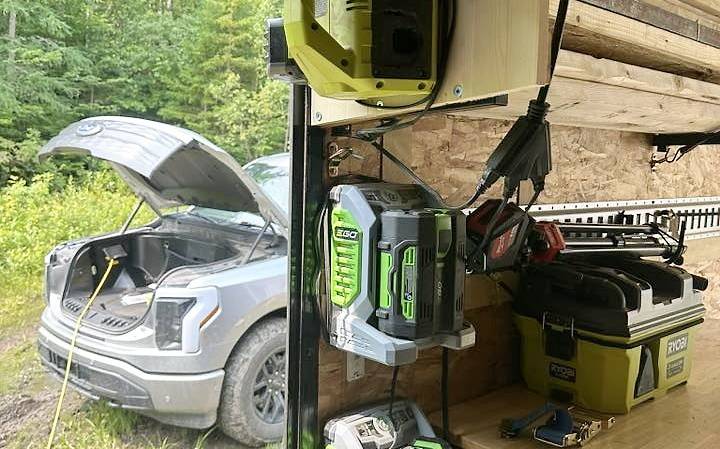
Recharging in the middle of the woods
To get to his cottage 65 km from La Tuque from Montreal, Laurent Allen-Guérard built his own solar-powered charging station.
"I've driven about 4,000 km using solar power since last year. I took more and more risks when I reached 25%, leaving at 60-70% [after my stay]," he says.
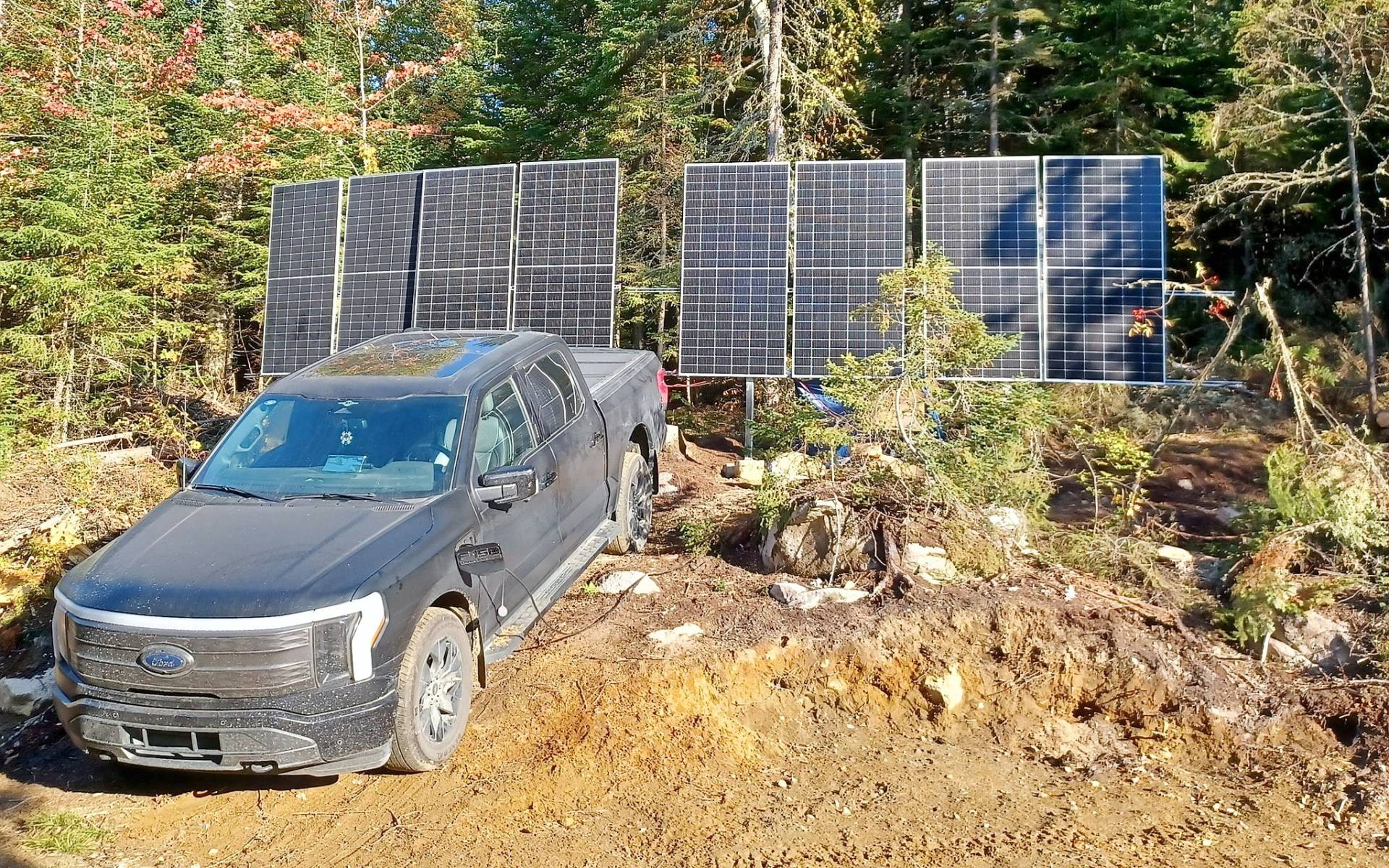
His station consists of double-sided panels and batteries with a total capacity of 10 kWh. He plans to replace his inverter with a more powerful one. “It will charge more next year.” The station will also be used for his new Taiga Nomad snowmobile.
His 2023 Lightning Lariat has clocked up 60,000 km, half of which was off-road.
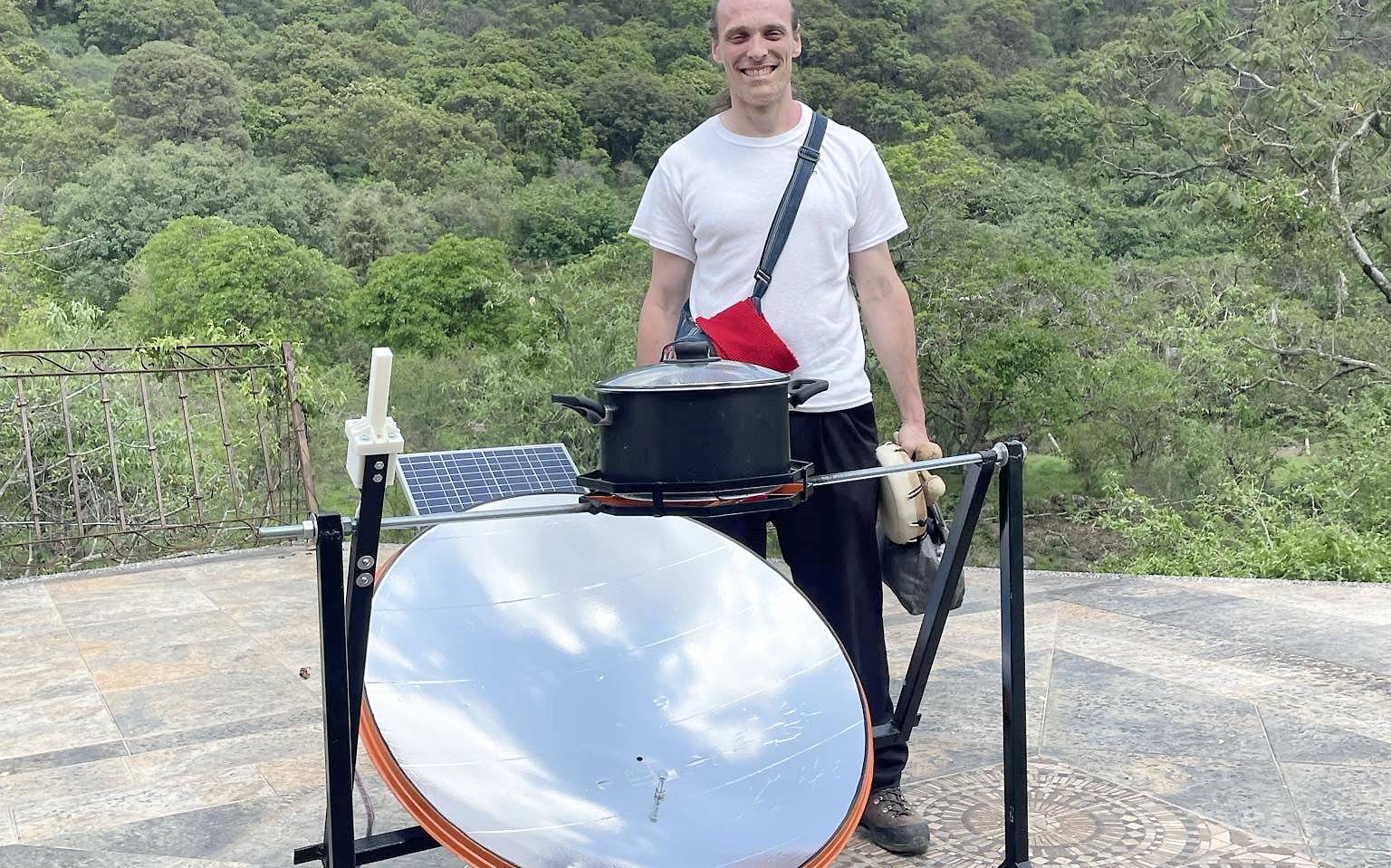
"I get butterflies every time I drive it, especially when off-roading. It's instantaneous, really powerful. I like the space inside [the space under the front hood is a storage compartment]. It's always full of tools. I carry a coffee maker, frying pan, pot, and stove rings so I can cook while charging.“
”Now, with the 180 kW charging stations, I hardly have time to eat! It's the most enjoyable vehicle I've ever driven. Plus, it's very well protected underneath; I've hit several rocks without any damage. The only thing that's expensive is repairs,“ explains Laurent Allen-Guérard.
Practical and economical
”I drove 40,000 km in a year and it didn't even cost me $1,500 in electricity. With my 2016 Ram Ecodiesel, even though it got 9 L/100 km, it cost me $6,500 in fuel plus two oil changes at $300 each," says Stéphane Bruneau of Rouyn-Noranda.
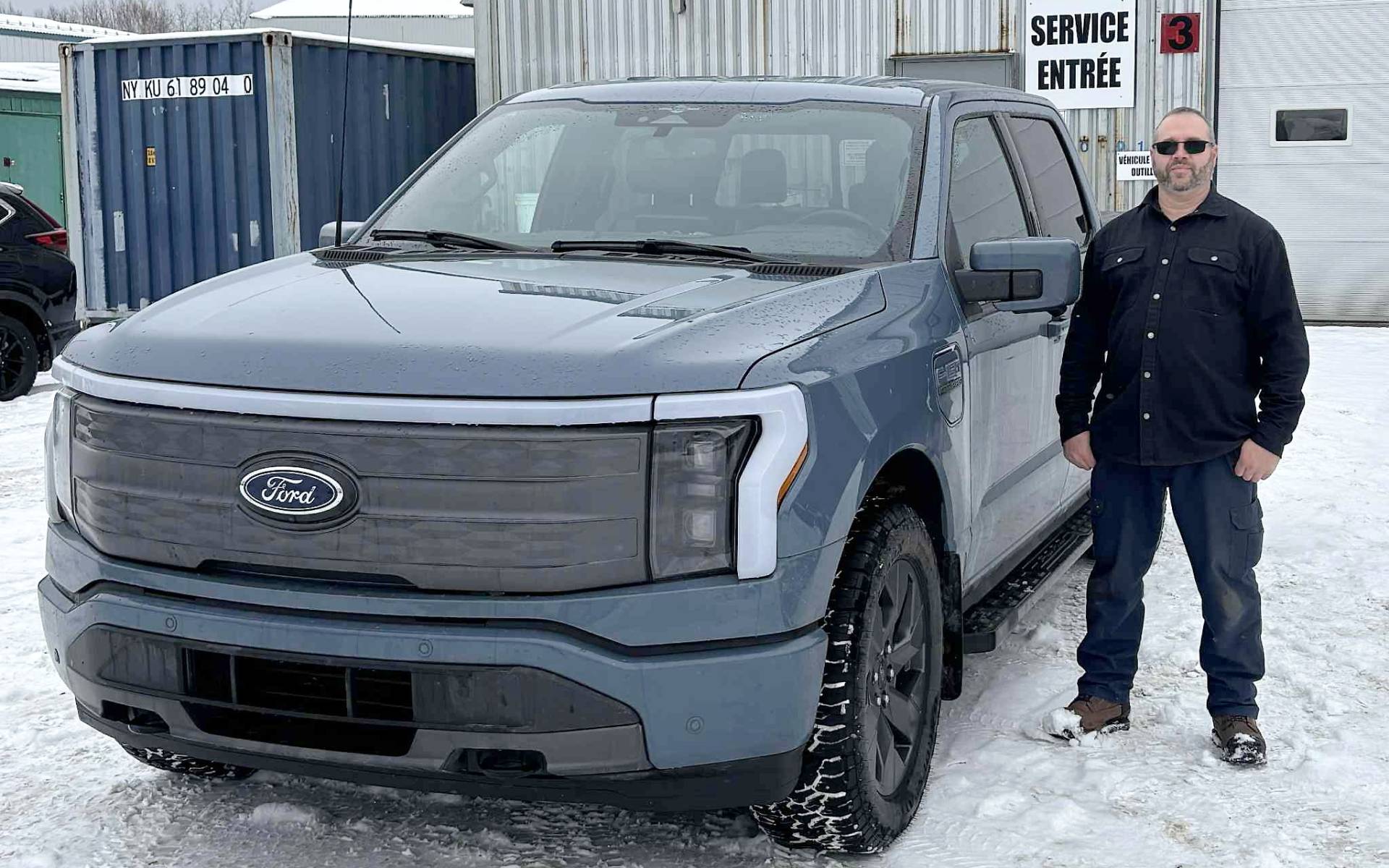
"The Lightning is such a practical multi-purpose truck when you need electricity for repairs or even work. Sure, its range is limited on the road, but the convenience and cost savings it offers are worth the little time it takes to recharge.“
”I don't want anything to do with gas-powered vehicles anymore. With an electric vehicle, you get comfort, power, economy, and peace of mind," says Stéphane Bruneau.
An electric vehicle for his business and his horses
Jean-Philippe Jetté owns J'phil Électrique in Saint-Mathieu-de-Beloeil, but he is also passionate about horse riding. His loaded horse trailer weighs close to 10,000 pounds.
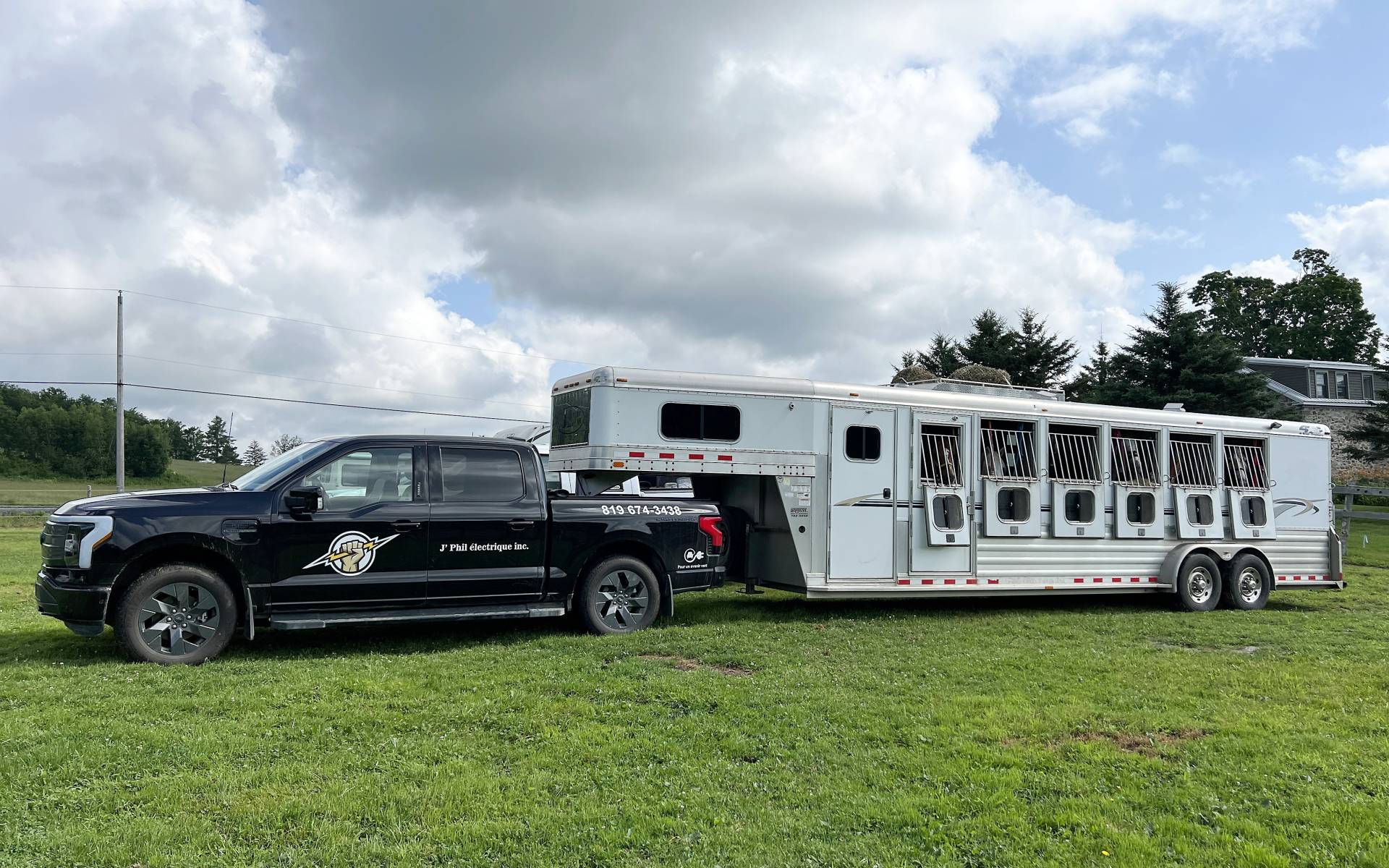
“With this configuration, I get 300 km of range in the summer. It replaced my F-350. It performs beautifully, but Ford does not recommend installing a fifth wheel or gooseneck hitch.”
"My company has a total of four Lightnings. All my employees love them. Mine always pulls a trailer, and the other three have a box and ladder rack. In total, the four trucks cover about 150,000 km per year. I estimate the annual savings at $20,000 in fuel and maintenance. I've had some recurring problems both under warranty and after, but nothing to discourage me."
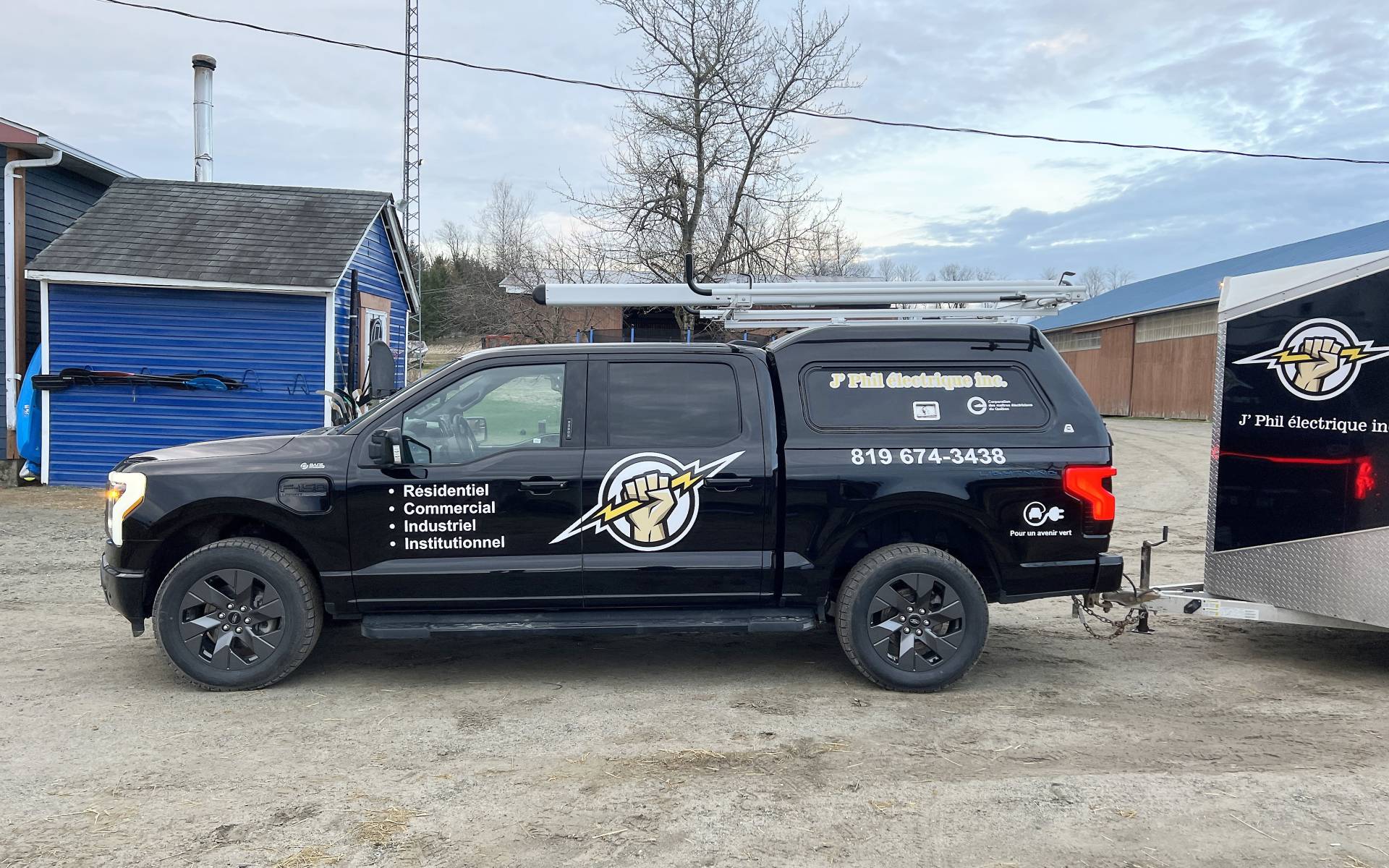
"I'm sure I accelerate faster than an F-350 with half the load, if not empty. We sometimes work in Montreal. Recharging takes 30-40 minutes, and the guys eat at the same time. In winter, with the big battery and ladder, the truck can travel 250 km, and about 325 km in summer. In winter, mine, with a 16-foot, 7,500-pound enclosed trailer, gets 180 to 200 km,“ says Jean-Philippe Jetté.
Renovating his sugar shack with his truck
”I've had my Lightning for two years and it's approaching 100,000 km. I wasn't enthusiastic at first, but now I wouldn't go back. I restored my off-grid sugar shack thanks to it. I also power my shack with my Lightning, so no more noisy generators. I make regular trips between Montreal and Quebec City without any constraints. I always plan my charging around my lunch break, so I don't waste any time. It's very economical, low maintenance, and reliable," says William Limpens.
No turning back
GCD Energy, which installs multi-unit residential, commercial, and industrial charging stations in the Greater Montreal area, uses five Lightning chargers.
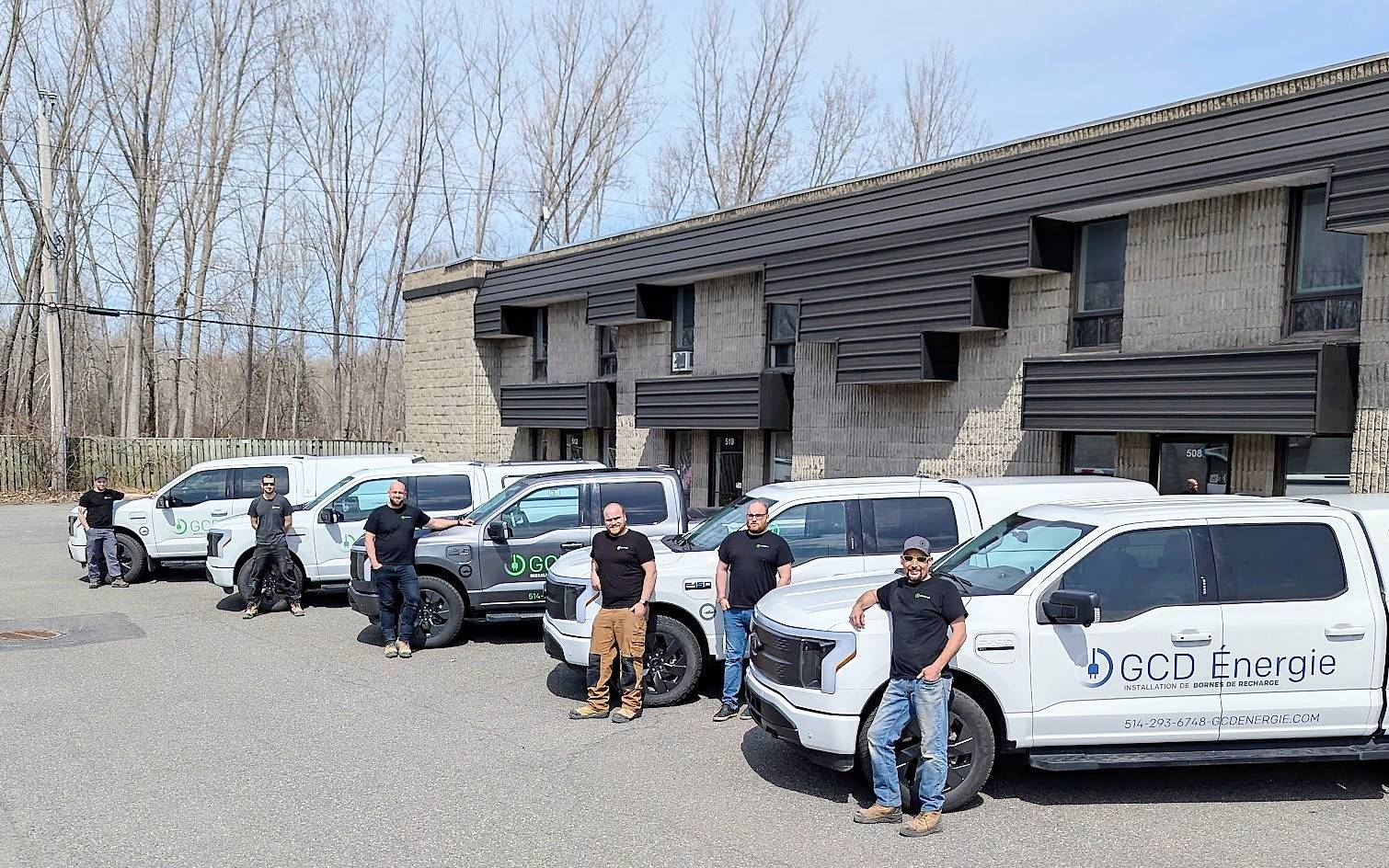
“I bought the first one in 2022,” says owner Guillaume Dubé. “I have four different versions: Lariat, Flash, XLT Long Range, and an SR. They replace Savana and Sprinter vans.”
"Each truck travels about 30,000 km per year. The savings in fuel and maintenance are $10,000 to $15,000 per truck per year. In 98% of cases, recharging is done at home or at the workshop. Employees are reimbursed between $450 and $500 per year for their electricity costs.“
”The vehicles are efficient, reliable, and well suited to our operations. There's no way we're going back. When you look at the hourly cost of labor today, it makes much more sense for our teams to recharge while they sleep rather than waste time filling up with gas," says Guillaume Dubé.
Up to $23,000 in annual savings
Paul Bergeron, a Quebec City entrepreneur specializing in the installation of draft beer, gas, and dry ice delivery systems, is on his second Lightning after selling his first at 90,000 km.
“I love it. I’ve owned about 30 vehicles, and this is my best experience ever. It’s always loaded to the limit (2,000 pounds). I drive 60,000 km per year, and I estimate that, based on gas prices and maintenance, I save between $15,000 and $23,000 per year. I don't want to invest in Ford's R&D, so I took out an extended maintenance plan for nearly $10,000, but it's partially refundable upon resale. My electricity costs are $100 per month in the summer and $200 in the winter," says Paul Bergeron.