

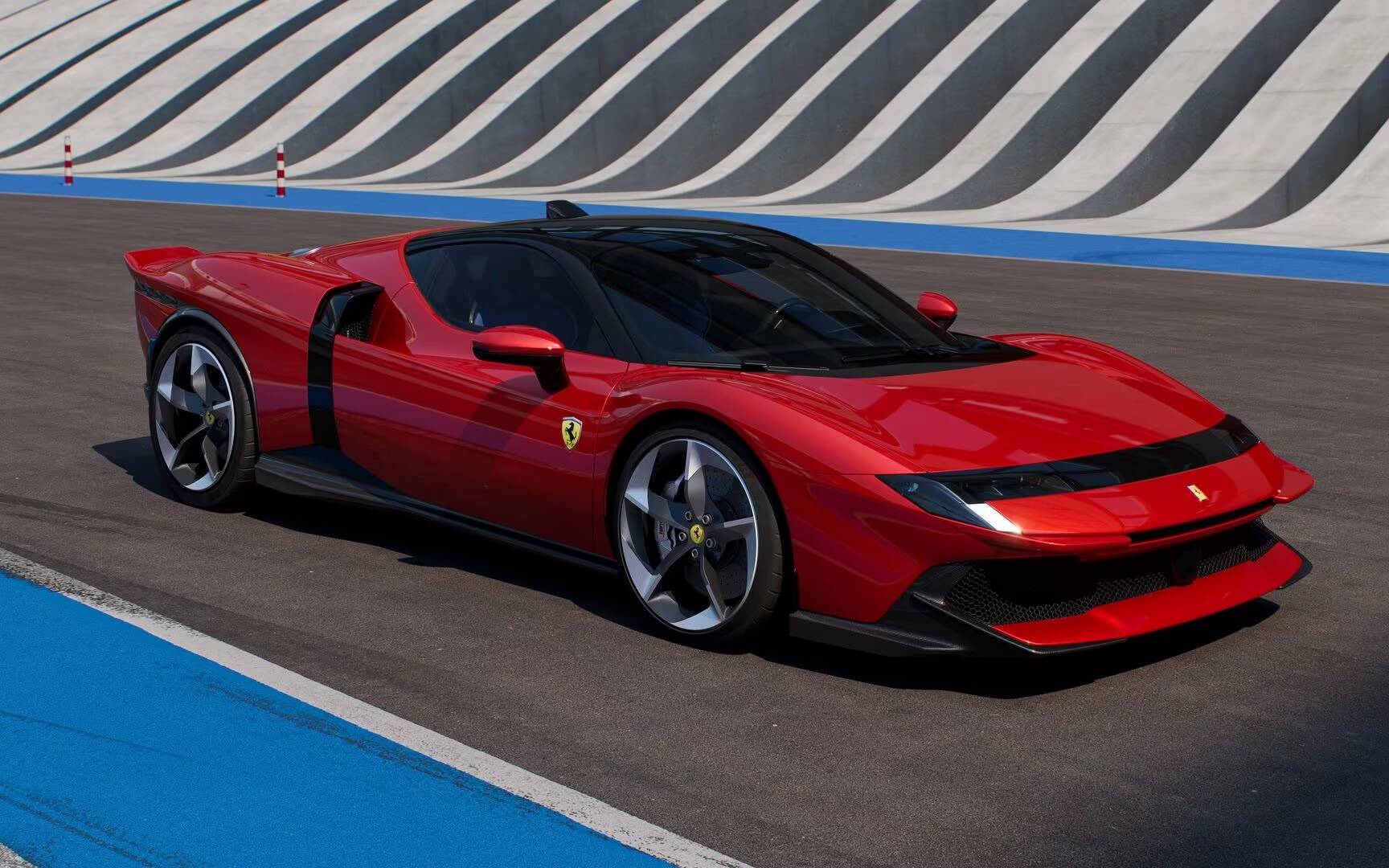
Ferrari is replacing the SF90 Stradale with this new 849 Testarossa
Ferrari continues to renew its range. Following the Amalfi, which succeeds the Roma, here is the all-new 849 Testarossa, runner-up to the SF90 Stradale. Despite its name, which recalls one of the most famous Ferraris in history, this car is resolutely modern in every way.
Let's start with its design, which incorporates larger air intakes at the front and sides to meet the cooling requirements of the new engine (more on that later). The silhouette can be seen as an evolution of the original Testarossa, albeit with vertical black trim on the sides instead of horizontal slats.
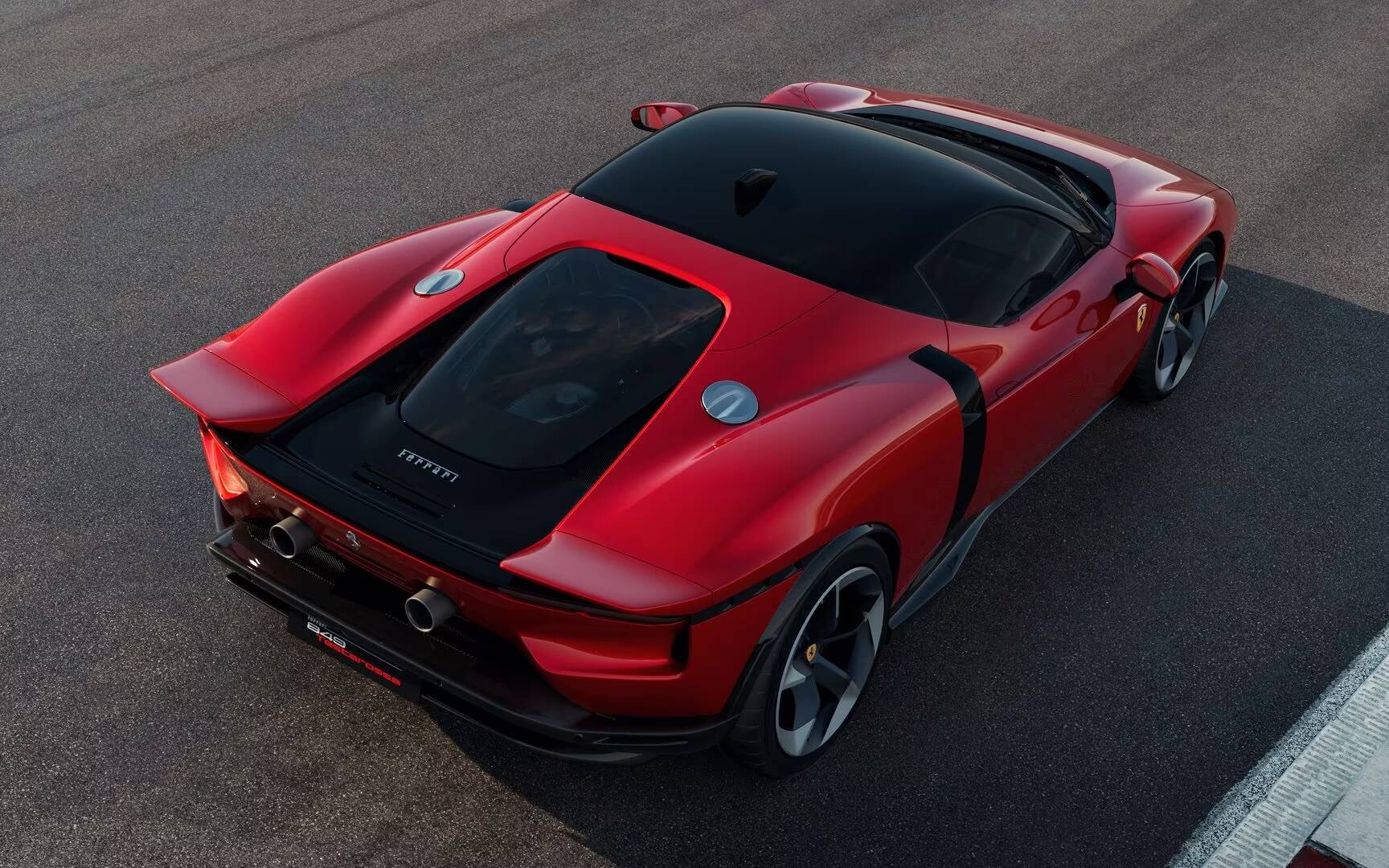
At the rear, the two separate, fixed spoilers are reminiscent of certain sports and racing cars of the 1970s, such as the 512 S, while the movable spoiler in the middle is inspired by the SF90 Stradale and the 296. The latter provides 100 kg (220 lb) of downforce at a speed of 250 km/h, for a total of 415 kg (915 lb), which is 25 kg (55 lb) more than the SF90 Stradale. In terms of weight, however, the two models are identical, which is a credit to Ferrari's engineers.
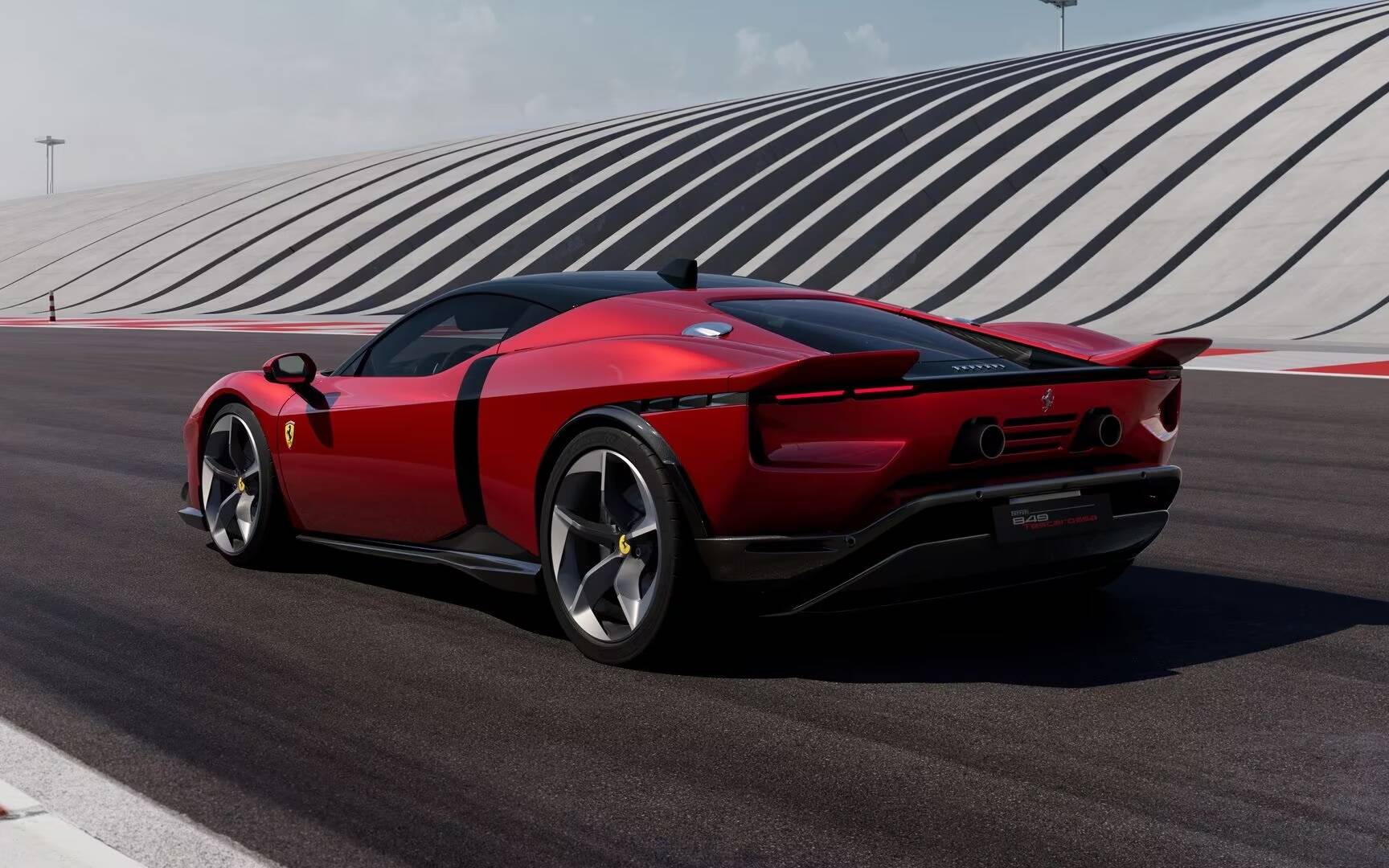
Naturally, the company has planned a convertible version (Spider), equipped with a retractable hardtop and reinforced chassis, as well as an Assetto Fiorano package that lightens the 849 Testarossa by 30 kg (66 lb) and gives it a stiffer suspension.
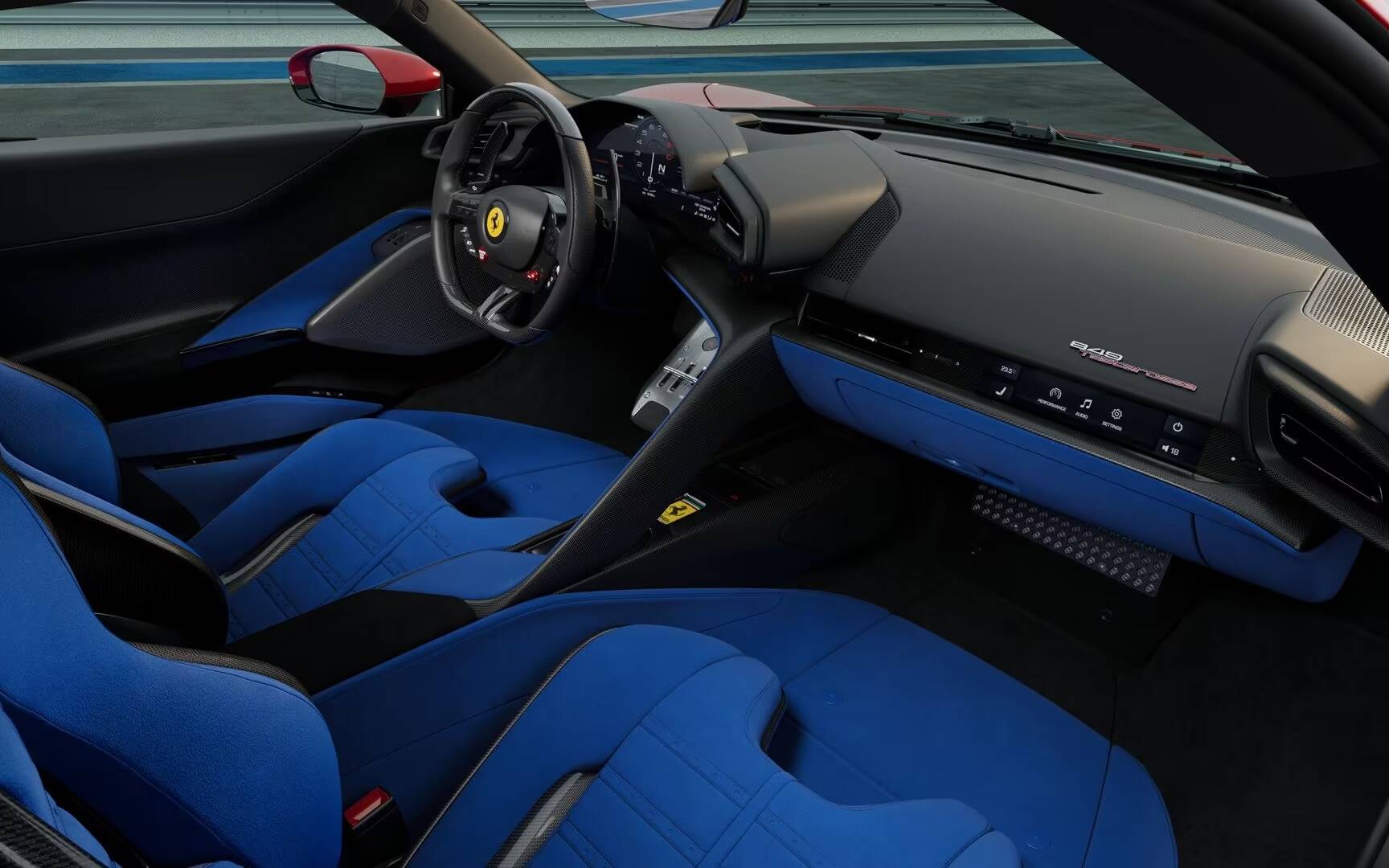
Inside, Maranello's new creation is not too different from the SF90 Stradale, except for the center console and the bridge connecting it to the dashboard. The gear selector is located in a raised section and there is no central screen, as all infotainment functions are controlled via the digital interface in front of the driver. You'll also notice that there is no screen facing the passenger, which differs from recent models such as the 12Cilindri.
Up to 1,036 horsepower
Now let's get down to business. The 849 Testarossa is a plug-in hybrid like its predecessor, except that its 4-liter twin-turbo V8 has new cylinder heads, a modified intake, lighter camshafts, and, most importantly, new, larger-capacity turbochargers, not to mention reworked sound effects. On its own, it generates 819 horsepower and 621 lb-ft of torque.
Add in the three electric motors, and the total power output is 1,036 cavalli. Nothing has changed in terms of acceleration time from 0 to 62 mph, which is still 2.3 seconds, while the time from 0 to 124 mph has been reduced to 6.35 seconds. To slow down, expect a braking distance of 28.5 meters from 100 to 0 km/h (thanks to larger front discs and redesigned rear calipers) and more progressive brake pedal action. The wheels are once again 20 inches in diameter.
And for 100% electric driving, which can be done using a maximum power output of 161 horsepower, the 7.45 kWh battery provides a range of 25 km according to the WLTP calculation method. Let's say it's mainly for getting out of the neighborhood or cruising through city centers in silence.
If you can afford it, orders for the Ferrari 849 Testarossa are already being taken, but don't expect the first models to arrive in Canada before 2027.