

Electric vehicles: what happens when the battery runs out?
If you drive an electric vehicle, or if you're thinking about getting one, you've probably already thought about running out of fuel... or rather, running out of electrons! Finding yourself alone, isolated in the middle of nowhere, with no way of reaching the nearest recharging point. And in the middle of a bitterly cold winter, to make matters worse.
Although this situation is actually very rare among electric vehicle users, CAA Québec invited us to experiment with several battery-powered models, driving them all to the point of breakdown. The objective? To find out how far they can really travel, and how they behave until they come to a complete stop. For our part, we drove a Kia EV9 GT-Line with all-wheel drive and the largest battery (99.8 kWh), with a theoretical range of 435 km in summer.
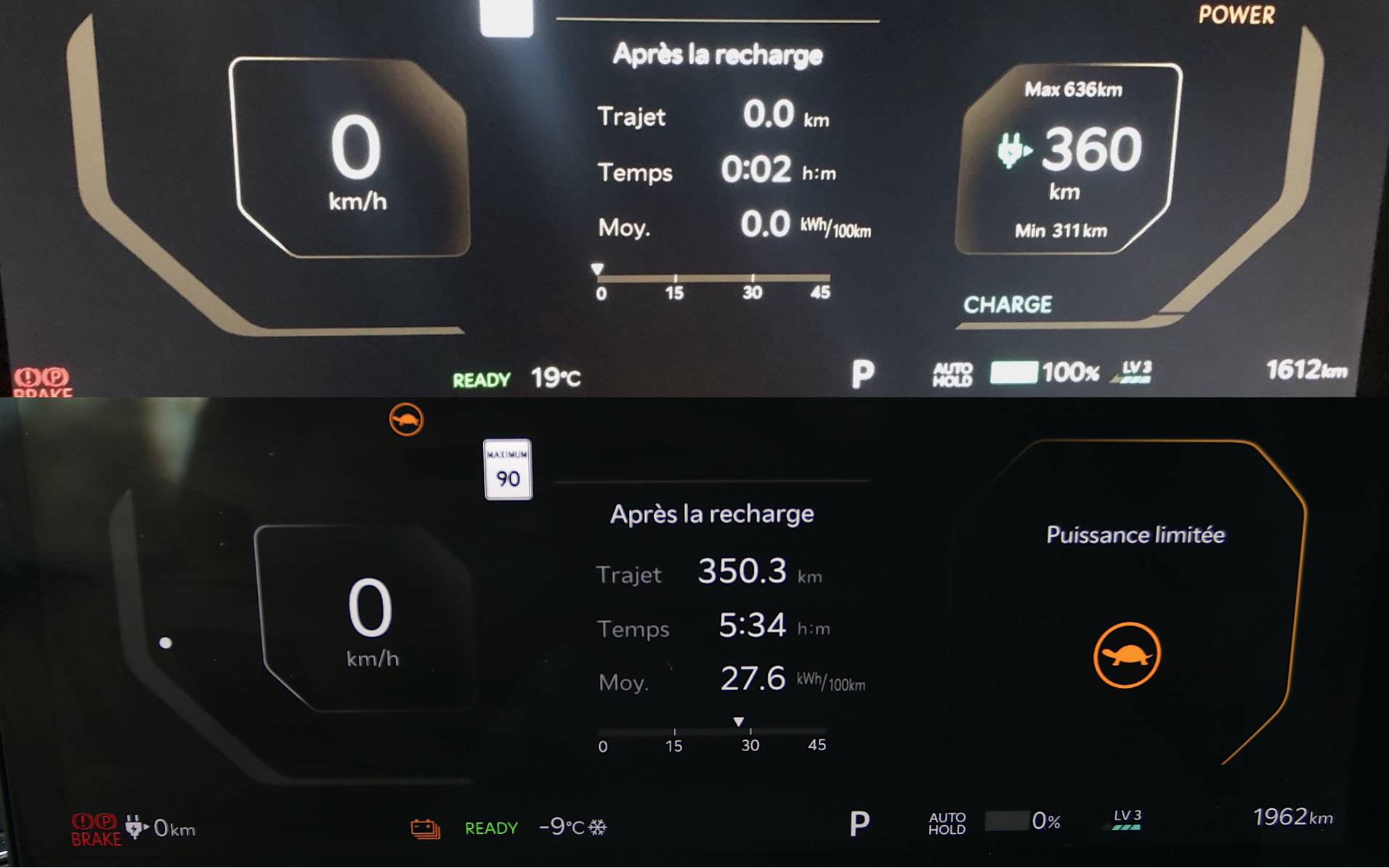
As a preamble, it's important to specify that the vehicle set off with its battery fully charged, in an indoor parking lot maintained at 19°. The cabin temperature was set to 21°, with ventilation in the middle position. The theoretical range on the dashboard was 360 km at the time of departure.
Leaving Ottawa, our journey began on Ontario roads to Hawkesbury, where we crossed into Quebec and headed for Notre-Dame-de-la-Merci. Finally, we headed north to Mont-Tremblant, first on secondary roads, then on the 117.
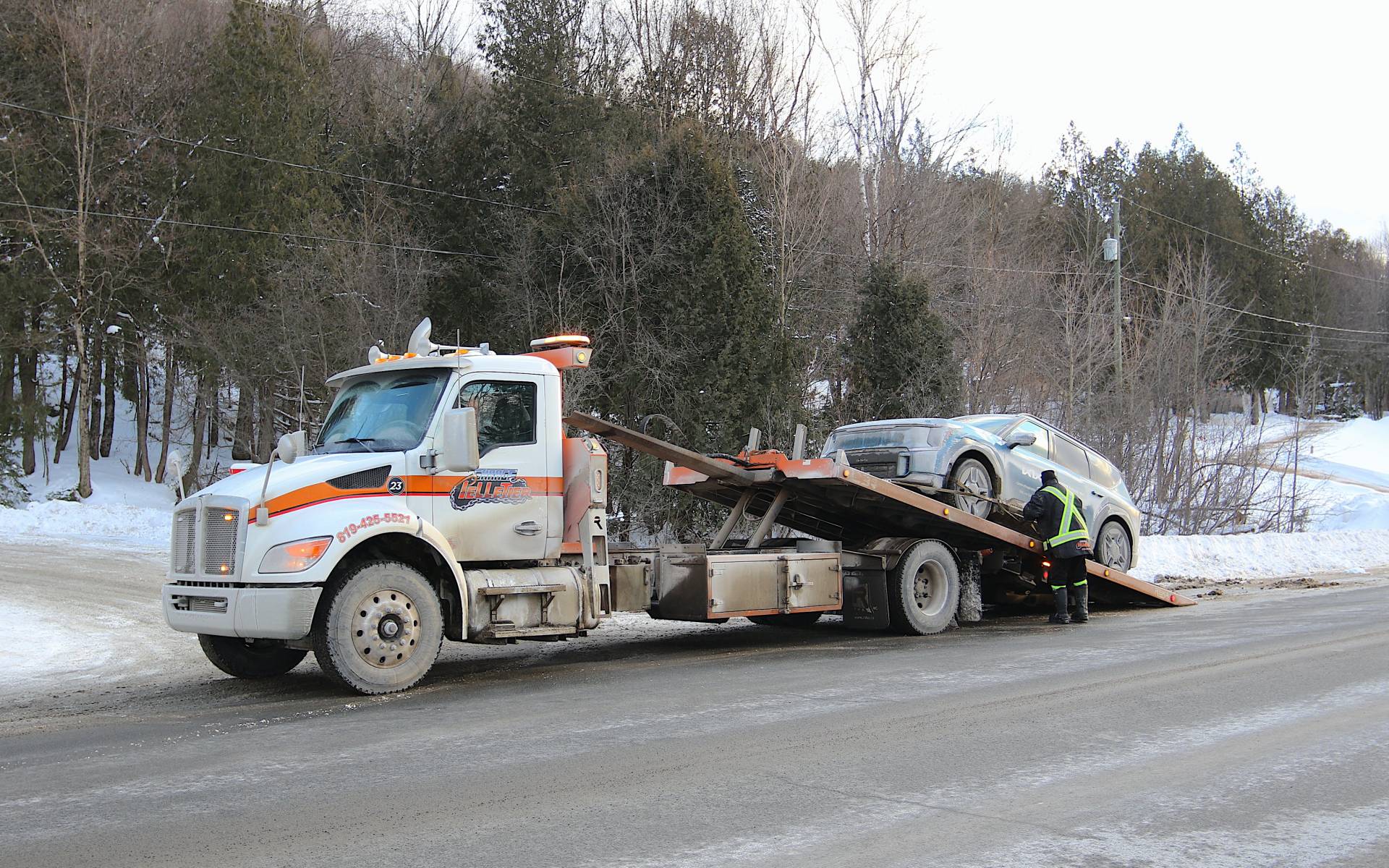
What's interesting in this case is that there was no need to worry about our battery failure, since a CAA Quebec tow truck was standing by to come to our rescue.
Autonomy close to reality
In the first 200 kilometers, the Kia EV9 averaged a fuel consumption of around 26 kWh/100 km, which is good for a vehicle of this size driven in temperatures averaging -6°.
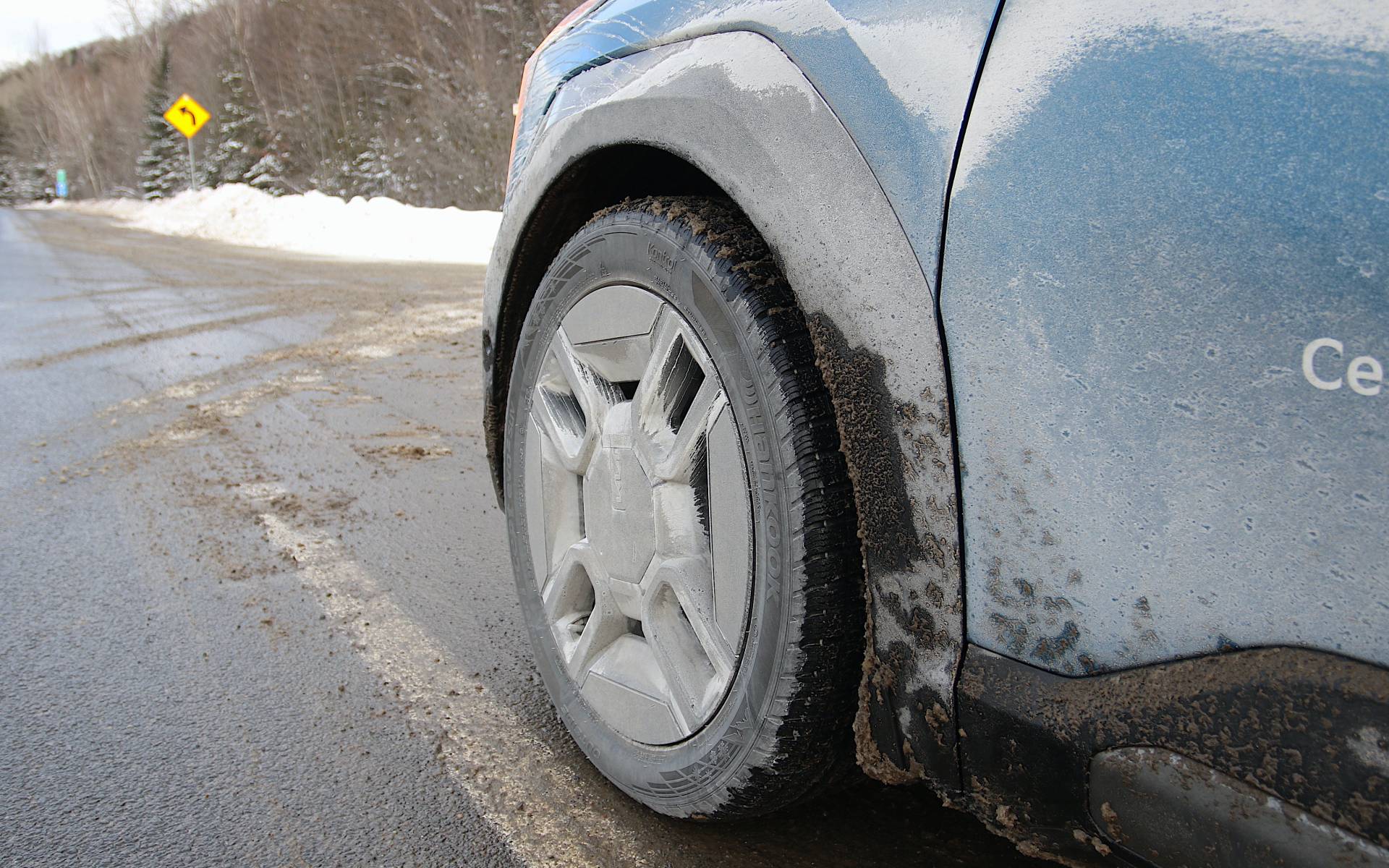
It was when we climbed into the Laurentians that the remaining range indicator became more pessimistic. With an outside temperature of -10° and more wind, we recorded an average of around 29 kWh/100 km. This theoretically meant a loss of 20 km of range, or 340 instead of the 360 promised in Ottawa.
It's important to point out that the vehicles had to be driven at the legal speed, including on the freeway, with only 5 km/h of overtaking allowed. By driving the same roads at 115 or 120 km/h, our radius of action would undoubtedly have been less, at around 300 km.
10%, 5%...0%
The first alert on the dashboard sounds when 20% of the battery remains, advising the driver to recharge soon. We, of course, drove on, ignoring this advice. Even when the range dropped below 10%, the vehicle behaved normally. Power was the same, and we could drive the EV9 as if nothing had happened.
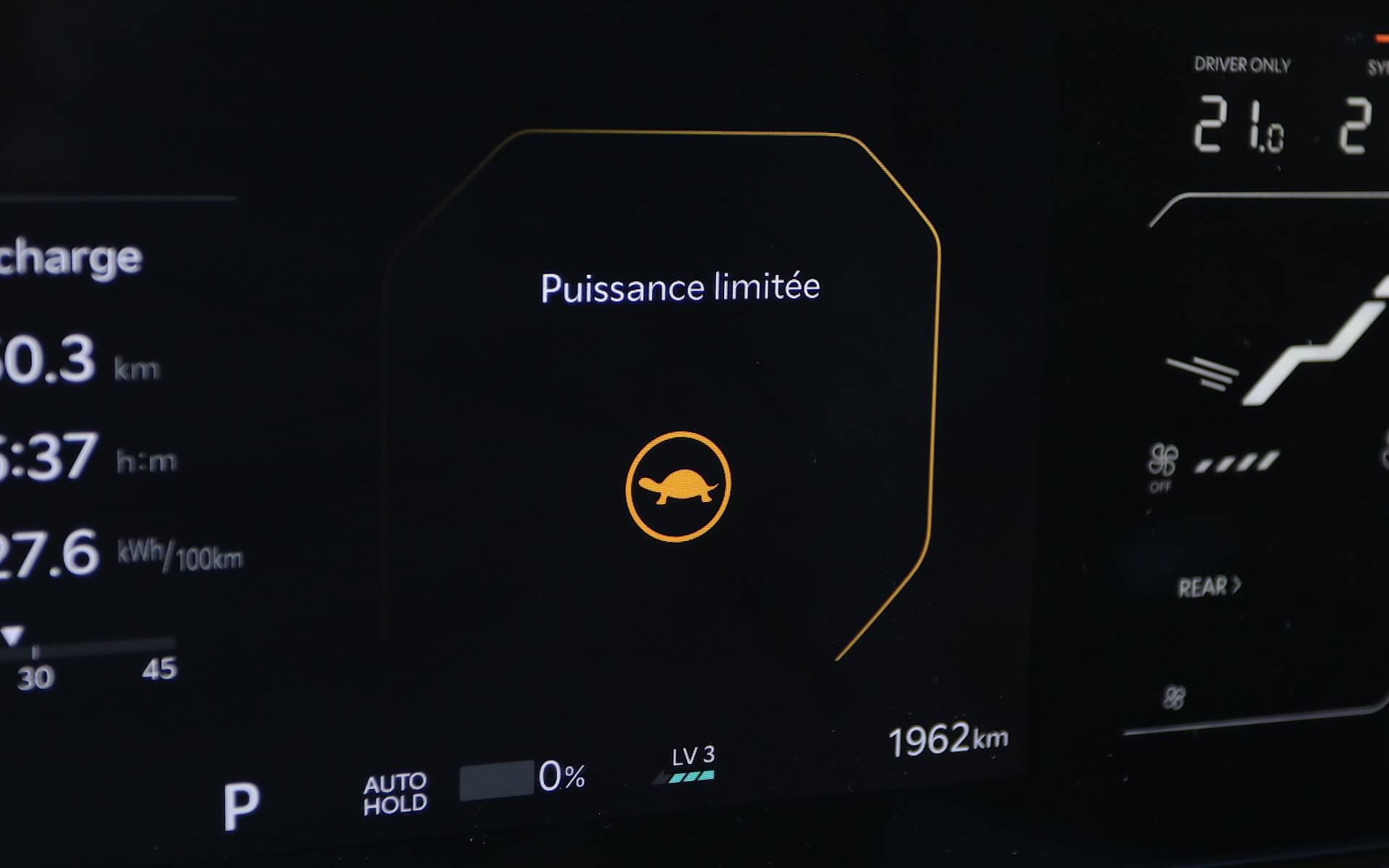
It was when we reached 6% that power began to decline. A turtle appeared on the dashboard, indicating reduced power.
On route 117, which has a 90 km/h speed limit, it was nevertheless possible to maintain this speed by pressing harder on the gas pedal. With 4% battery power, we were forced to reduce our speed, as the 70 km/h limit was becoming difficult to reach. This was the moment we chose to leave route 117 in favor of slower lanes, so as not to endanger anyone.
At this point, it's important to point out that the downhill sections offered a welcome respite thanks to regeneration. In fact, regeneration gives you a welcome boost before tackling the next climb. At 2% battery, 40 km/h becomes difficult to maintain, and the slightest false flat becomes an ordeal. And at 1%, the EV9 literally runs like a turtle, oscillating between 12 and 15 km/h maximum.
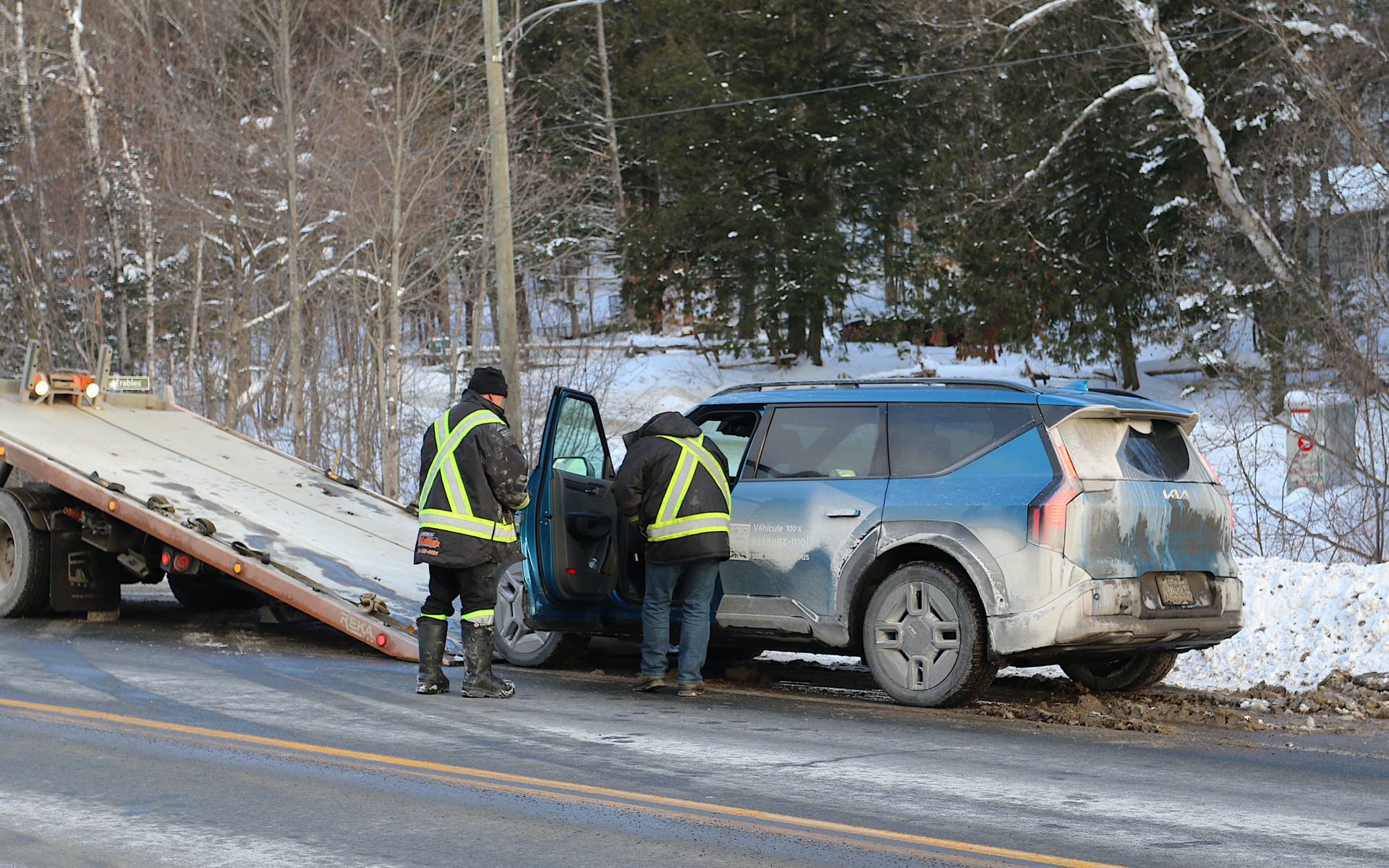
When the indicator showed 0%, we had one kilometer of theoretical range left on the instrument cluster. Once this had been covered, the Korean SUV gradually slowed down before coming to a halt a few metres further along the roadside.
While waiting for the tow truck, we were pleasantly surprised to find that the heater (set at 21° with the fan on 3 out of 8) continued to work perfectly for 20 minutes! After that, it started blowing cold air. This should reassure those who fear getting stuck on a road for several hours on a snowstormy day!
The balance sheet
By the time we handed over the keys to the tow trucks, the vehicle had managed to cover 350.3 kilometers of the 360 originally promised. Average fuel consumption was 27.6 kWh/100 km, which is very good considering the conditions encountered.
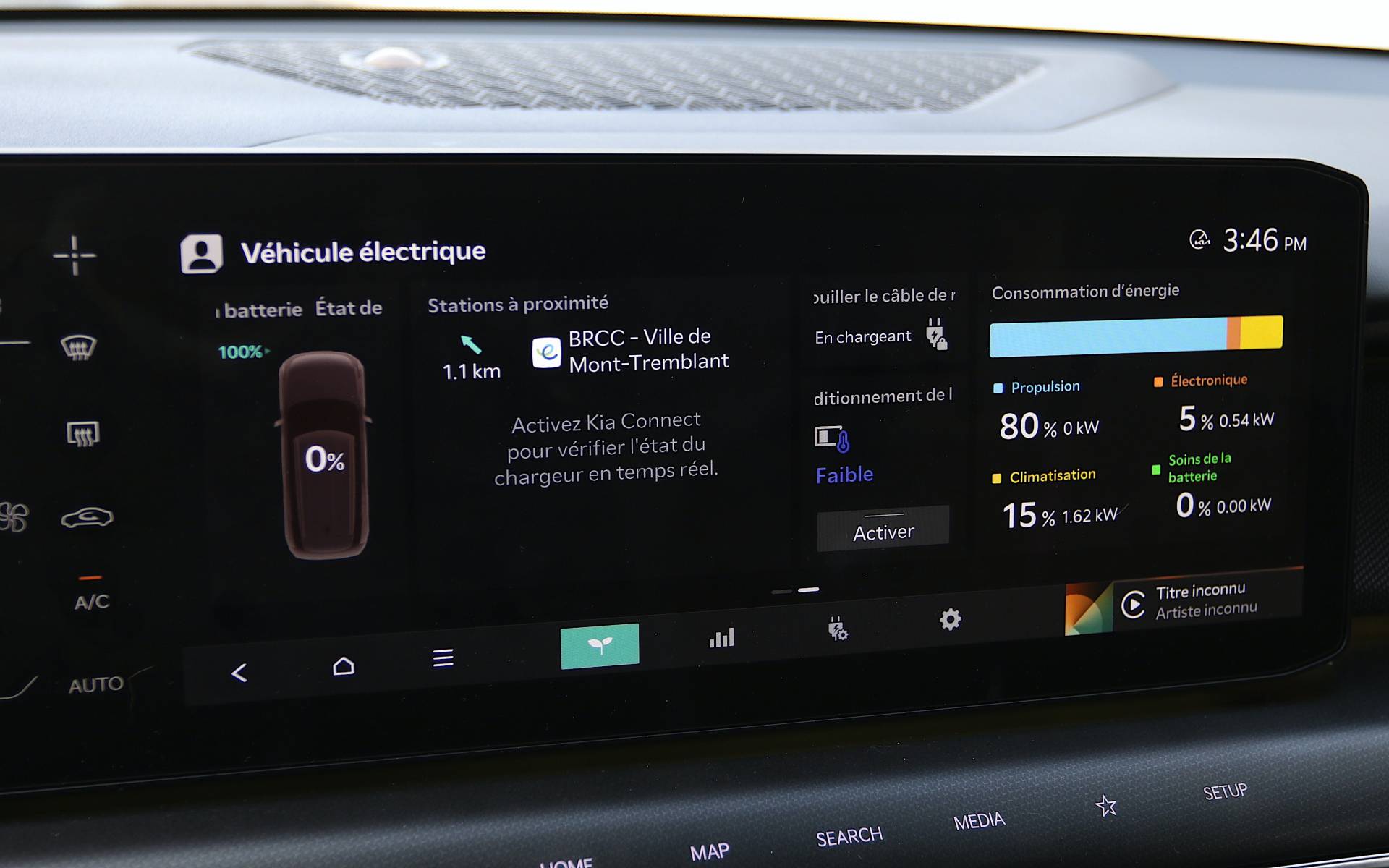
When using this full charge, 80% of the battery capacity was used to drive the vehicle, 15% for heating and 5% for electronics.
We probably could have done a little better by turning off the heating and infotainment. But as there were several vehicles doing this test, it was important that all the crews kept the same settings so that the results would be comparable.
By the way, 13 of the most popular electric vehicles in Quebec were evaluated in this experiment organized by CAA Québec. All the results will be announced shortly, so stay tuned!