

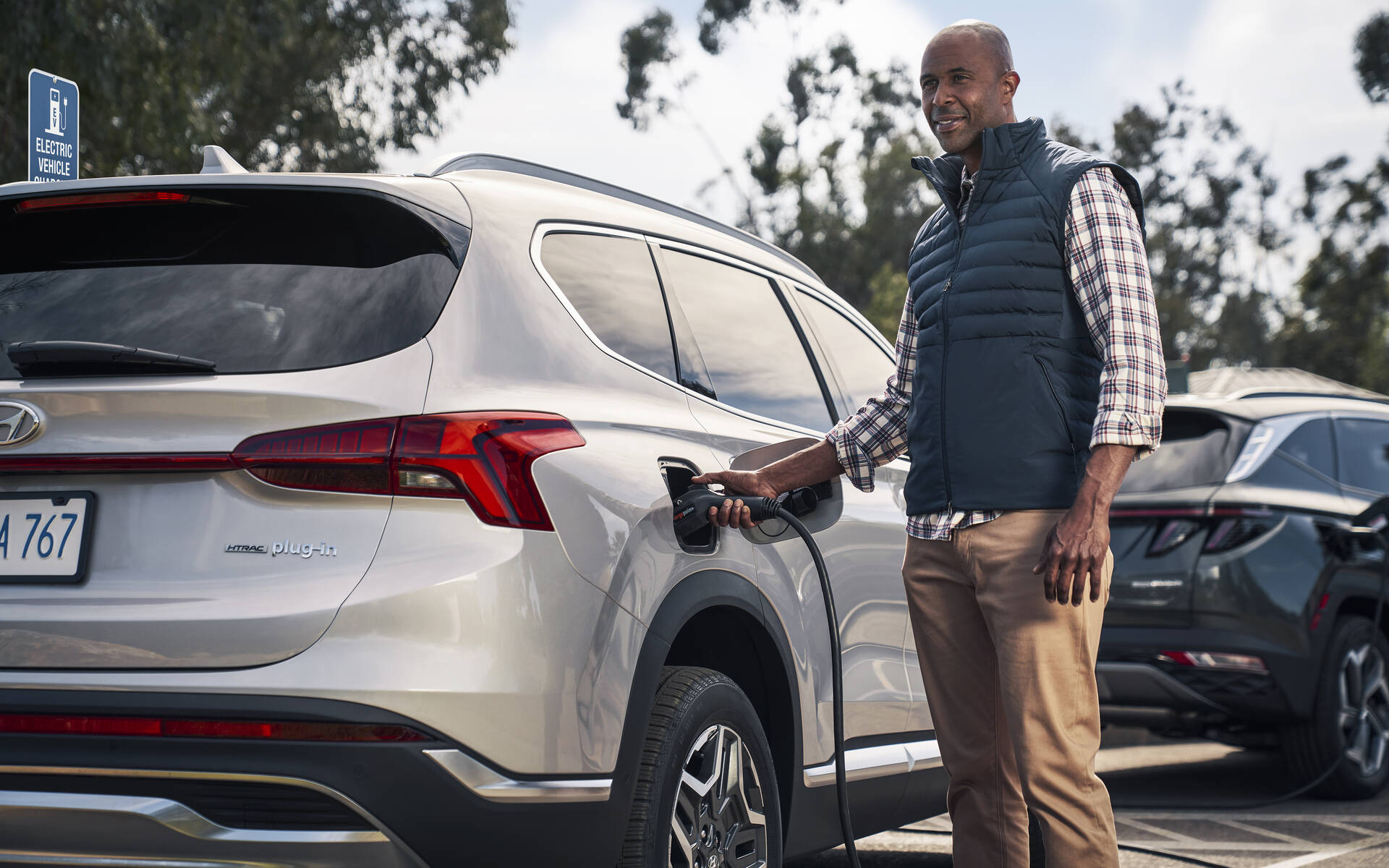
Does Hyundai still believe in plug-in hybrids?
With the recent announcement by the Quebec government that it is cutting back on credits for electrified vehicles, we can easily anticipate a gradual loss of interest on the part of consumers. Some will remain convinced, others will consider their wallet first. For a vehicle that's already fairly expensive, or that doesn't qualify for credits at all, the impact will be moderate to nil. However, the situation will be different for accessible electric vehicles, particularly plug-in hybrids.
In fact, it is currently possible to obtain between $5,000 and $10,000 from both levels of government (provincial and federal), for the purchase of a plug-in hybrid vehicle. At federal level, rebates vary according to the advertised electric range, and at provincial level, according to battery size. That's why a Toyota RAV4 Prime is eligible for $10,000, compared with $7,500 for a Prius Prime, even though it's more fuel-efficient and offers greater electric range, but its battery size is less than 15 kWh (which draws the line between a $2,500 or $5,000 provincial credit).
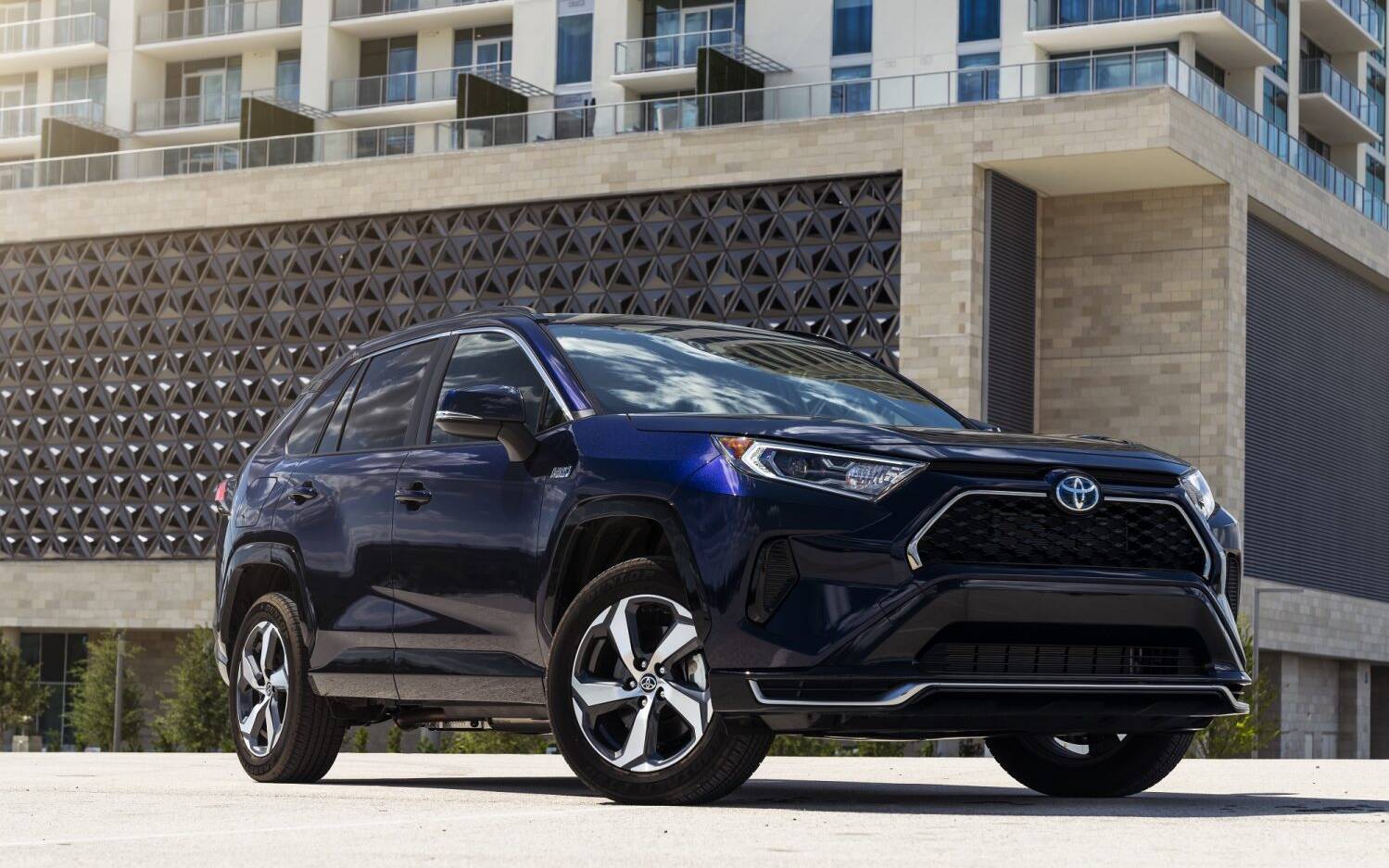
At Ford, in 2023, we could already see a lack of interest in marketing the Escape Plug-In Hybrid, now offered in a single, very luxurious version and sold at a high price. The same cannot be said for Mitsubishi Motors, where the Outlander PHEV accounted for 32.2% of sales in Quebec. We can therefore anticipate a change of strategy on the part of this manufacturer, which, unlike Ford, will not be abandoning the niche in the short or medium term.
As a reminder, starting in 2025, the provincial credit for eligible plug-in hybrid vehicles will drop from a maximum of $5,000 to $2,500, then to just $1,000 in 2026, before being eliminated. What's more, we still don't know what the federal government intends to do about the rebates granted, which could also be reduced, hurting some manufacturers.
On the Hyundai side, however, it seems that plug-in hybrid technology is hardly part of the medium- to long-term plans. According to Michael Ricciuto, Director of Products and Corporate Strategies for Hyundai Auto Canada, this technology has a disadvantage in terms of long-term viability.
Because it encompasses several types of technology, requiring a great deal of tooling and training for dealers, but also because it's a technology of compromise for consumers. With this in mind, the new-generation Santa Fe has been developed without the plug-in hybrid variant, which was offered until 2023, and is still available with the Tucson 2024.
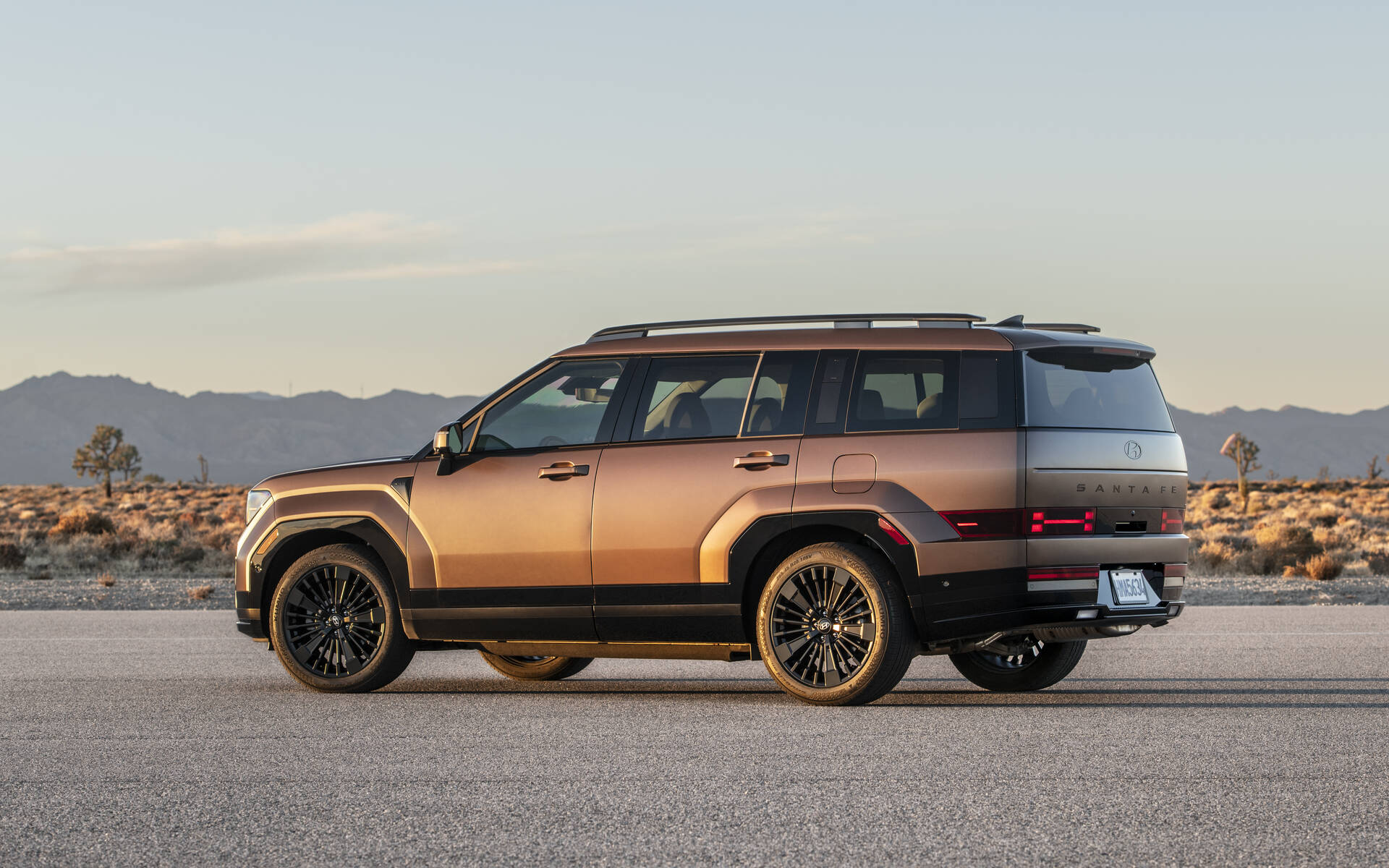
In high demand here in Quebec, this technology, until now embodied in the Santa Fe, was much less coveted in the rest of the country. This is due, firstly, to the limited eligibility for credits, which increases the price differential with a conventional hybrid model. Then, because Hyundai is increasingly playing the electrification card, with products such as the Ioniq 5, it's easy to understand why many buyers have chosen to set their sights on such models.
Add to this the imminent arrival of an Ioniq 7 that will be essentially comparable to the recent Kia EV9, and you have the explanation for Hyundai's abandonment of the Santa Fe plug-in hybrid. Although it's purely speculative, one might assume that the next iteration of the Tucson will be devoid of a plug-in hybrid variant, as Hyundai gradually shifts the emphasis to traditional hybrids and all-electric vehicles.
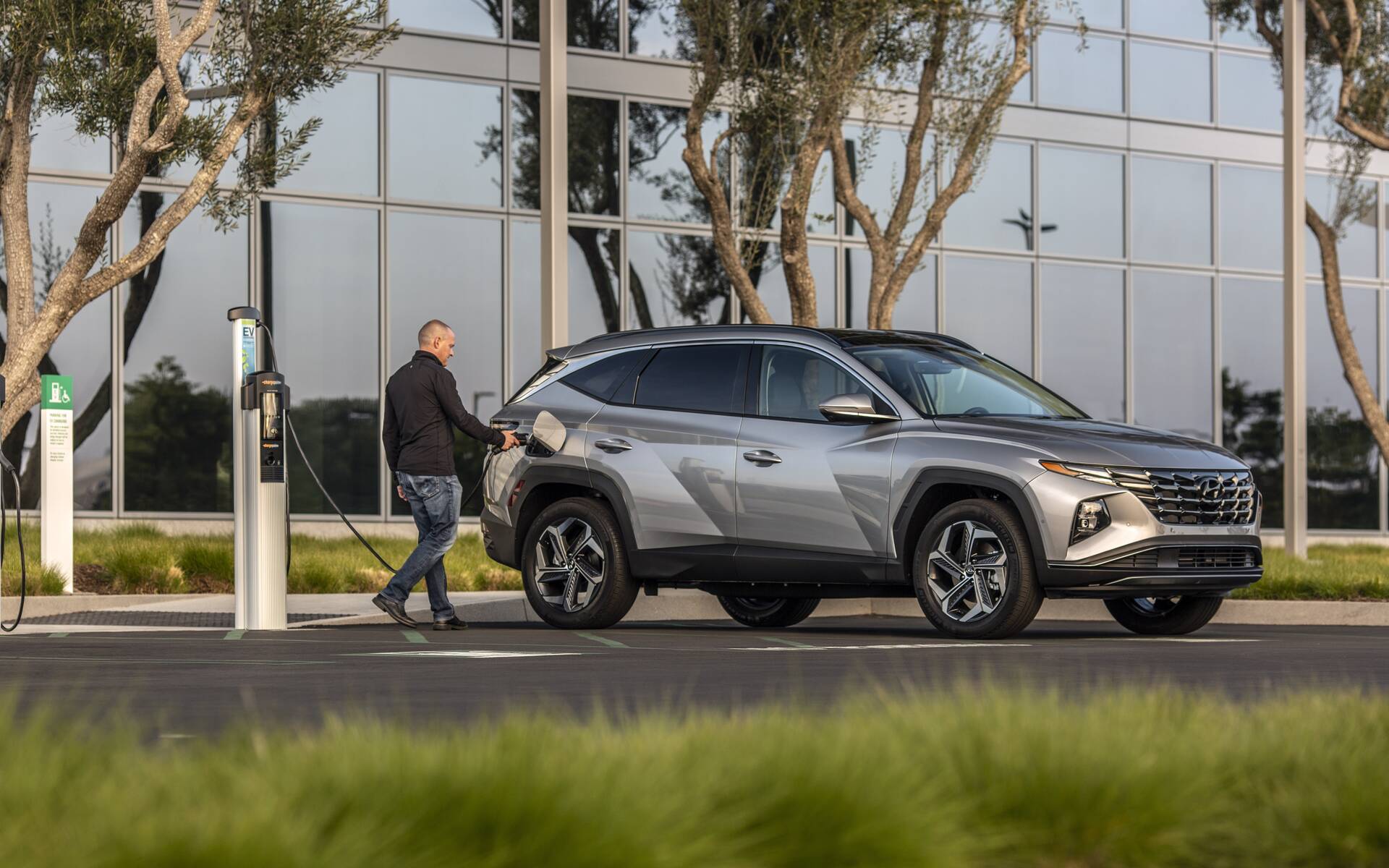
Hyundai's strategy is likely to be equally valid for Kia, as the two manufacturers share the bulk of their technologies. It remains to be seen what Mitsubishi's tactics will be with its Outlander PHEV and, above all, Toyota's RAV4 and Prius Prime, which are enjoying huge success in our country. A success that could of course wane with the reduction in credits, and which could suddenly explain a resurgence in popularity for traditional hybrids.
Here's proof that manufacturers can't put all their eggs in one basket. By pandering to the demands of governments that play yo-yo with credits and constantly change their minds, manufacturers run to their doom. So, except for manufacturers like Polestar, Tesla and Vinfast, whose business models are focused solely on electrification, manufacturers who have been established for decades have no choice but to find solutions through multiple offerings. Hyundai is doing just that while continuing to believe in hydrogen.