


Do you think it will be possible to collect today's cars in 20 or 30 years' time?
I currently own a 2019 Volkswagen Golf R that I love, and I plan to keep it as long as possible.
But with more and more technology being integrated into cars, I wonder whether current models will still be working in 20 or 30 years' time. What do you think?
--------------------------------------
Hello Quentin,
It's a difficult question to answer, because predicting the future is no easy task, especially when you consider the rapid changes and volatility of the automotive industry today. But it is certain that the more on-board systems and equipment there are in a vehicle, the greater the risk of breakdown.
What follows is my personal opinion and is not based on scientific data, but I think that the main problem that could arise in 20 or 30 years' time will be the cost of replacing certain parts and their availability. Your 2019 Golf R still has a lot of physical controls and instrumentation with dials and needles. However, for some models sold in 2024, packed with screens, touch controls and options of all kinds, they may be harder to maintain, especially at a reasonable cost.

In older vehicles, for example, it was almost impossible for the radio, heater and all the dashboard indicators to fail at the same time. However, when all these functions are combined in a single screen and the screen is broken, this complicates repairs and makes them very costly, especially if the manufacturer no longer supplies the screen once it is no longer legally obliged to do so.

For an antique car today, it's also easier and much cheaper to reproduce plastic moldings or simple electrical or electronic systems, which remained relatively basic until the 1980s.
That said, the proliferation of IT in vehicles could paradoxically facilitate certain repairs. Let's say a faulty multimedia system prevents the car from working and/or the manufacturer no longer provides updates. Groups of model owners could develop solutions of their own, and then make them available to collectors. After all, if individuals or companies manage to remanufacture parts for classic cars today, there's no reason why this can't happen in the future.
Some enthusiasts are also able to use similar but not identical parts to run an engine, or even source them from other manufacturers. For my antique vehicle, for example, I discovered that the fuel pump relay was used all over the world for Peugeot, Renault, Citroën, Lancia, Fiat and Alfa Romeo vehicles. This relay is even used to start the 12-cylinder engine of the Ferrari Testarossa!
It's also worth bearing in mind that some people will start collecting electric cars in the years to come. The Tesla Roadster, for example, is already 16 years old. And even if their batteries or motors don't work as well or at all, it will still be possible to replace them. Especially since, unlike a vintage gasoline car collected today, changing the engine or battery won't be as sacrilegious as swapping a gasoline engine.
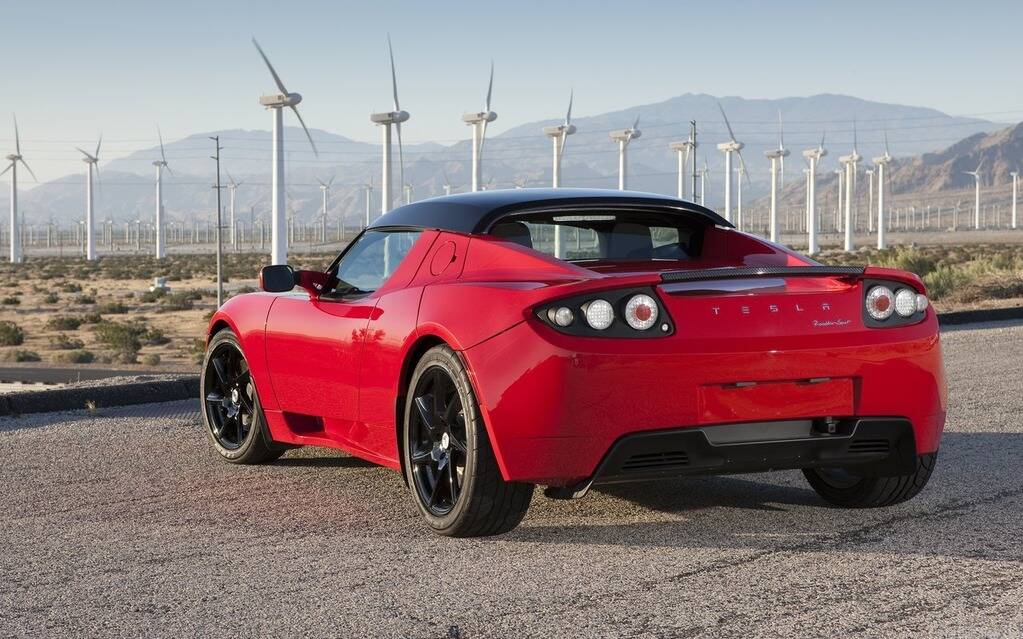
If you put a Chevrolet Corvette V8 under the hood of a Ferrari 550 Maranello or Porsche 911, the value of the car drops drastically, and the purists will look at you sideways. On the other hand, if, in 20 or 30 years, you own a 2008 Tesla Roadster and its battery is nearing the end of its life, there's little chance that the price of your car will halve if you replace the original Panasonic cells with Samsung ones...
So, to answer your question, I think some of the more high-tech vehicles are going to be hard to collect, especially at a reasonable price. However, for more popular models, of which your Golf R will certainly be one, I trust that the passion and ingenuity of car enthusiasts will continue to drive the cars they love.