

Cold snap: a timely new study on electric vehicles
As an extreme cold snap settles over much of the continent for the next few days, a new study provides us with up-to-date data on the performance of electric vehicles, and more specifically on the loss of battery life when temperatures drop.
It comes to us from the same American firm Recurrent that The Car Guide has spoken to you about on several occasions in the past following similar exercises.
The importance of heat pumps
For its latest analysis, the team took into account over 18,000 vehicles representing some 20 different models. Conclusion: with the mercury at freezing point (0 degrees Celsius), those equipped with a heat pump retained an average of 83% of their normal range in cold weather, compared with 75% for those without.
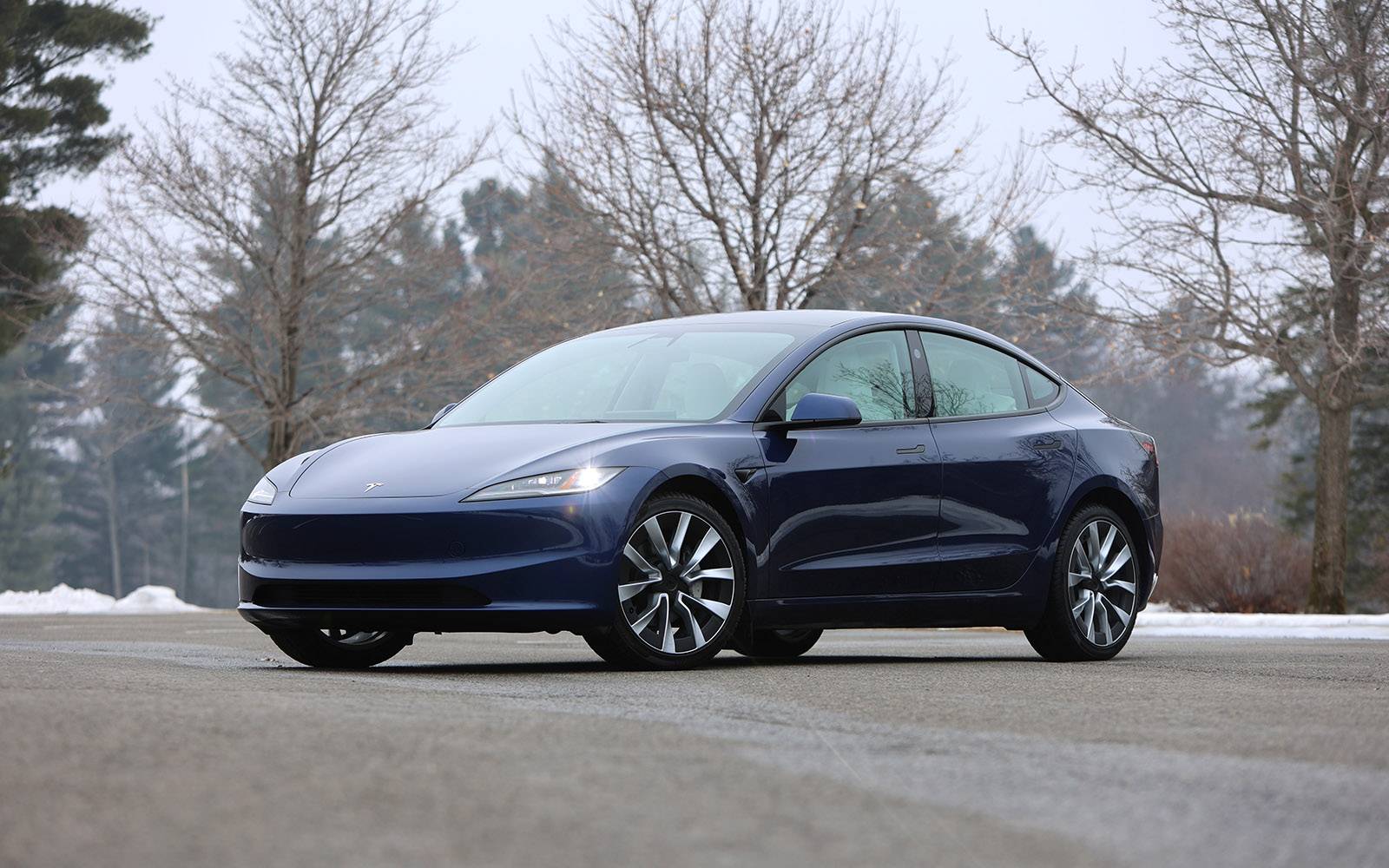
An identical difference was observed between Tesla Model 3s fitted with the system (87%) and those without (79%). This tends to confirm the general rule that a heat pump increases the range of electric vehicles in winter by around 10%. Canadian drivers should keep this in mind when shopping.
Which models stand up best to the cold?
That said, a heat pump is only part of the solution to cold weather. Not all electric vehicles are created equal, if only in terms of their battery chemistry. Tesla is one of the best-performing brands, as is Hyundai, as this table from Recurrent shows:
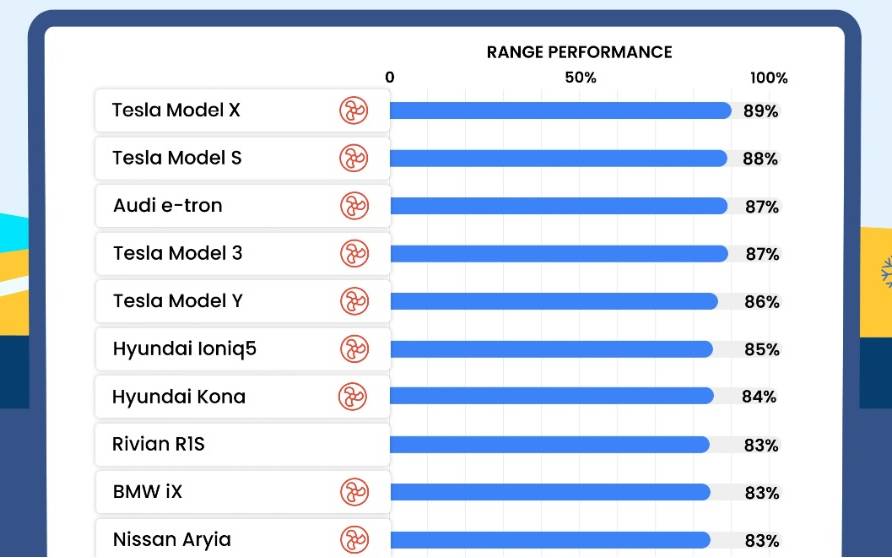
Kia also managed to retain 80% or more of its range at 0 degrees. Among the vehicles most affected by the cold are two GM models with heat pumps (Chevrolet Equinox EV and Cadillac Lyriq) and two Ford models (F-150 Lightning and Mustang Mach-E), but none in the study does worse than the Volkswagen ID.4 (data for 2021 model only):
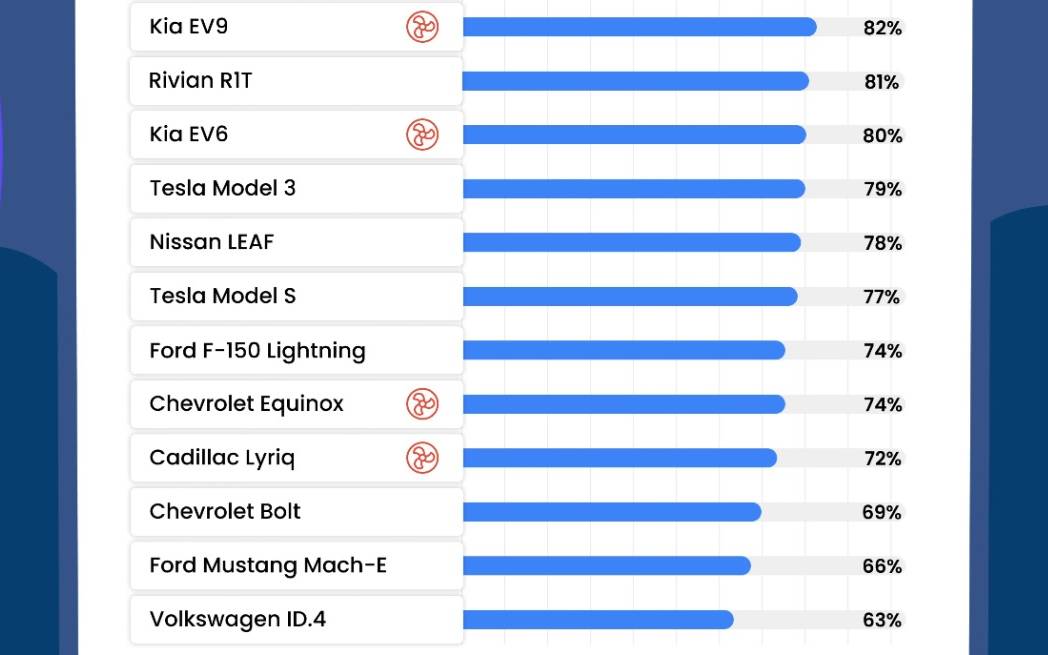
The loss of autonomy is felt and becomes more of a problem on long outings than during everyday city driving, as drivers spend more time on the road, travel at higher speeds and take less advantage of regenerative braking.
Recurrent also points out that using the heating system drains the battery faster than heated seats and steering wheel. Contrary to popular belief, extreme heat is far more damaging to batteries than cold, we add.
For more details on the study, visit the Recurrent website.