

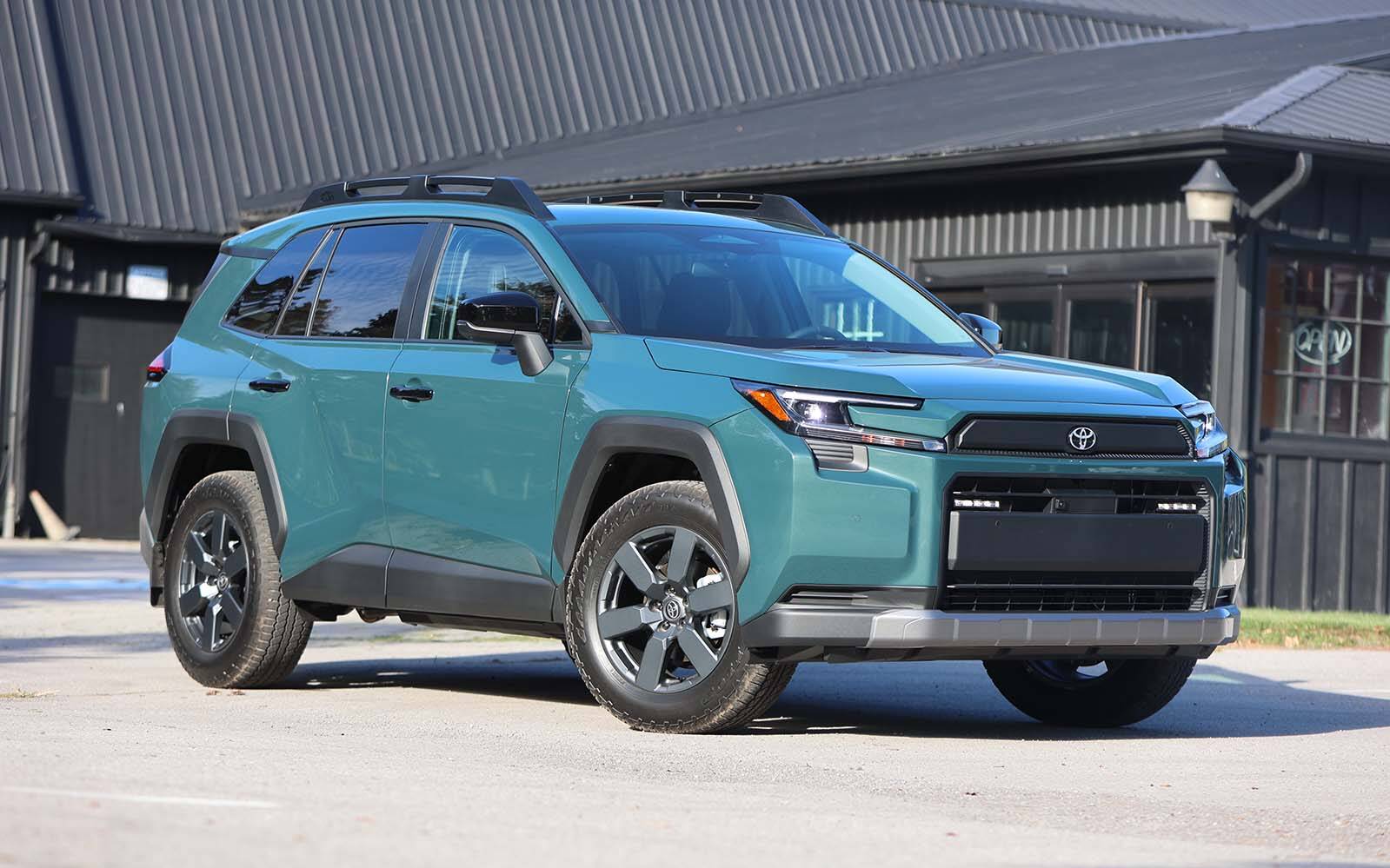
2026 Toyota RAV4: Canadian pride
The Toyota RAV4. The best-selling compact SUV in Canada and the United States. More than 14 million units have been produced to date, including 4 million assembled in Canada since 2009. No fewer than 925,000 RAV4s have been sold in Canada to date, and Toyota intends to reach 1 million units to mark the model's 30th anniversary in 2026. So much for the numbers.
Obviously, Toyota has every reason to highlight the RAV4. Not only does the manufacturer want to maintain its leading position, knowing that it offers a product that inspires the competition, but it also wants to preserve jobs at its Cambridge and Woodstock plants at a time when the Canadian auto industry is increasingly under threat. Last week, we learned that the future Jeep Compass—which was to be assembled in Brampton, Ontario—will ultimately be built south of the border, putting thousands of workers out of a job. Consider the RAV4 the true leader of the Canadian auto industry. Imagine, about 375,000 units are built annually, in addition to the Lexus NX and RX, which are also assembled in Cambridge.
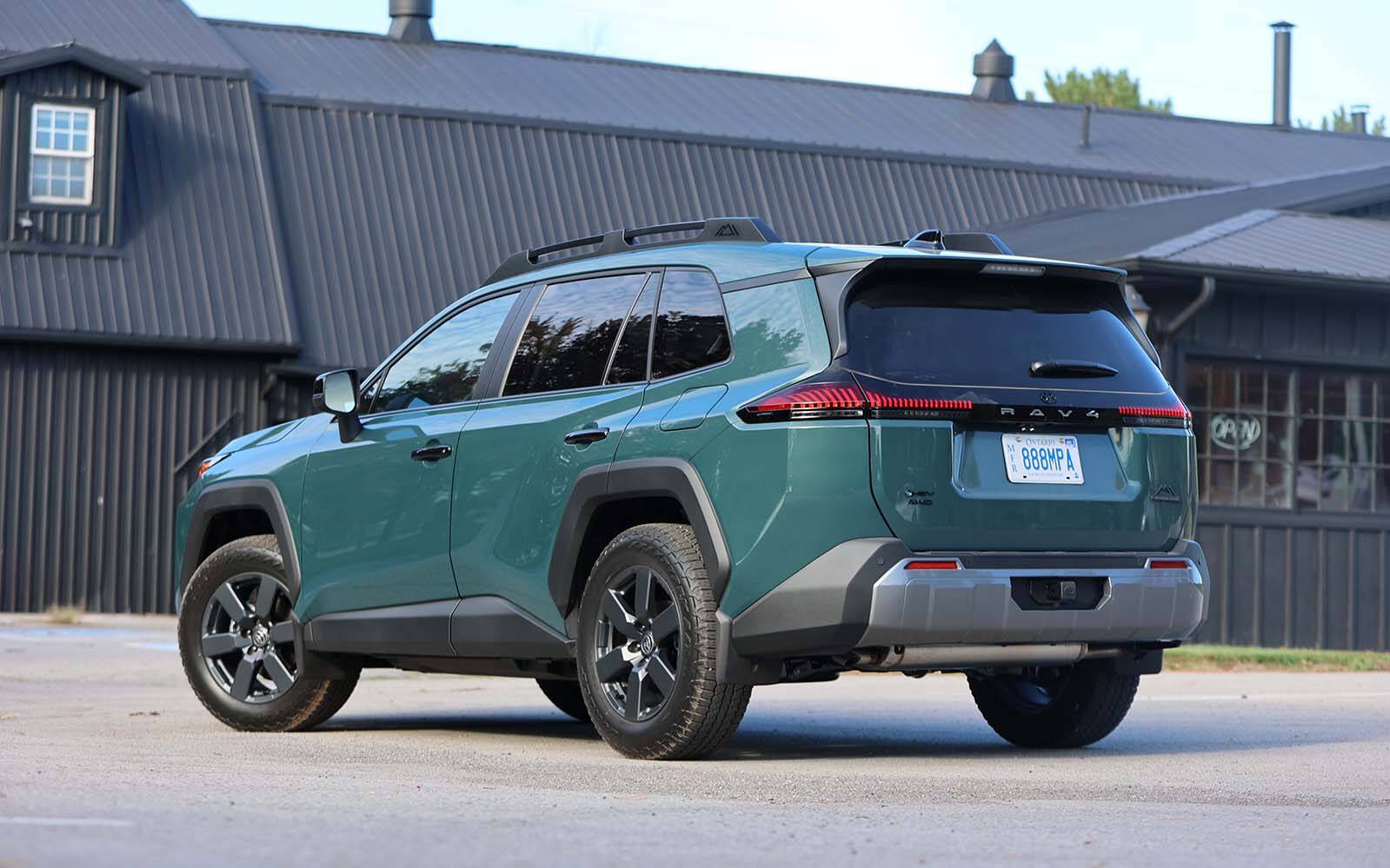
Toyota therefore invited the automotive press to southern Ontario for a program that included several hours of driving, a product presentation, and a tour of the Woodstock plant, where we learned that the batteries for the RAV4, now all hybrids, would also be assembled there.
This is a major challenge, since in 2024, only 48% of RAV4s sold were electrified, a figure that dropped in 2025 due to a shortage of the batteries needed for their assembly. This is a situation that Toyota must resolve in order to avoid losing market share, given that the Honda CR-V continues to grow and new players such as the hybrid-powered Jeep Cherokee are entering the market.
100% hybrid!
Toyota continues its momentum in the world of hybridization by releasing an exclusively hybrid RAV4 in 2026. This model will also come standard with four-wheel drive, as the hybrid is equipped with a second electric motor located on the rear axle, providing all-wheel drive. As with the current model, there is no drive shaft, unlike many competing vehicles.
Toyota is pulling out all the stops by offering the most powerful (236 horsepower), most fuel-efficient (5.4 to 6 L/100 km depending on the version) and only compact hybrid SUV capable of towing loads of 3,500 lb. In fact, only the base LE version is limited to 1,750 lb, as it is not equipped with a high-efficiency transmission oil cooler.
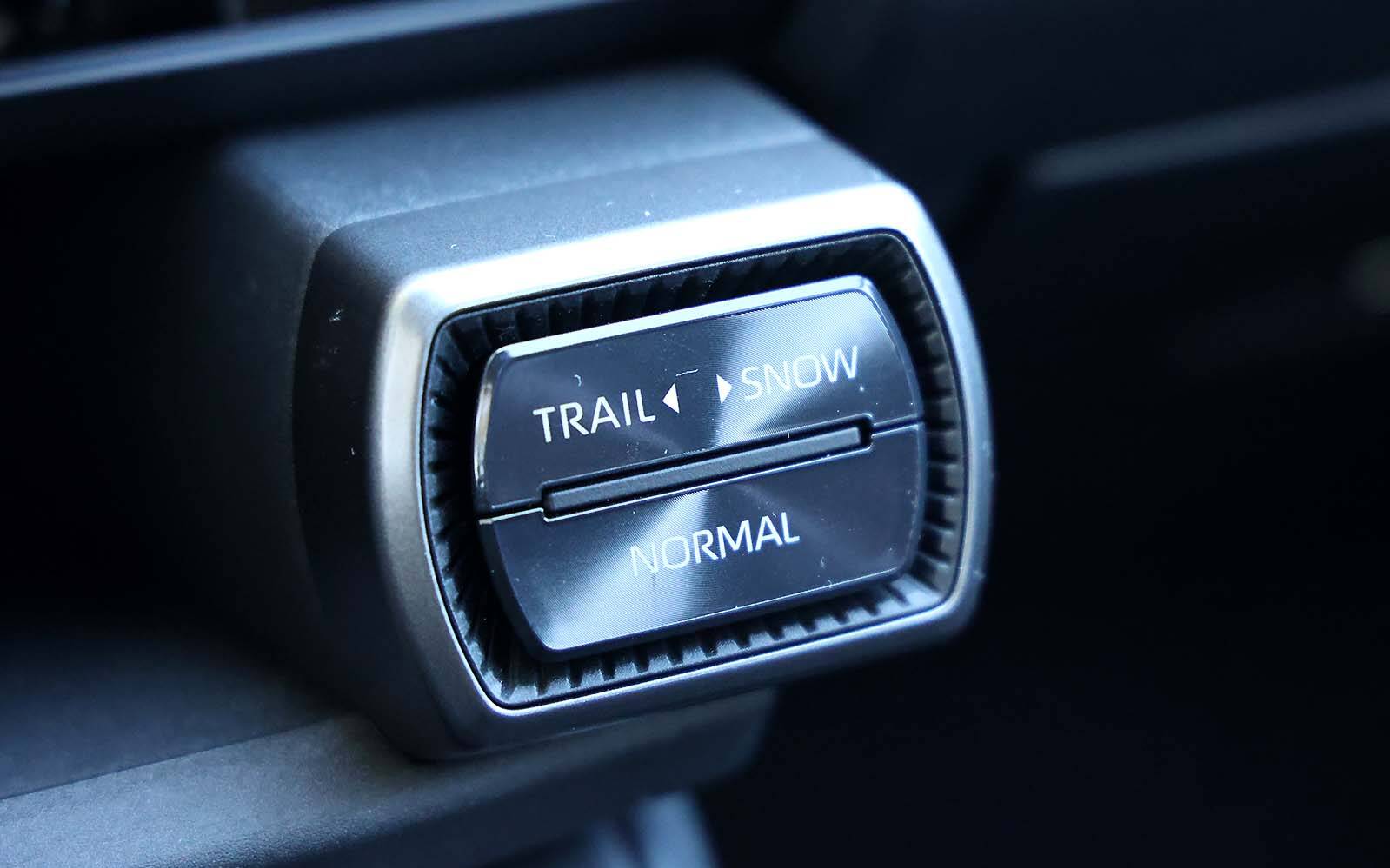
Toyota offers five trim levels for the hybrids, ranging from the base LE version to the Limited model, including the Woodland, which is likely to be a huge success. This vehicle features a raised and firmer suspension, as well as all-terrain tires, to improve its off-road performance and appeal to those who want a vehicle with a slightly less generic look.
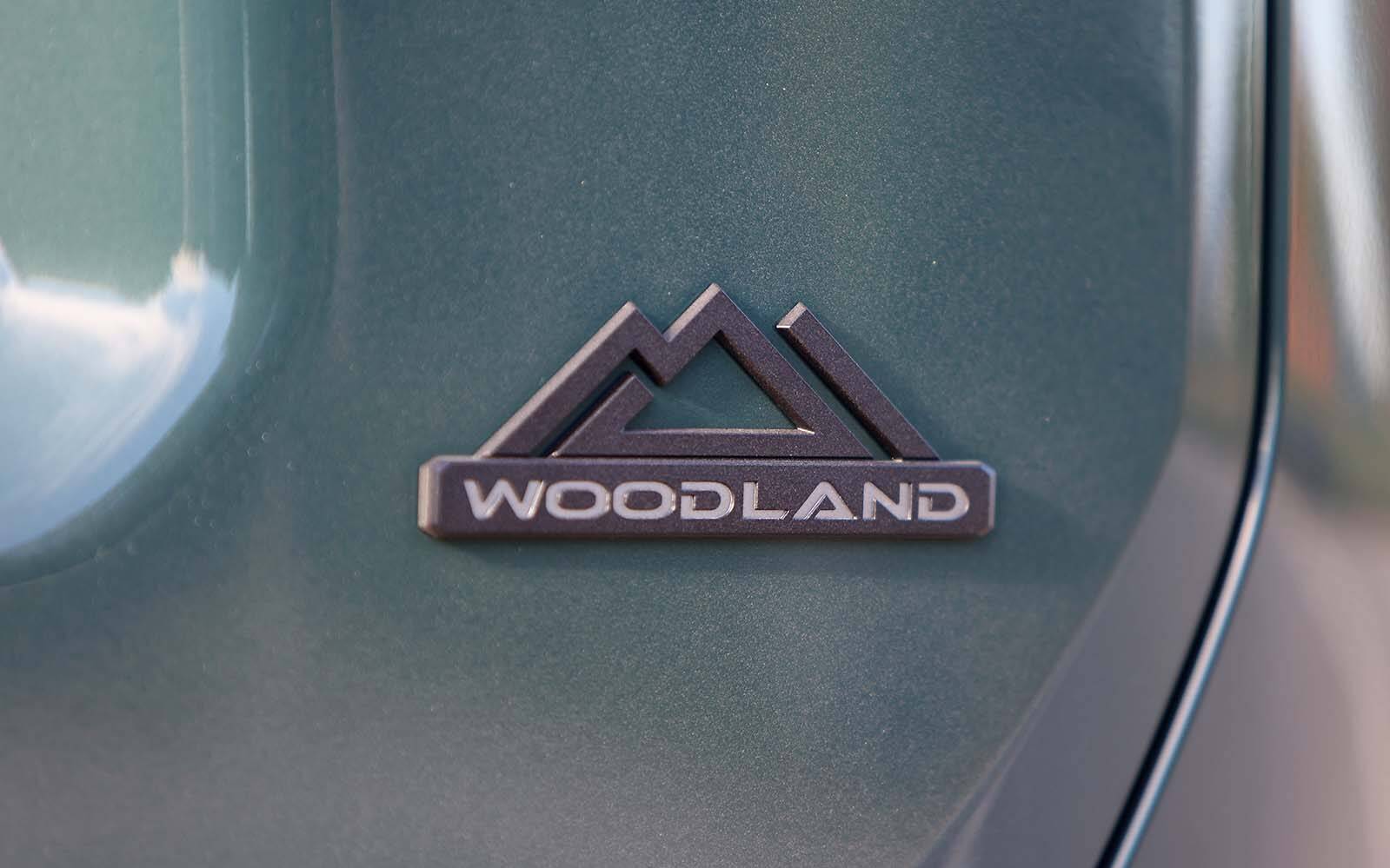
You’ll also notice that the RAV4 Woodland features a distinctive front end that gives it more character, complemented by roof rails, glossy black trim, matte-finished wheels, and Rigid Industries fog lights, which can provide either white or yellow illumination. Unique color options will likely be available for the Woodland, which, in all likelihood, will probably be the version that requires a longer wait. Its ride is admittedly a bit firmer, but that only makes it more engaging to drive.
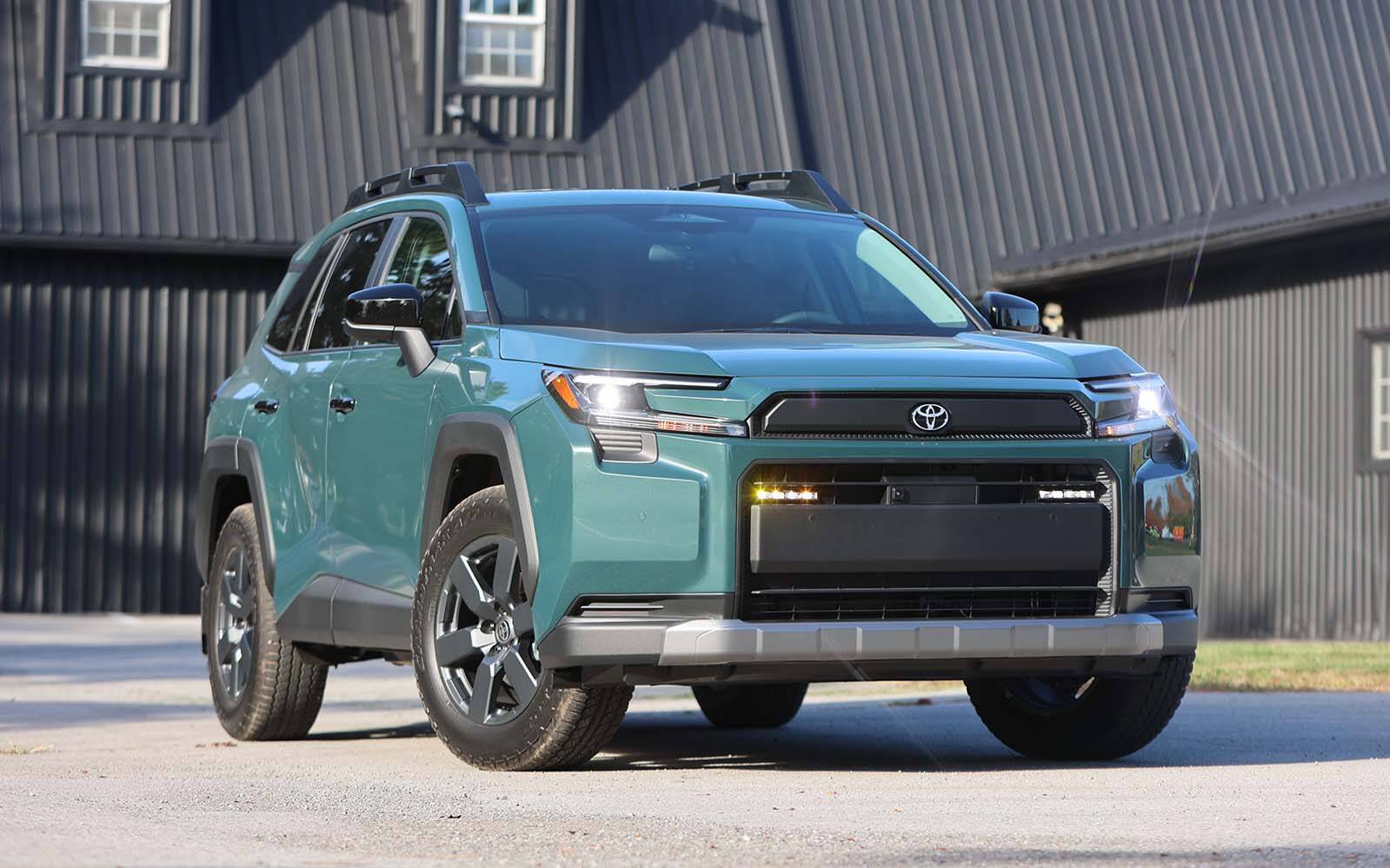
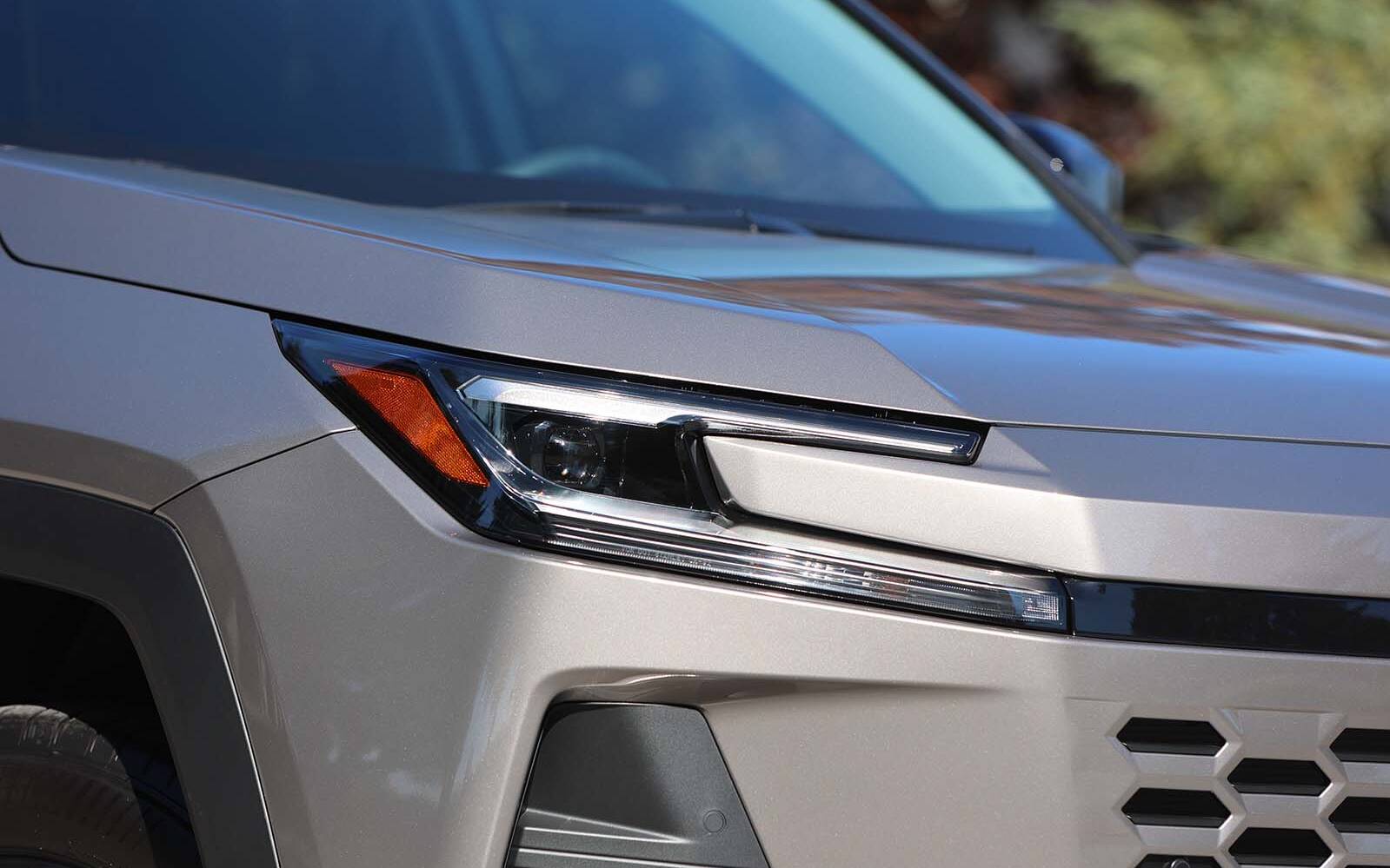
And then, it's true that its fuel consumption rating is a tad higher than that of other models, due to more aggressive tires and a body raised by 20 millimeters. However, with a combined average of 6.0 L/100 km, the RAV4 Woodland can still boast of being more fuel-efficient than the hybrid versions of the Honda CR-V (6.4 L/100 km), Hyundai Tucson (6.6 L/100 km), Mazda CX-50 (6.2 L/100 km) and Subaru Forester (6.9 L/100 km). In fact, only the Ford Escape achieves a rating of 6.0 L/100 km on paper, with the manufacturer ironically announcing its withdrawal from the market at the end of 2026.
On the road
We were able to drive three very different versions of the RAV4 during our test drive. The Woodland (which all the reviewers and influencers were fighting over!), the XLE with the Premium package, which will undoubtedly be the best-selling model, and the base LE version. We did not test drive the Japanese-made PHEV model, as it is scheduled to be launched in a few months.
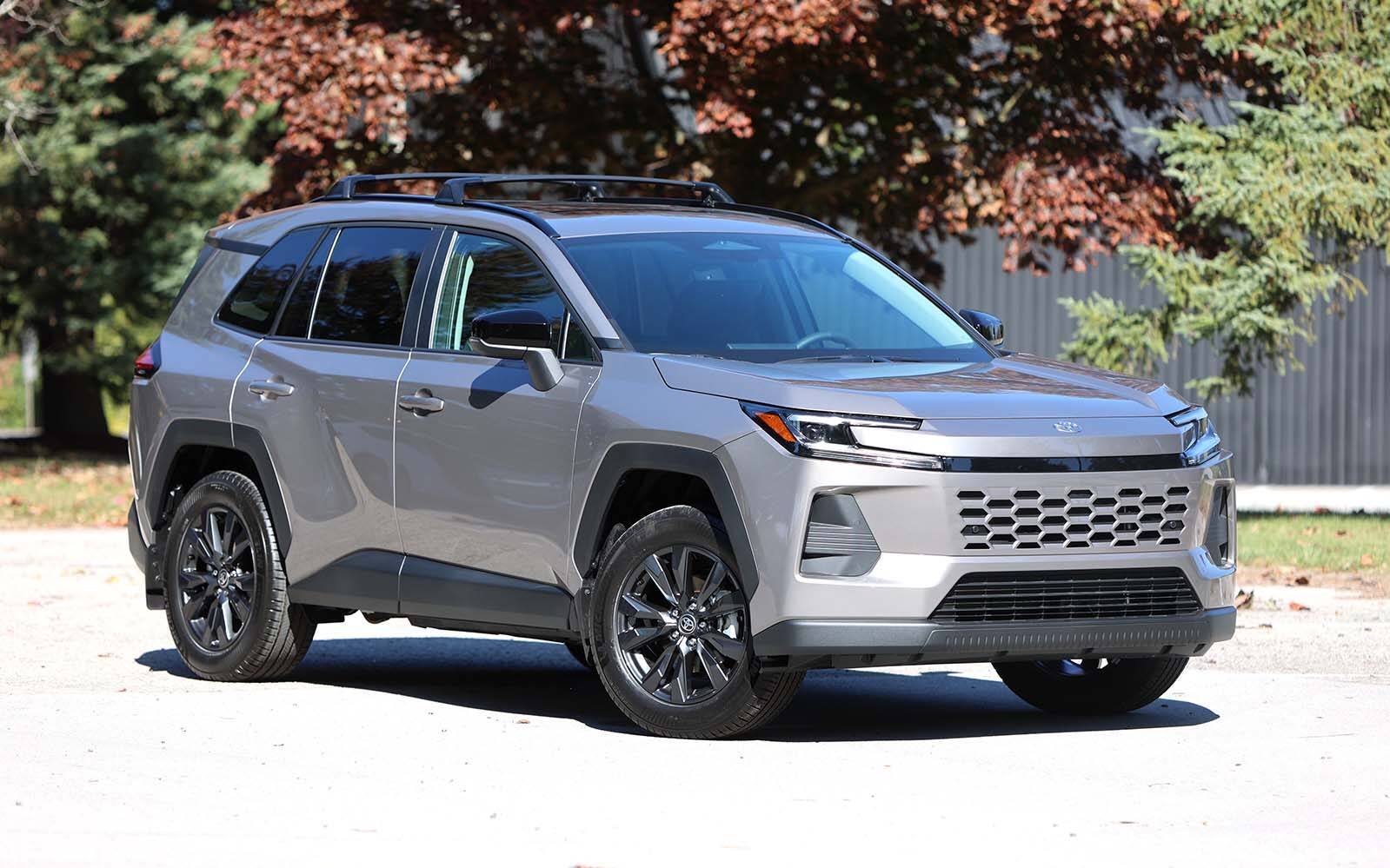
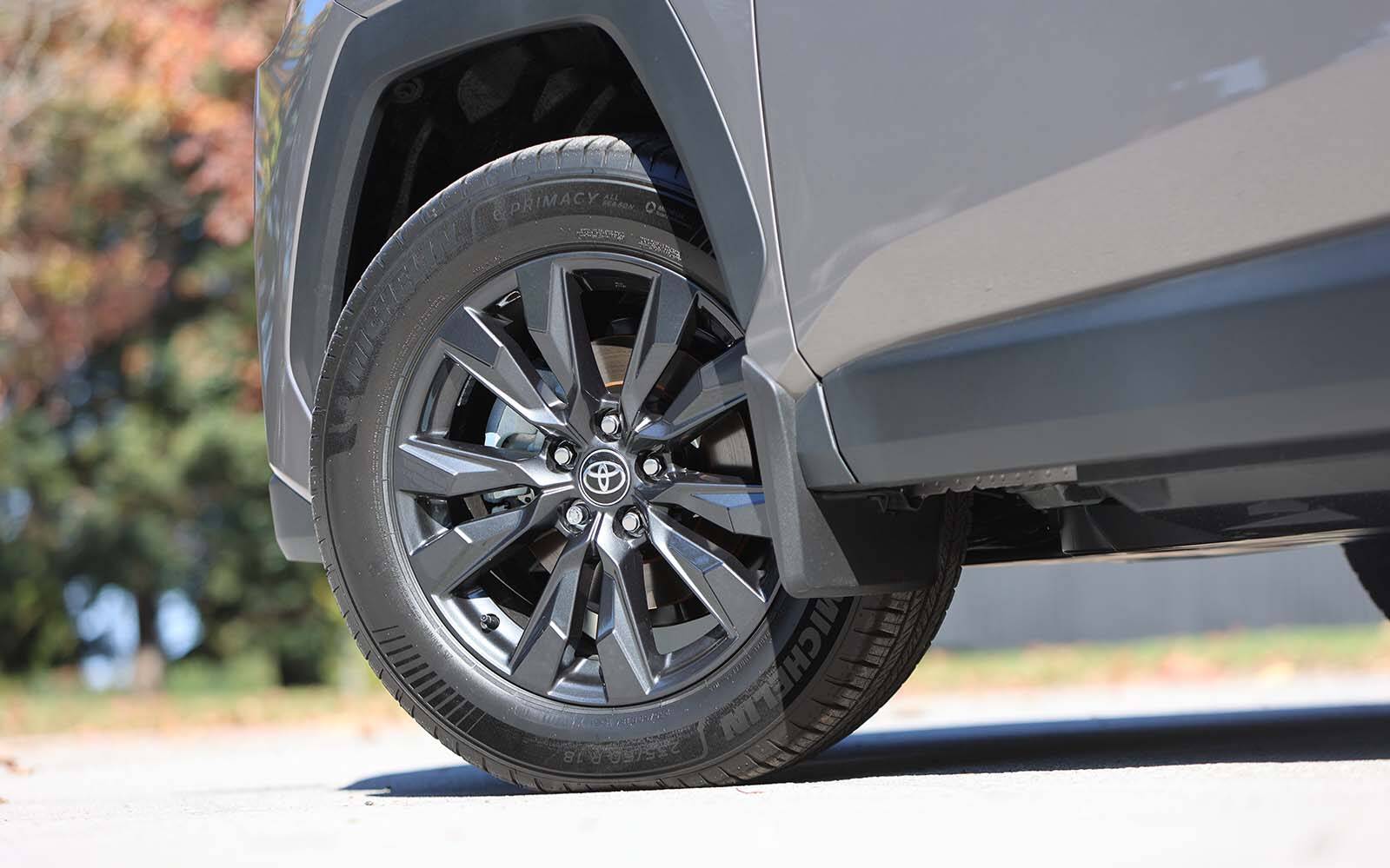
Clearly, the best balance is found in the 18-inch wheels and regular tires (XLE) option, which provides remarkable comfort and increased stability. The Woodland option results in a slight increase in noise, attributable to the crossbars and all-terrain tires. On the other hand, the 17-inch tires cause subtle swaying at high speeds. This is noticeable after driving the other versions. There is even the option of 20-inch wheels on the XSE model, which are likely to hit harder.
With more responsive steering and optimized initial torque, the RAV4 is now more inspiring to drive. While not as dynamic as a Subaru Forester, it is less generic than in the past. Comfort and noise levels have been improved, with Toyota focusing on isolating the cabin and wheel arches. As for power, it's up to 236 horsepower, almost double that of the first RAV4 launched in 1996, which delivered 120 horsepower. What an evolution! At the time, the brand's strategists could never have imagined that the RAV4 would one day become the most popular passenger vehicle in the country.
With its rapid acceleration, the RAV4 impresses above all with its continuous power. It never runs out of steam, offering astonishing torque, which allows for better acceleration control and ultimately saves money at the pump. Having recorded a combined average of 5.4 L/100 km behind the wheel of the XLE (Toyota claims an average of 5.6 L/100 km), I was able to achieve a better result with the LE version. I achieved a rating of 5 L/100 km after driving 235 kilometers, with more than 50% of the trip on the highway. Admittedly, the temperature was ideal (around 18 degrees Celsius), but did you realize that a 236-horsepower, all-wheel-drive RAV4 capable of towing loads of up to 3,500 lb now consumes 15% less fuel than the late Mitsubishi Mirage, which was equipped with a 78-horsepower three-cylinder engine? The result obtained with this LE version is even lower than what we observed when testing the current Corolla XSE Hybrid (138 horsepower).
This result leads us to question the relevance of a PHEV version that will cost $8,000 to $10,000 more for equivalent equipment. However, with an average fuel consumption of, say, 5.5 L/100 km, that would translate into an annual fuel cost of $1,750 (at $1.60 per liter), meaning you would have to drive for seven to eight years to recoup the PHEV's additional cost alone, assuming that you would only use gasoline 20% of the time and would only recharge at home. A more detailed calculation will, of course, be carried out once we know the prices, but you’ll quickly notice that a PHEV, without government incentives, suddenly becomes less appealing.
Disappointment on Board
Admittedly, the test vehicles were pre-production units that will never be sold to the public. Some interior trim pieces were non-porous or did not meet the manufacturer’s quality standards. Nevertheless, it must be acknowledged that the overall presentation remains dull, and some materials give the impression that Toyota opted for the lowest bidder… Even a Limited version, meant to be more upscale, falls far behind what, for example, the Mazda CX-50 or the new Volkswagen Tiguan offer. The ubiquity of gray plastics and the lack of contrasting elements is therefore disappointing, which could lead some buyers to choose the Woodland version—a variant where decorative elements are more numerous and attention to detail is evident, although the finish is still not particularly impressive.
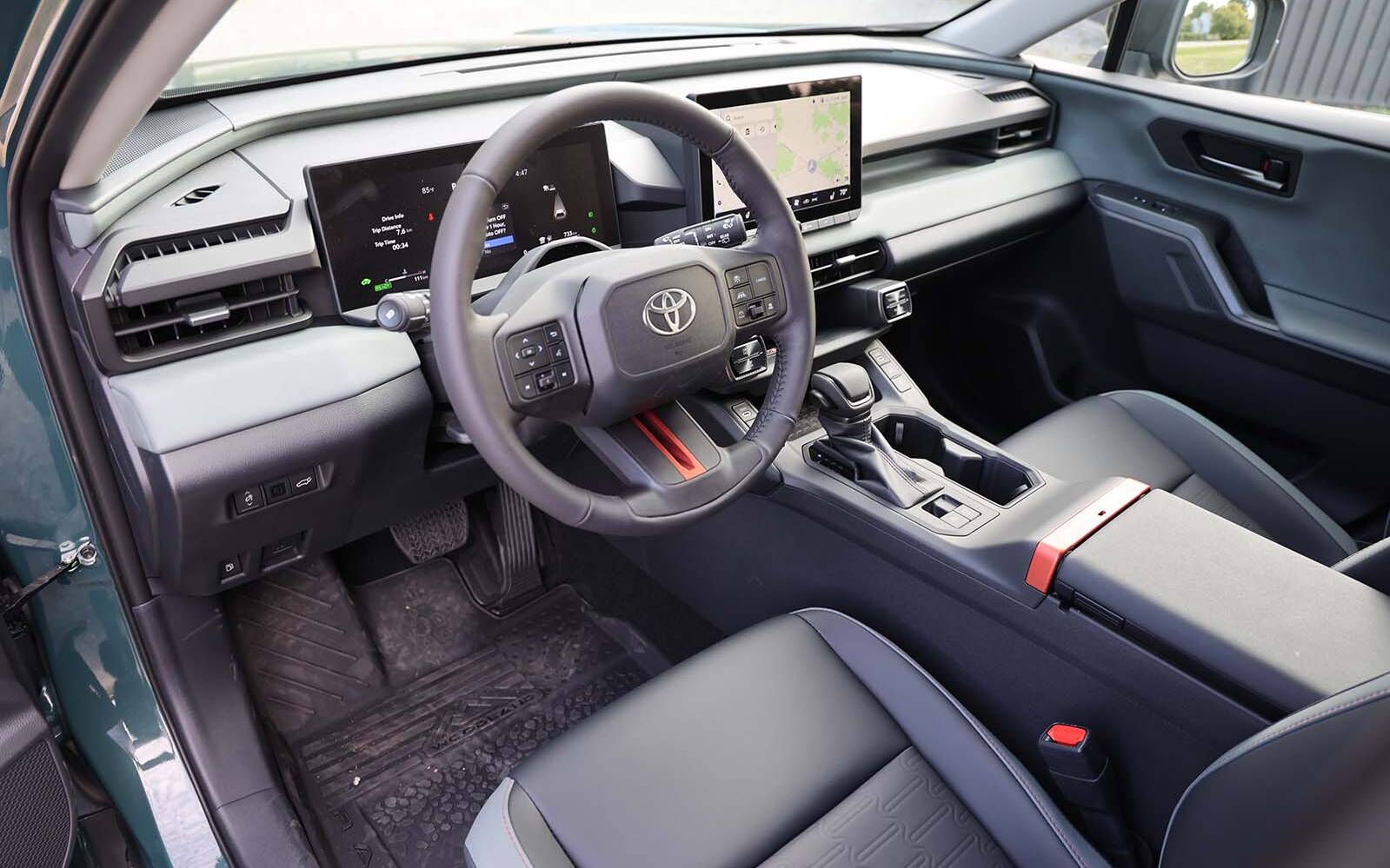
Fortunately, Toyota soothes the blow by offering comfort and ergonomics worth noting. The interior space is more generous than ever, the driving position is ideal, and visibility is improved thanks to the enlarged quarter windows and rear windshield. Except for the LE variant, models come with SofTex synthetic leather, which is pleasant to the touch and more durable. The presentation of this material varies by trim level, with some versions featuring contrasting stitching and two-tone upholstery. That said, the seats are more comfortable and provide an impeccable driving position.
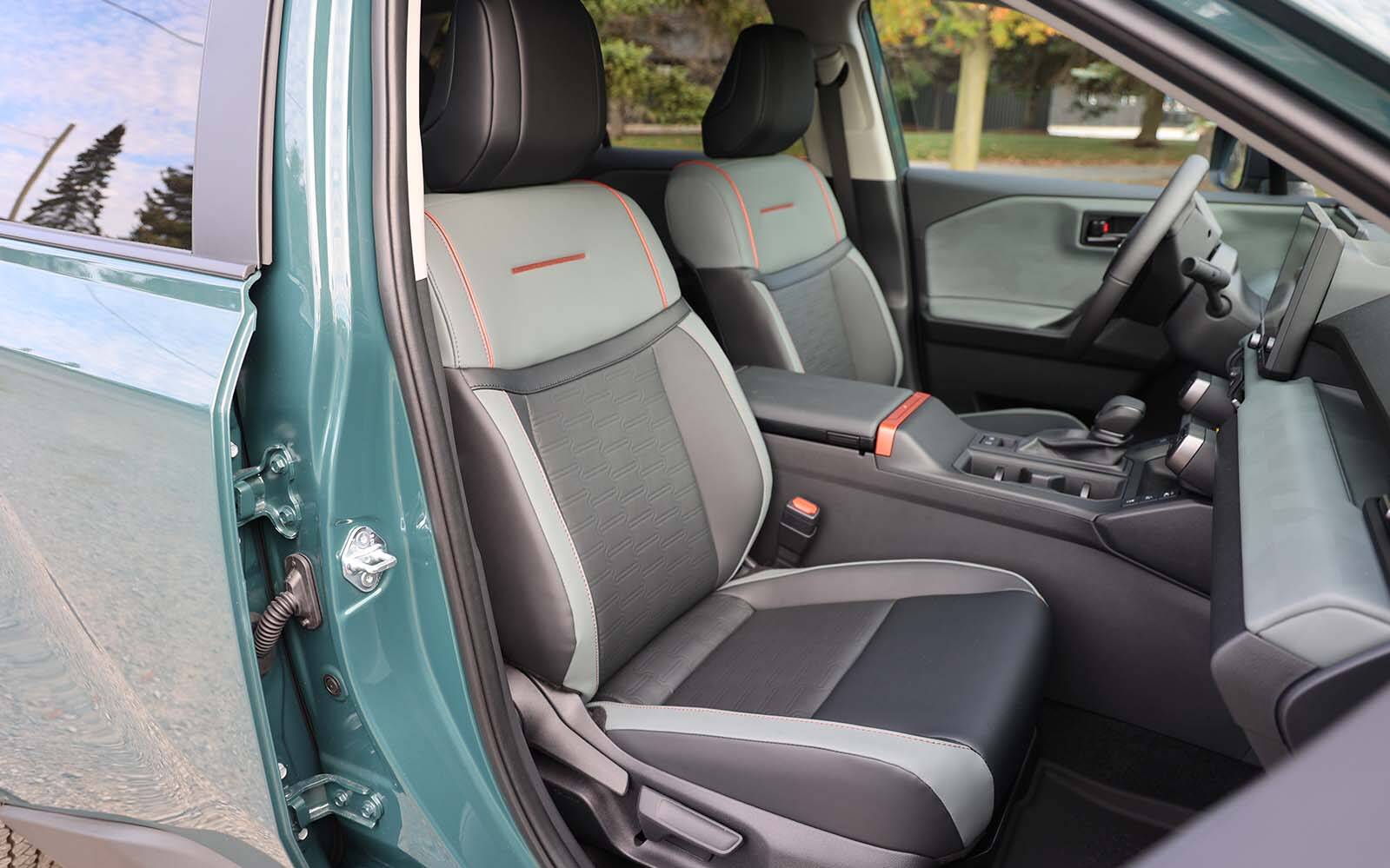
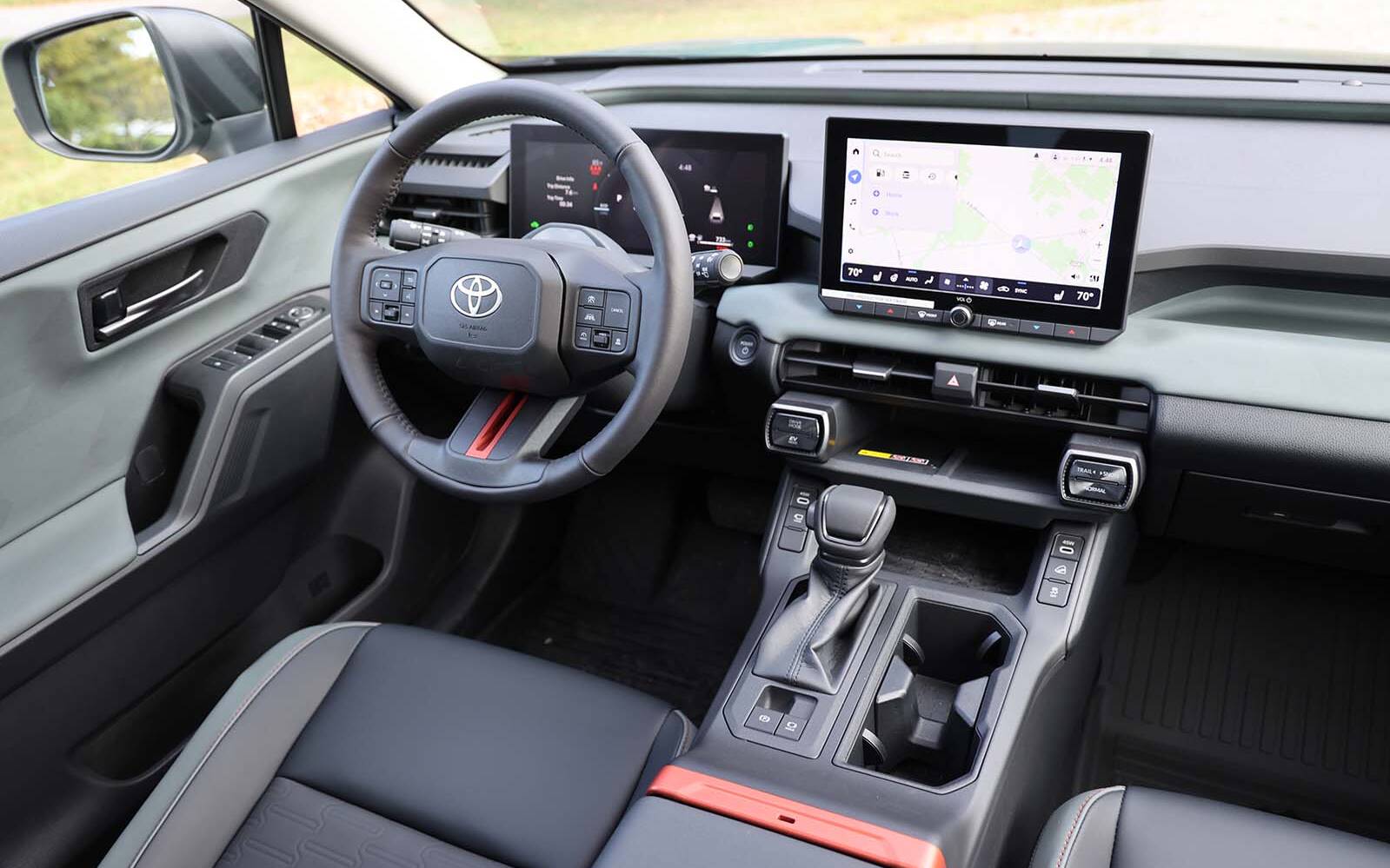
Equipped with a versatile center console, the RAV4 even offers a reversible armrest that provides two types of surfaces and access from both sides. In addition, there are tiered storage compartments that (except in the LE version) include a wireless charger for mobile devices. Move up the trim levels, and Toyota replaces the traditional gear lever with an electronic one, freeing up even more space. Why not offer it on all versions? Because people will pay extra to have it!
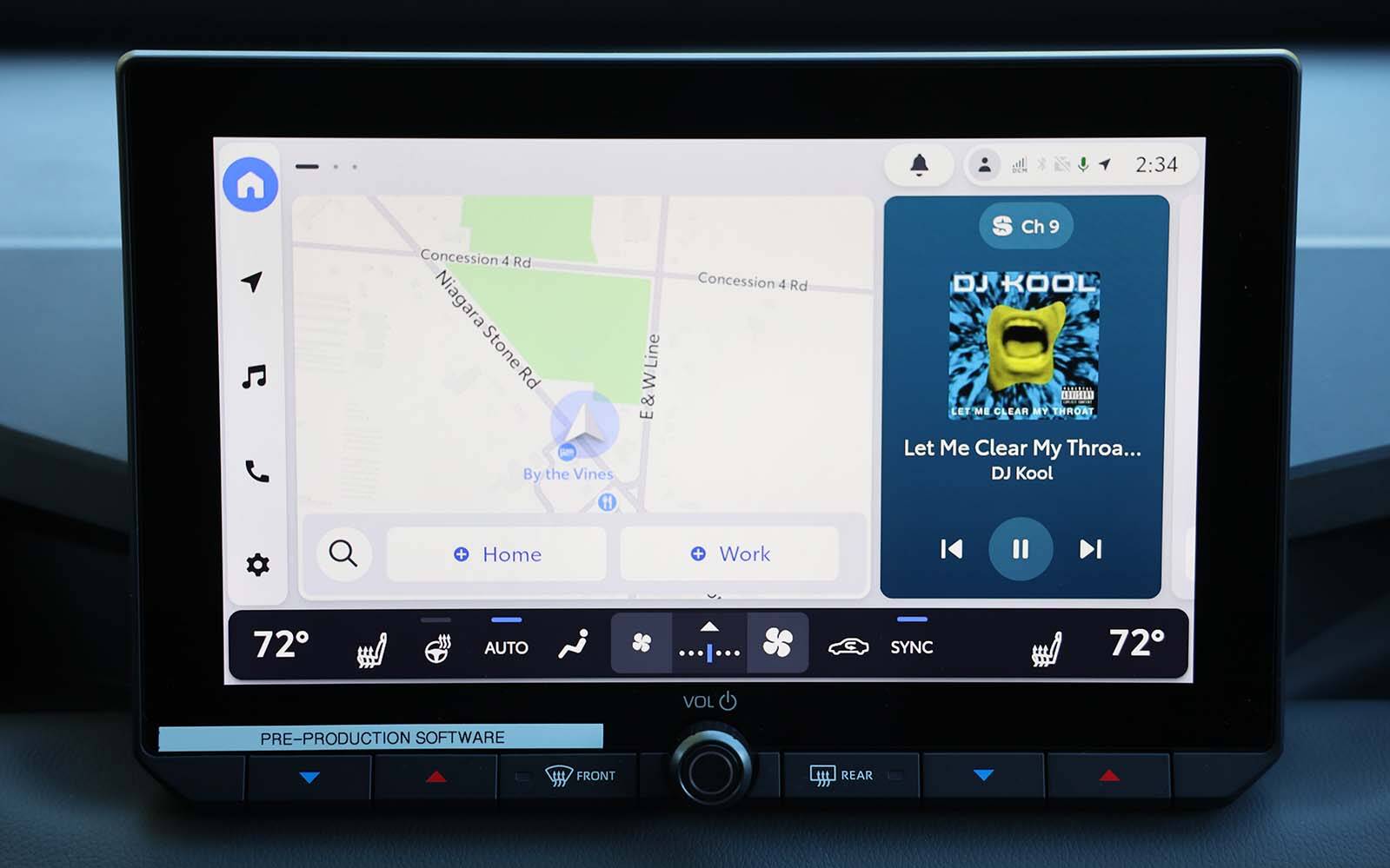
The same goes for the 12.9-inch central display, which is only available on the XSE and Limited trims, while the others make do with a 10.5-inch screen. Rest assured, all versions come with wireless Apple CarPlay and Android Auto, and the instrumentation is now fully digital on a 12.3-inch screen. Honestly, the graphics aren’t particularly impressive, but the interface is simple to use and easy to read. As the manufacturer notes, certain updates can even be made via the Arene software, Toyota’s new favorite toy!
A technology set to appear in the brand’s future models, allowing for diagnostics, cloud-based updates, and improvements in both driving safety and theft prevention. In fact, Toyota notes that it has enhanced the vehicle’s cybersecurity to make life harder for thieves. Stay tuned…
PHEV Coming Soon
The hybrid RAV4 will arrive in early 2026. Prices will be announced later, but expect a range between $39,000 and $55,000 for the conventional hybrid models. As for the three PHEV versions (SE/XSE/GR-Sport), they will debut in the spring. Naturally, all eyes are on this new sporty variant, which aims to innovate in a rather conservative market. It will be the only version without towing capacity, but it promises an exhilarating driving experience on par with other Gazoo Racing models.
In the meantime, although the power has been increased to 320 horsepower, we’re disappointed by the figures announced by Toyota. In short, a 20% larger battery yields only a 15% increase in electric range. This brings it to 80 km before the hybrid system kicks in, with the battery size now at 22.8 kWh—almost as large as the original Nissan Leaf (24 kWh), which could travel 130 km. Admittedly, Toyota has optimized charging speed, even allowing for Level 3 charging. However, how much heavier—and therefore how truly efficient—will the RAV4 PHEV be? That remains to be seen during its test drive.
In the meantime, keep in mind that the 2026 RAV4, despite a few flaws, will undoubtedly maintain its leading position. Its generous offerings, efficient on-road performance, spacious interior, and very, very low fuel consumption are sure to impress. And no, there’s no need to worry about any risk of high-voltage battery cable failure. That design flaw was resolved long ago, and Toyota has made sure not to relive that nightmare, which unfortunately affected the confidence of many owners.