

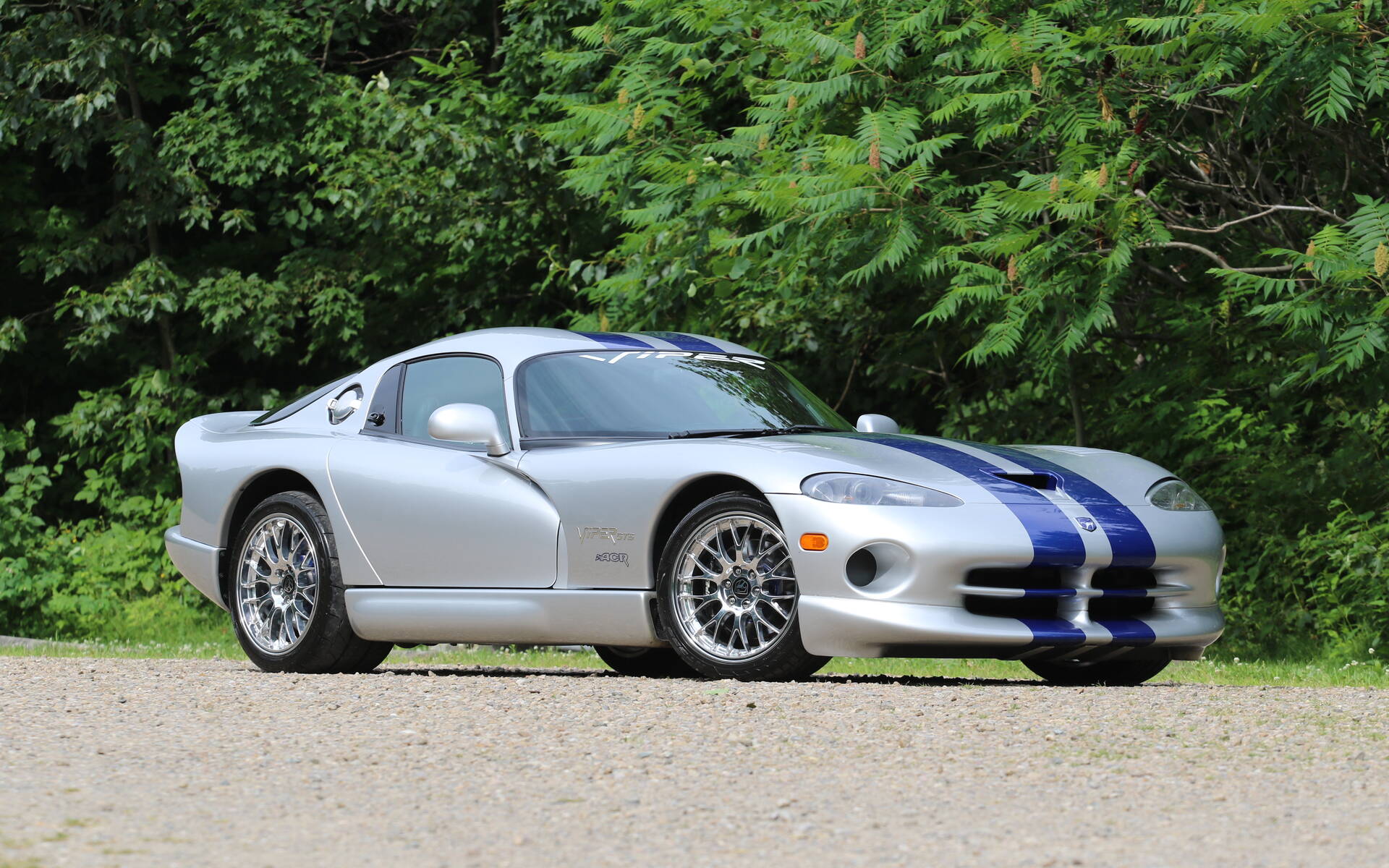
1999 Dodge Viper GTS: Less Venomous Than Expected
When the Dodge Viper was released, Jacques Duval didn't drive it because he was still working for Ford at the time. It would be a few years before he could get behind the wheel. Among the tests he conducted, his speed record on the PMG Technologies speed ring in Blainville made a lasting impression (see below).
The model you see here is a 1999 GTS, but not just any GTS. This is the ACR version, the most powerful model available at the time. It is a special edition commemorating the Viper GTS-R's victory in the GT2 class at the 1998 24 Hours of Le Mans. It stood out for its 18-inch BBS wheels, Koni shock absorbers with special springs, and five-point harnesses, among other features. The huge 8-liter V10 also gained 10 horsepower and 10 lb-ft of torque (460 horsepower, 500 lb-ft), which didn't change its performance much.
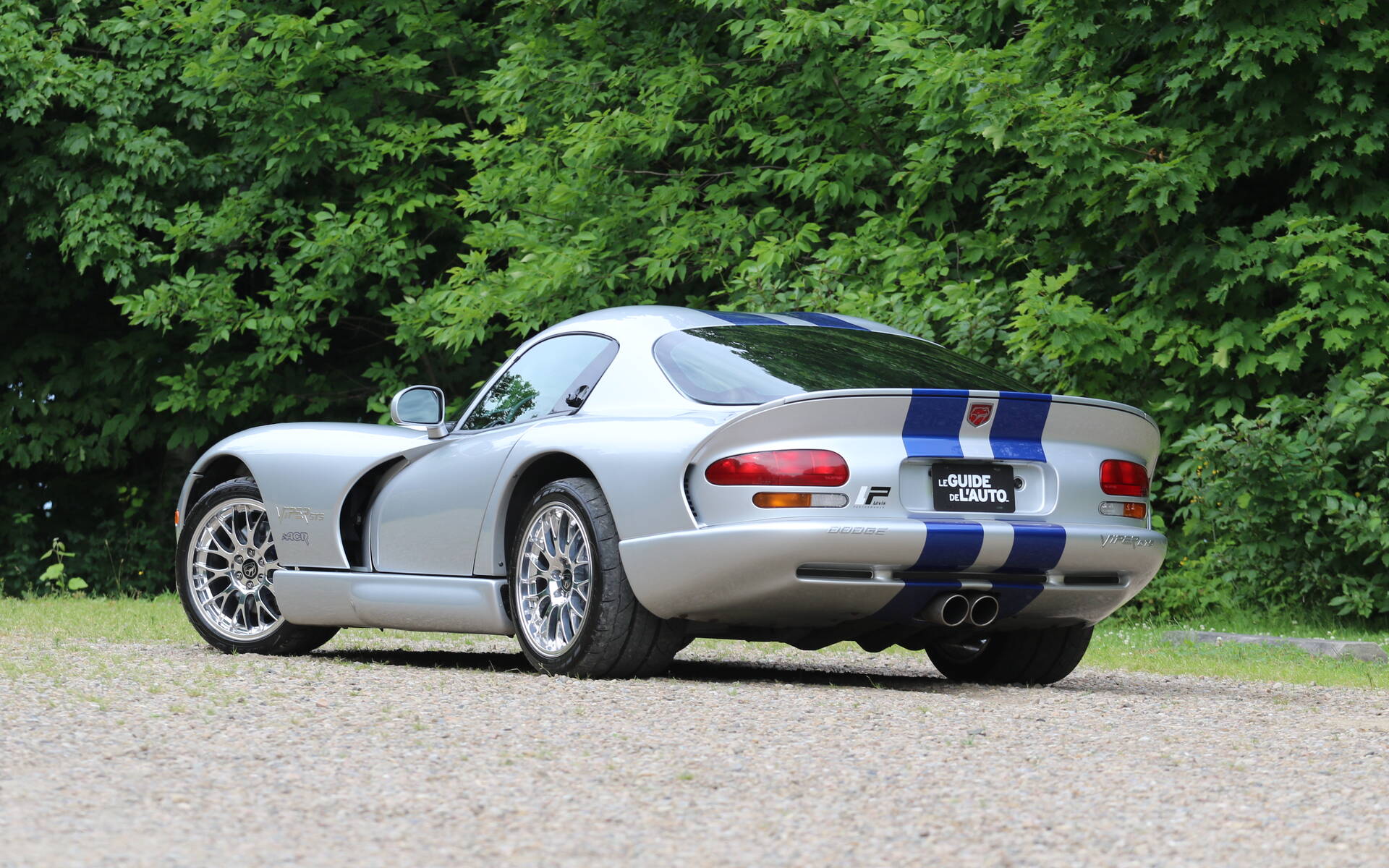
Sitting low to the ground, wide and squat, the car remains as intimidating today as ever. When you open the door, the width of the sill requires a bit of contortion to get in. The quality of the finish is clearly not its strong point, with the Viper featuring some of the same controls already seen in cheaper Chrysler Group vehicles. The center console is huge, with a large gear lever mounted on top. The steering wheel requires you to stretch your arms a little, but the depth-adjustable pedals still allow you to find a comfortable driving position.
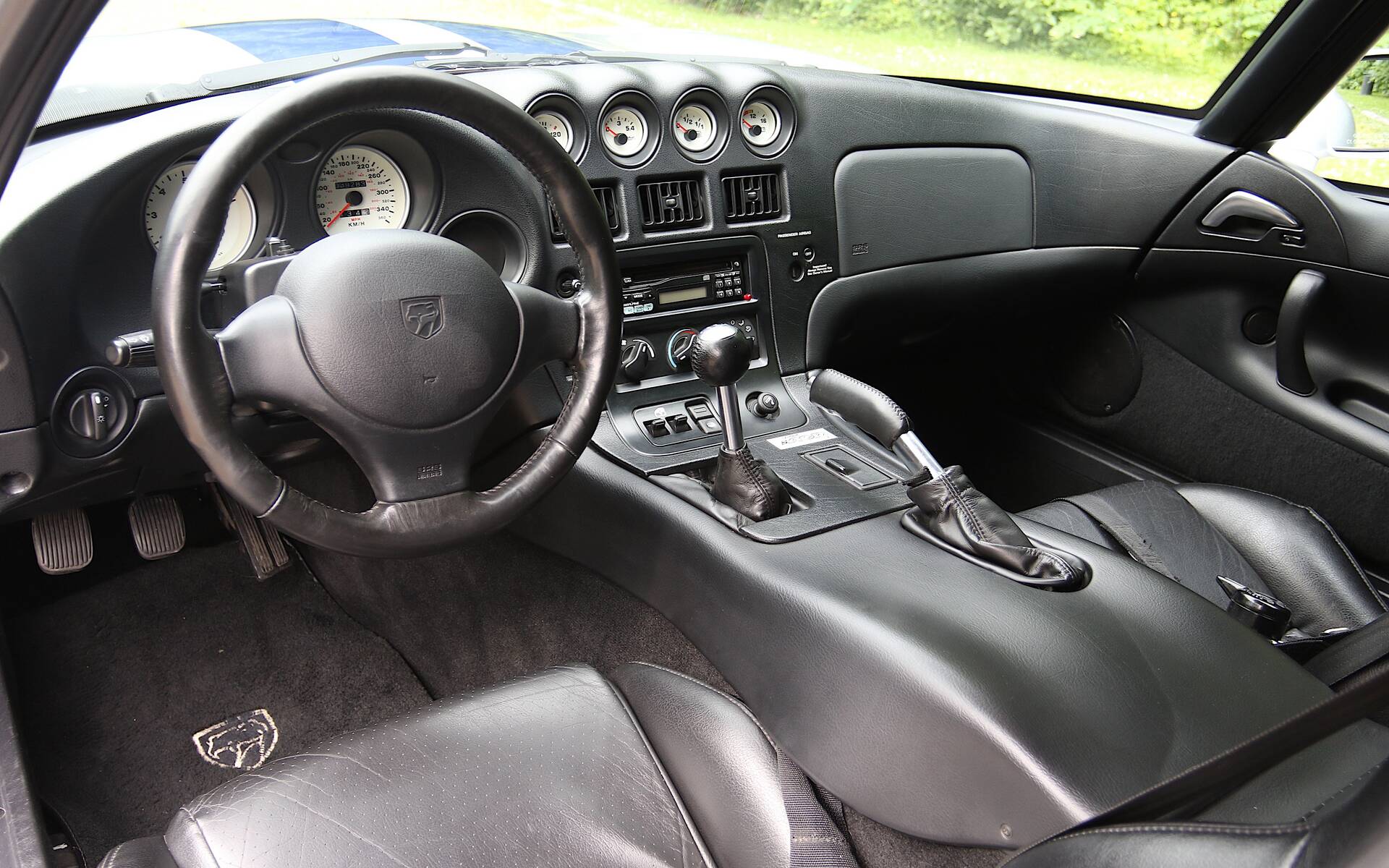
The driver appreciates the support provided by the seats, but the pedals shifted to the left and the lack of a footrest take some getting used to during the first few turns of the wheel. When starting up, the aluminum V10 makes its deep voice heard loudly. While we expected hell in the city, we were surprised by the Viper's docility. The limited rear visibility, the turning radius of a Boeing 747, and the width of the car require a certain amount of vigilance. But the clutch is quite smooth, the gearbox is pleasant to use, and the steering is well balanced.
In the GTS ACR, the torque is such that you can launch the car from idle without even touching the accelerator! In first and second gear, you have to be careful with the raw power of the engine, which requires you to use the right pedal with just the tip of your toe. More torquey than powerful, the V10 is at its most vigorous between 1,500 and 4,000 rpm. Above that, the thrust decreases in intensity, a sort of antithesis to a Honda VTEC...
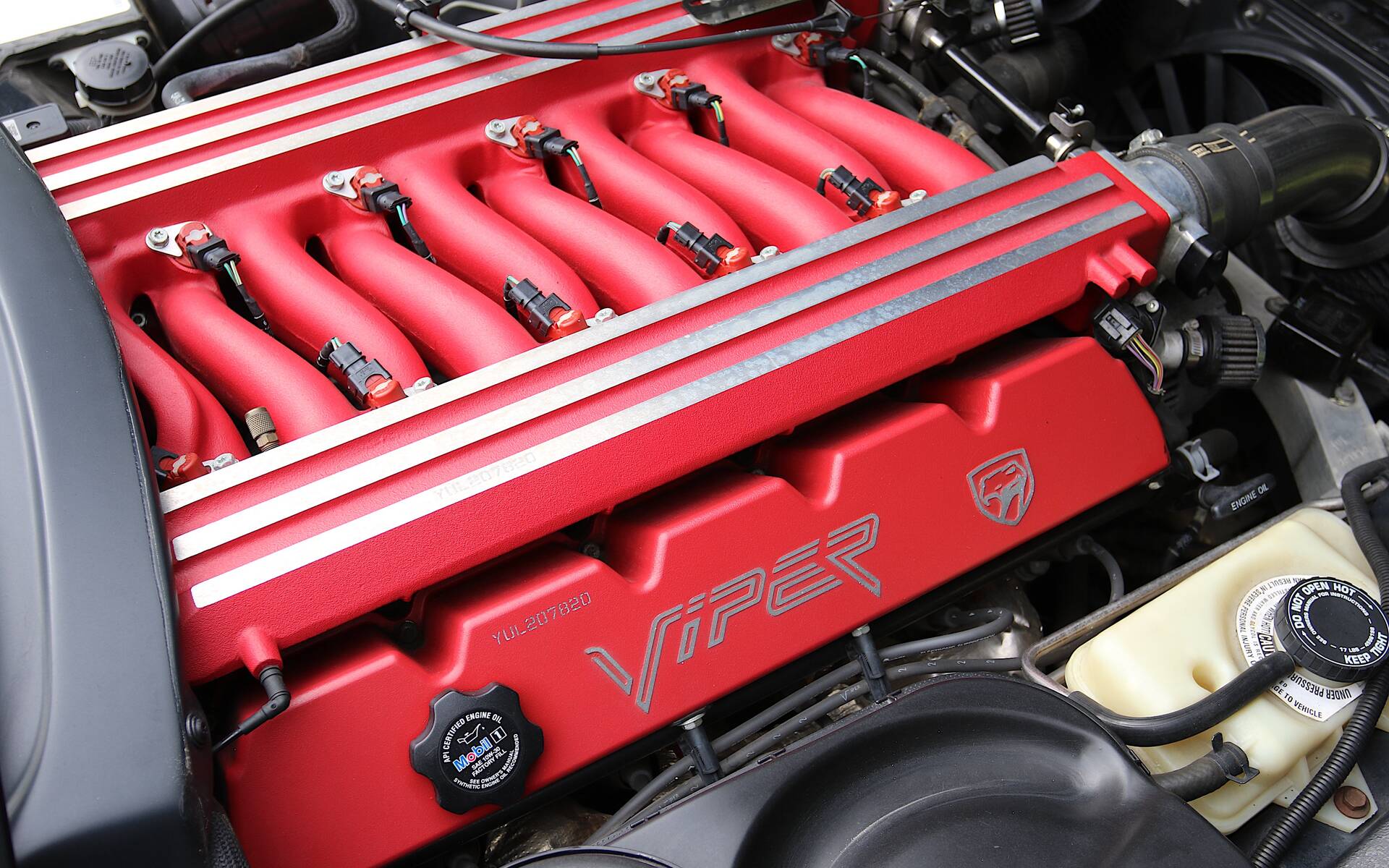
On an open road, the engine is so powerful and the gear ratios so long that you could get by using only four of the six speeds. Often described as a temperamental and tricky car, we approached the Viper test drive with some trepidation. With no driver assistance features, there's no doubt that it needs to be handled with care on a track or wet road.
But by exercising the restraint required when driving a powerful rear-wheel drive car on the road, we appreciated its truck-like torque, precise steering, and good agility considering its size. As surprising as it may seem, a Dodge Challenger Hellcat Redeye with a manual transmission, despite being equipped with ABS and traction control, is much more intimidating and demanding to drive than a Dodge Viper. Just goes to show, you should never judge a book by its cover...
Jacques Duval’s opinion in The Car Guide 1998:
"The Viper undoubtedly does not have the nobility of the Italians from Maranello, nor even the trophy cabinet of a Corvette. But when it comes time to put up hair-raising numbers, it doesn’t back down. The power is remarkably easy to exploit. Without needing to be coaxed, the Viper gave us an astonishing 8.8 seconds from 0 to 160 km/h — a time that many small sports coupes would settle for a 0 to 100 km/h. It’s this exceptional power that allows you to do whatever you want with this car. On the road, however, I would be wary of the Viper, even though its Michelin Pilot tires do the impossible to transfer the power to the ground. It offers neither ABS nor traction control, which is surprising in a car that costs nearly $100,000. During my familiarization laps, I realized that 6th gear acted as an 'overdrive' and was useless for determining the car’s top speed. It was therefore in the yellow zone of the tachometer, in 5th gear at 5,800 rpm, that the Viper charged toward its new track record of 299.7 km/h. Yes, I was disappointed not to have surpassed the 300 km/h mark, but I’m certain it would take very little to get there. For example, the monitoring equipment mounted on the right door near the ground disrupts the aerodynamics and easily costs a good km/h all by itself. All the more reason to try again next year..."
A big thank you to Mathieu Ziska and Dominique Ziska for allowing us to drive this perfectly preserved Viper.