

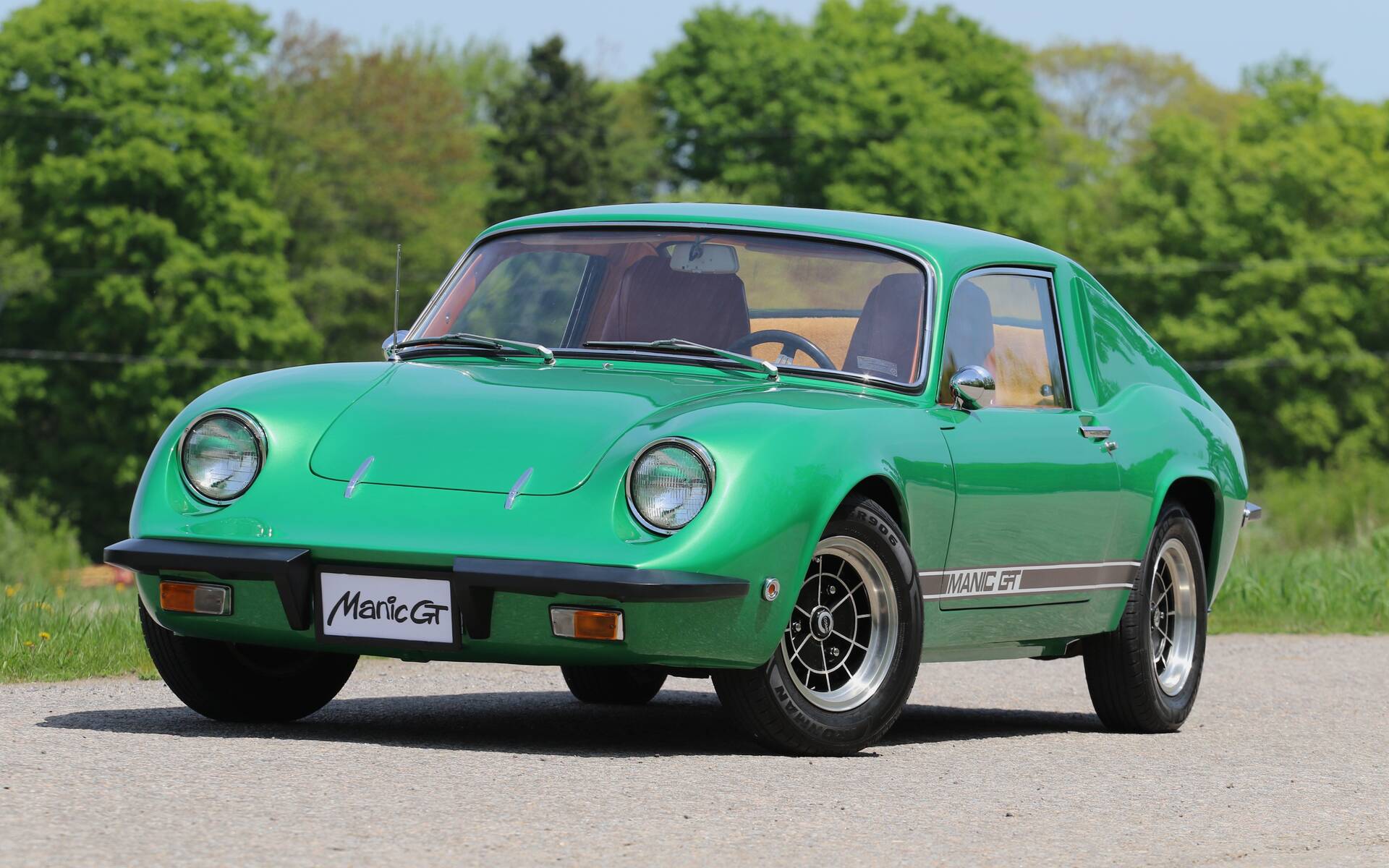
1971 Manic GT: The Test Drive of the Quebec Sports Car
This test drive is a bit special, as it involves the last car to be mass-produced in Quebec. Between its debut in 1969 and the last car produced in the summer of 1971, approximately 160 units were delivered. This venture, launched by Jacques About, could have been successful but ultimately fell short.
Jacques Duval knew Jacques About well and even drove for his racing team in 1968. When the Manic GT, the manufacturer's first road sports car, was completed, the founder of Guide de l'auto was naturally the first journalist to take the wheel. He drove a pre-production model and his road test was published in the 1970 edition.
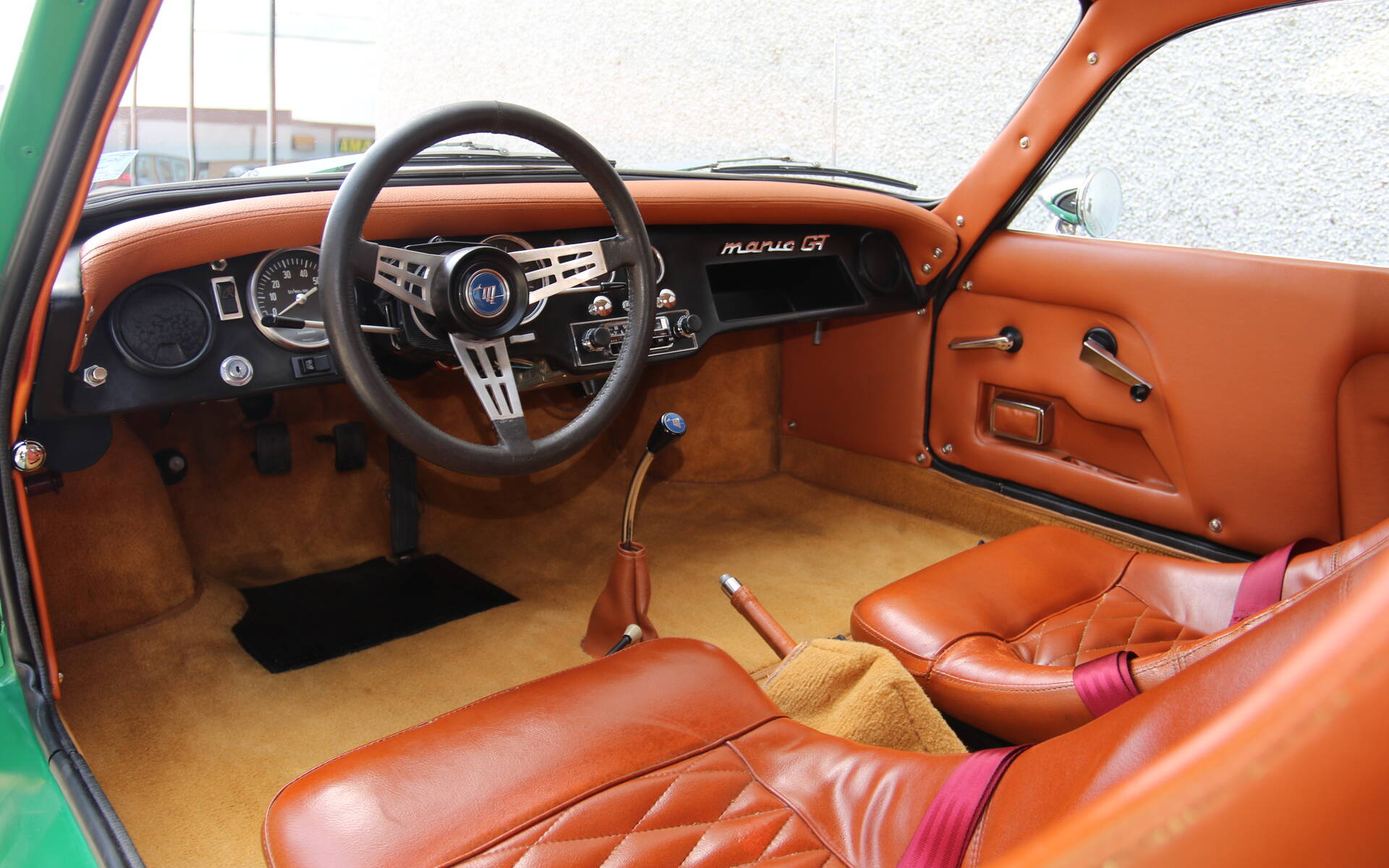
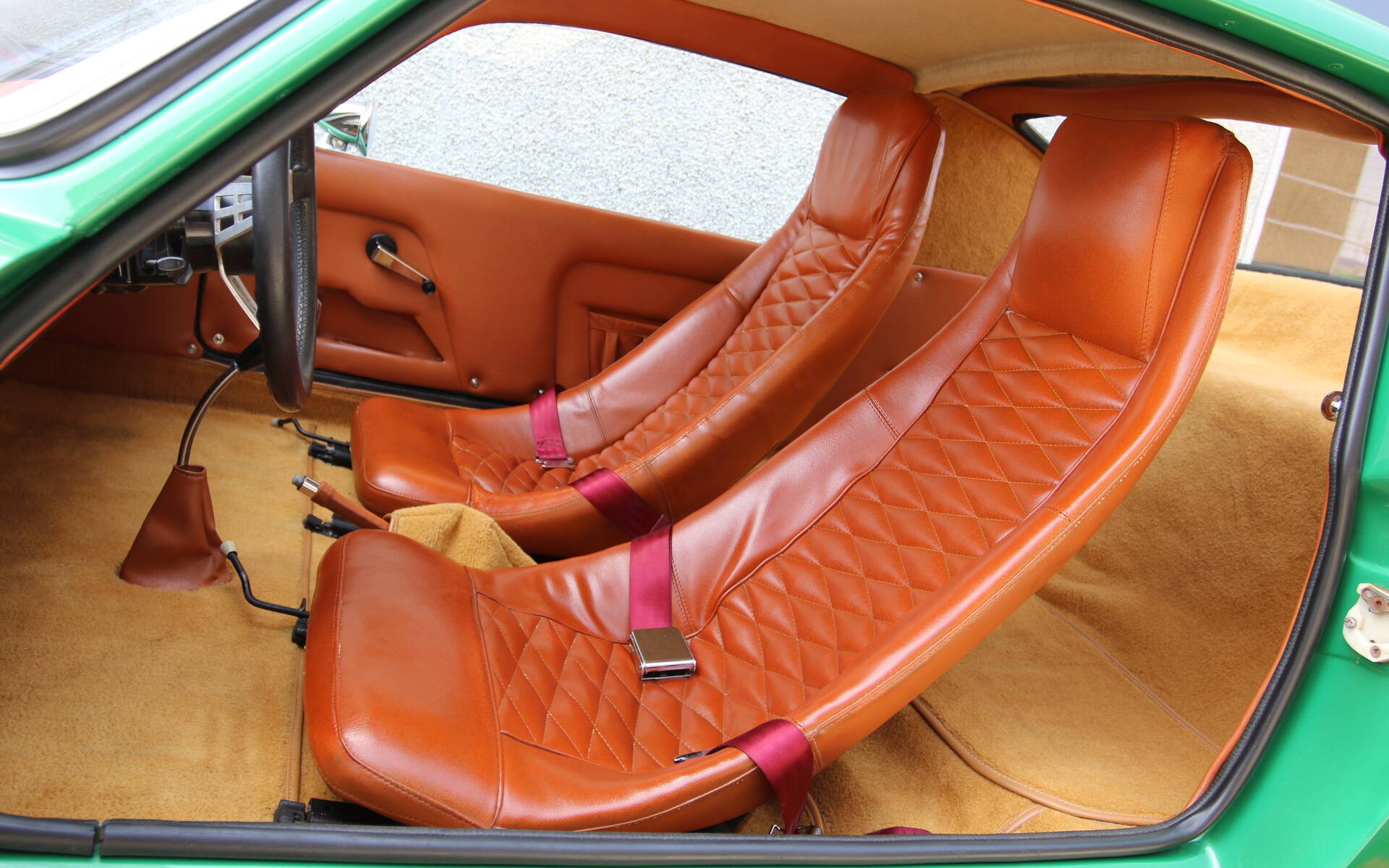
The model you see here is undoubtedly one of the most beautiful survivors. Owned by MP Gérard Deltell, the car has been beautifully restored. The green color was found thanks to a trace of the original paint located in the rear light frame, the gold-colored carpet (custom-made) comes from the United States, and all the interior elements are identical to those fitted on Manics when they left the factory.
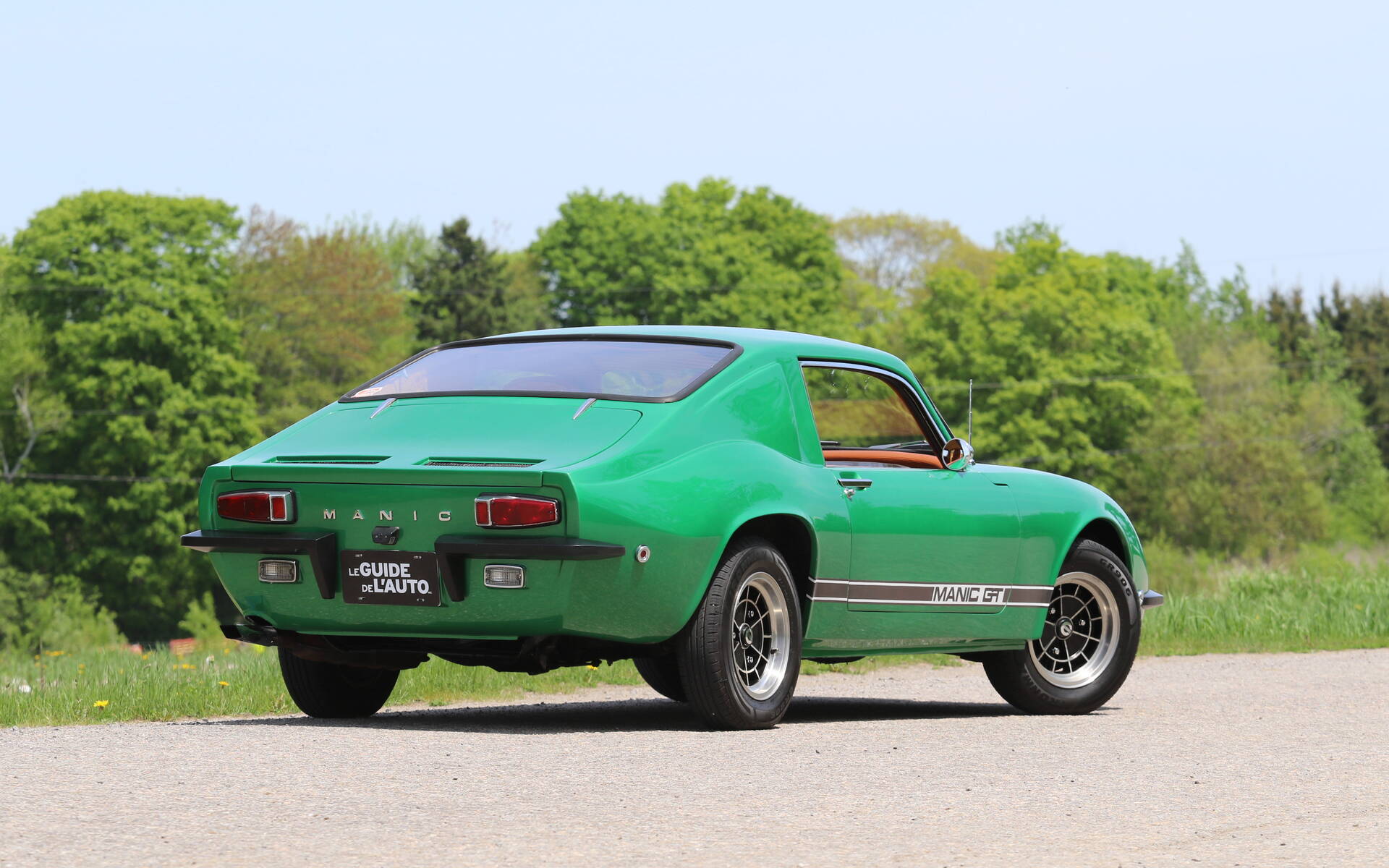
Although the brochure from that period mentions three different engines, there were actually only two original Renault mechanical options. The basic 1.1-liter 4-cylinder engine developed 60 horsepower, but it was possible to fit a 1.3-liter “Autobleu” engine that increased power by 20 horsepower. It is the latter, much rarer, that powers our test model. Featuring a specific cylinder head, it can also be recognized by its distinctive blue oil cap.
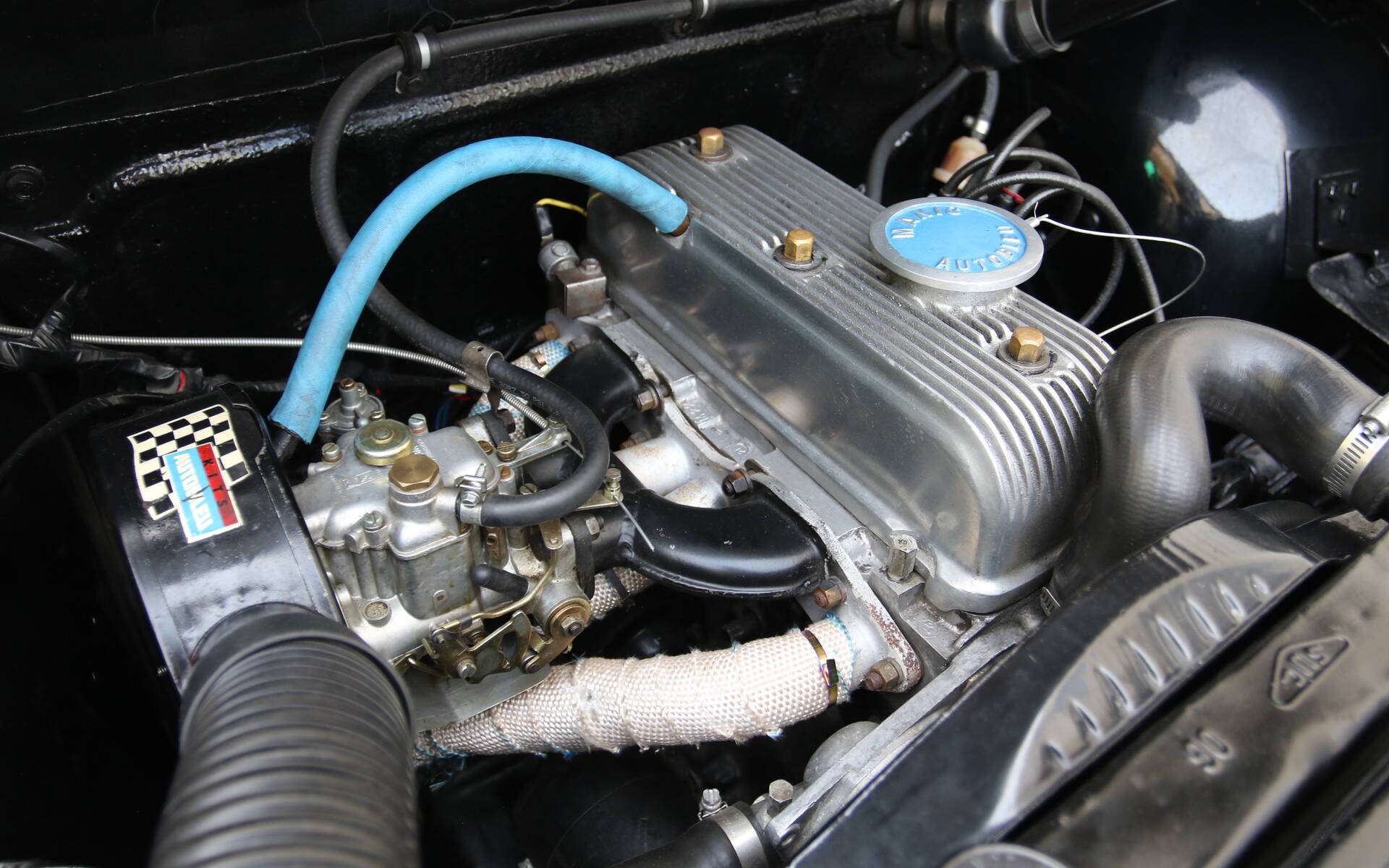
Underneath its unique fiberglass bodywork lies the floor and running gear of the Renault 8 and 10. Short, narrow, and low, the Manic looks like a little grasshopper in today's traffic. For our report, we brought along a Toyota Tacoma. Placing the two vehicles side by side really shows just how small the Manic is!
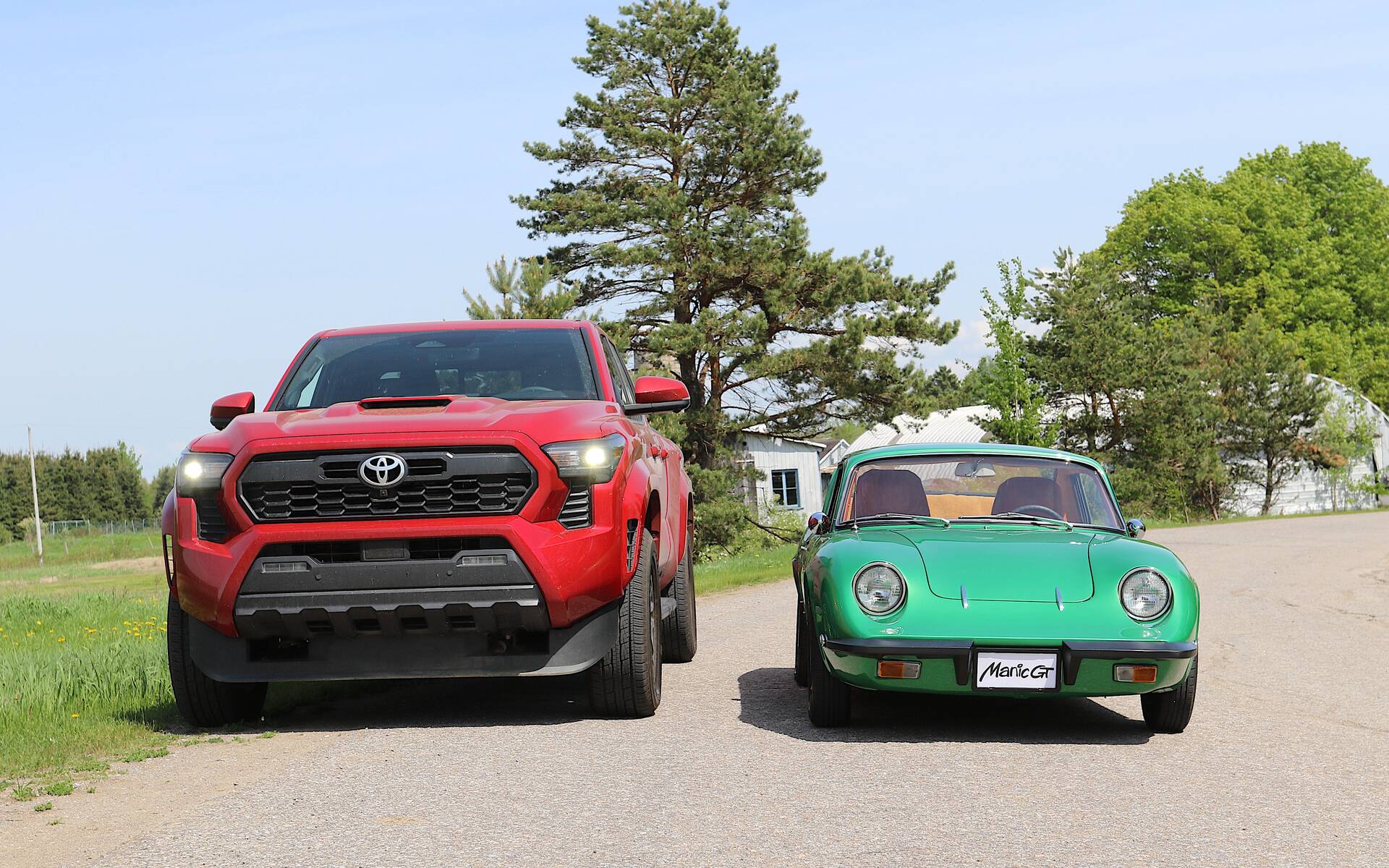
Getting into the car requires a certain amount of flexibility. As Jacques Duval rightly pointed out at the time, the driving position is strange. With seats that have very sloping backs (and are not adjustable), a steering wheel that is too low, and pedals that are offset to the right, the ergonomics are far from ideal. When starting up, the 4-cylinder engine produces a rather flattering sound for such a small displacement. Thanks to responsive controls, the first few turns of the wheels are easy to make.
Even without power steering, the steering precision remains perfectly adequate today. This explains why Jacques Duval found it magnificently precise more than 50 years ago. The same compliments can be paid to the brakes, which are capable of stopping the car effectively and without causing any alarm in today's traffic.
As for the engine, the figures may raise a smile today, but with only 658 kg to move, acceleration and pickup are quite lively. The 4-speed gearbox is short, with a firm lever but fairly precise guidance. At higher speeds, wind and engine noise create a real cacophony on board.
The Manic GT is best appreciated on secondary roads, preferably winding ones. With pure rear-wheel drive, the car is not tricky when driven at a reasonable speed. And as you might expect, there was no question of beating it like Jacques Duval did at Mont-Tremblant a little over 50 years ago.
At the end of this summer drive, we were won over by the sensations delivered by the Manic GT. Totally anachronistic in today's traffic, it turned many heads during our test drive. And although it requires a bit of commitment behind the wheel, its performance is far from ridiculous. It's also a car with an evocative name, symbolic of a time when anything seemed possible, but whose career was unfortunately too short.
Jacques Duval's opinion in the 1970 Guide de l’auto:
"The body style is intended to be half American, half European. It's fair to say that the lines are quite pleasing, even if there are certain similarities here and there. We should point out that this was a pre-production model still at the prototype stage and had not yet undergone certain modifications. We often say that we get into a car. In the case of the Manic, it would be more appropriate to say that we get out of it. The racing-style bucket seats have a backrest that is much too reclined to offer the desired comfort on a long journey. The finish on our test car was rather mediocre and artisanal in style. The small Renault engine loses none of its qualities in the Manic. We were pleasantly surprised by the gearbox, which is better than on a standard Renault. The steering is extremely direct and responsive, and the brakes are simply sensational, never causing the car to deviate an inch when applied suddenly. Unfortunately, the handling does not give the same feeling. The car is what you might call oversteering, and the loss of rear-wheel traction is quite abrupt. With courage, determination, and money, Jacques About's team could soon prove to us that “Quebec knows how to do it.” The car is still far from perfect, but it's heading in the right direction.
A huge thank you to Gérard Deltell for his enthusiasm and passion whenever he talks about the Manic, and for letting us drive his superb car.